

With the 2026 NFL Draft kicking off in Pittsburgh on April 23, rookie card prices are already moving. Here's what's driving them — and why draft night is one of the most important dates on the calendar for football card collectors.
Every April, NFL draft picks reshape the rookie card market. Names that collectors have been tracking for months — building positions on, watching footage of, debating on forums — suddenly have a team, a system, and a contract slot attached to them. Rookie card prices respond immediately, and if you're not paying attention, you're already late and will end up paying a premium.
Understanding how NFL draft picks affect rookie card prices is one of the most valuable frameworks a sports card collector can have. The draft is the single most concentrated moment of price movement in the football card calendar. What happens on those three days in Pittsburgh this April will shape the rookie card market for the next several years.
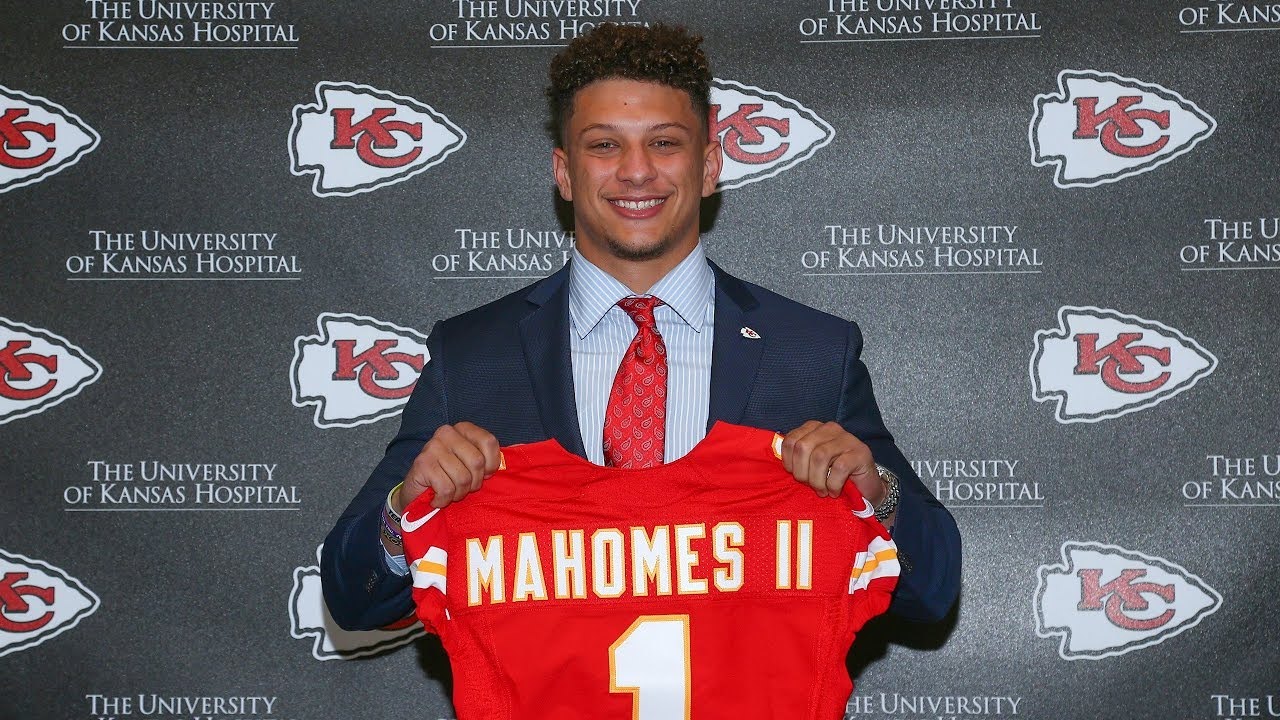
Fig 1: The day Patrick Mahomes got drafted for the Kansas City Chiefs in 2017 — one of the most important drafts for modern Football Card collectors — Image courtesy of the Kansas City Chiefs
Why the Draft Matters More Than the Player
A player's draft position often matters more to their initial card value than their actual college performance.
A highly-touted prospect who falls to the second round will typically see their rookie card prices drop sharply the moment their name is called later than expected. Conversely, a player picked in the top five — regardless of whether the hobby had them pegged as a top-five talent — will see immediate price surges purely based on where they landed.
The reason is straightforward. Draft position determines the team, the system, and the opportunity. A quarterback taken first overall by a rebuilding franchise with a strong offensive line is a completely different collector proposition than the same quarterback taken fifteenth by a team already committed to a starter—the market prices in that context.
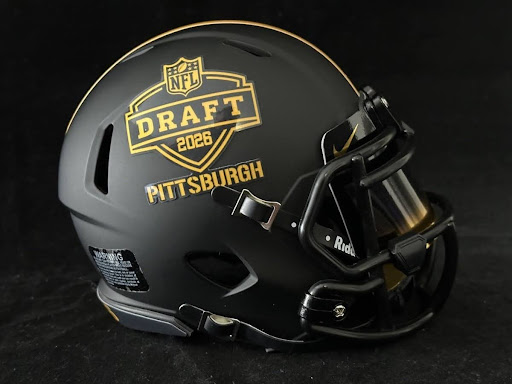
Fig 2: The first look at the 2026 NFL Draft Picks at Pittsburgh Stadium - Image courtesy of the Steelers

The Quarterback Premium
No position affects the card market more dramatically than quarterback. First-round quarterbacks — and especially top-ten quarterbacks — generate the most volatile and the most sustained card market activity of any draft class. The reason is simple: the quarterback is the face of the franchise, the player whose name appears on the most jerseys, and the position that drives the most long-term collector interest.
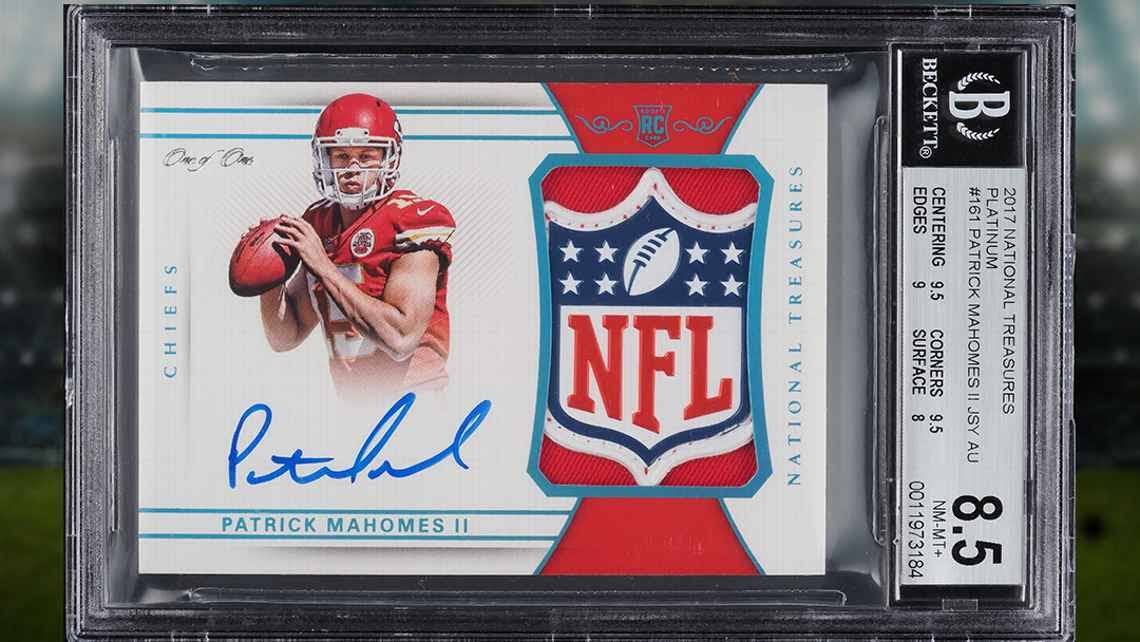
Patrick Mahomes was selected 10th overall by the Kansas City Chiefs in the 2017 NFL Draft. His base Prizm rookie card has appreciated over 400% since that year, and his National Treasures rookie card sold for $4.3 million — the most expensive NFL rookie card ever sold. None of that was visible on draft night. But the foundation was laid the moment Kansas City called his name.
The pattern holds across the modern era. Josh Allen was taken 7th overall in 2018. Joe Burrow went first overall in 2020. Justin Herbert went sixth. All three are now among the most valuable active quarterback card markets in the hobby. Draft position didn't guarantee those outcomes — career performance did. But draft position set the initial market, and collectors who understood that bought early.
Fig 3: A Patrick Mahomes 2017 Panini National Treasures 1-of-1, NFL shield, autographed, sold for $4.3 million — the most ever paid for a football card — Image courtesy of ESPN
What Happens to Card Prices on Draft Night
The secondary market moves fast on draft night. Here's how it typically plays out across four stages:
Before the draft: Speculation drives prices up on projected top picks in the weeks leading up to the draft. A player widely expected to go top five will see pre-draft card prices reflect that expectation. This is when the most informed collectors make their moves — before broadcast exposure drives casual buyers into the market.
During round one: Each pick triggers an immediate market reaction. A player going higher than expected sees prices spike within minutes of their name being called. A player falling triggers the opposite — prices soften fast as the market recalibrates around the new team and situation. The most dramatic moves happen when a player is taken in a dramatically different position than where the hobby had them projected.
In the days after: The initial volatility settles, and the market starts to price in context. Which team? Which system? Who are the weapons around them? Collectors who understand the NFL landscape have a genuine edge here over those reacting purely to pick number.
Over the first season: Rookie card prices track performance closely once the season begins. A strong first start can move prices significantly. An injury, a benching, or a slow start can erase draft-night gains quickly. The window between the draft and Week 1 of the season is often the most speculative — and the most volatile — period for rookie card prices.
The same spotlight effect applies to college basketball during tournament season — if you want to understand how live sporting events move card markets in real time, our guide on [how March Madness moves the card market] covers the same mechanics that apply to the NBA Draft pipeline.
Fig 4: 2026 Draft Mini Helmet Pittsburgh Matte Blackout - Image courtesy of EBAY
Position Matters as Much as Pick Number
Draft position is the headline. But the position played is the fine print that separates a short-term spike from a long-term hold.
Quarterbacks generate the most durable card value, as outlined above. Wide receivers and pass rushers picked in the top fifteen are generally strong long-term holds, particularly in an era where both positions command elite contracts. Running backs are the most volatile — the NFL's market for running backs has shifted dramatically in recent years, and even elite college backs taken high in the draft carry more career risk than collectors sometimes price in.
Offensive linemen are an interesting case. They are rarely the face of a franchise, and their cards trade at lower prices than skill positions. But elite tackles and guards drafted high consistently have undervalued rookie cards — their impact on the team is enormous, their careers tend to be long, and the market systematically underprices them relative to their actual football value.
Fig 5: Fox Sports ranked the Top 10 Quarterbacks of all time — Image courtesy of Fox Sports
The Team Landing — What It Actually Means for Card Prices
Collectors who follow the NFL closely have a genuine edge here that pure hobby participants often underestimate. The team a player lands with has a direct and measurable effect on card price trajectory, not just in the weeks after the draft, but across the first two to three years of a career.
A wide receiver landing with an elite young quarterback in a pass-heavy system has a fundamentally different card ceiling than the same receiver joining a team running a conservative offence with a journeyman signal-caller. The first scenario creates immediate fantasy football relevance, broadcast visibility, and highlight reel moments — all of which drive casual buyers into the card market and sustain collector interest. The second scenario creates uncertainty, which the market prices as risk.
For quarterbacks specifically, the offensive coordinator matters as much as the draft slot. A first-round quarterback under a proven offensive mind — think the kind of system that regularly produces 4,000-yard passers — has historically generated faster initial card appreciation than one handed a difficult rebuild. The market has learned to price that context, and collectors who read landing spots correctly have consistently bought at better prices than those reacting purely to pick number.
Before committing to a rookie card position after the draft, ask three questions. Who is the starting quarterback — or is this player the starting quarterback? What does the depth chart look like for immediate playing time? And does the coaching staff have a track record of developing players at this position? Those three answers will tell you more about the card price trajectory than the pick number alone.
What This Means for the 2026 NFL Draft
The 2026 NFL Draft kicks off with the first round on April 23 in Pittsburgh — and the rookie card market is already pricing in expectations before a single pick is made.
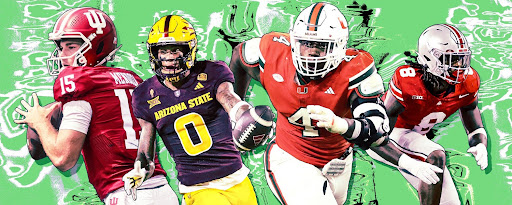
Fernando Mendoza — Indiana QB, Projected #1 Overall
The reigning Heisman Trophy winner and presumed first overall pick to the Las Vegas Raiders is the most searched prospect name in the hobby right now. Mendoza's pre-draft card activity has been significant — collectors building positions on his Panini Draft Picks and Bowman Chrome University cards before his landing spot was confirmed. His rookie card market has genuine upside if he hits, but the Raiders' rebuild means slower initial appreciation than a quarterback landing in a ready-to-win situation. Watch closely on draft night — if another team trades up for him, prices will move instantly.
Jeremiyah Love — Notre Dame RB, Projected Top 5
Widely considered the best player in the 2026 class regardless of position, Love is the most polarising card market prospect heading into draft night. His pre-draft card activity has been significant, driven heavily by the dynasty fantasy football community, which moves rookie card markets faster than any other collector group. The card debate around Love is the same one every collector faces with elite running backs: outstanding talent, real position risk. Landing spot is everything — a top-five pick alongside an elite quarterback is the scenario that justifies a longer hold.
Carnell Tate — Ohio State WR, Projected Top 10
The consensus WR1 in the 2026 class is the wide receiver generating the most pre-draft card attention. Tate is locked into a top-ten selection — a big-bodied, route-running receiver who snagged 12 out of 14 contested targets in 2025. Wide receivers with his profile are among the best long-term rookie card holds when the landing spot is right. The Browns at pick six have been widely linked to Tate. If he lands alongside a strong quarterback in a pass-heavy system, his Bowman Chrome rookie is one of the more compelling long-term positions in this class.
Jordyn Tyson — Arizona State WR, Projected Top 15
The WR2 or WR3 in this class, depending on the board, Tyson has the versatility and release package that NFL teams value. There is an injury caveat collectors need to price in — Tyson skipped combine drills and his pro day due to a hamstring issue, and injury history on a pre-draft card position is a genuine risk factor. If he comes through draft night healthy and lands with a strong quarterback, his card market has real upside. If injury concerns persist into training camp, prices will correct quickly.
Ty Simpson — Alabama QB, Projected Round 1
The most polarising quarterback in the class and potentially the biggest draft-night card market mover outside of Mendoza. Simpson's landing spot will define his card market entirely — a strong system with immediate starting potential creates a very different proposition to a backup role behind an established starter. Monitor his projected landing spot in the final days before the draft. The gap between his ceiling in a good situation versus a poor one is wider than almost any other prospect in this class.
Kenyon Sadiq — Oregon TE, Projected Top 20
The most underrated card market opportunity in the 2026 class for collectors who follow positional value. Tight ends taken in the first round consistently generate strong long-term card appreciation — the position has the longest development curve in football, meaning patience is rewarded. Sadiq's pre-draft card prices have not yet reflected the top-twenty pick hype the way skill position players have, which creates a potential value entry point. If he lands with a quarterback who targets tight ends heavily, his rookie cards are worth a close look.
Fig 6: The Top 4 most-watched rookies for the 2026 NFL Draft Picks — Image courtesy of ESPN
For collectors, the {2026 draft landing spots will define the rookie card market through 2028 and beyond](https://theringer.com/nfl-draft/2026/big-board?view=skim#content). If you are buying, the window to buy intelligently is now — before the picks are announced and before the market has priced in the context that makes all the difference.
The Bigger Picture for Collectors
The NFL Draft is the single most concentrated moment of price movement in the football card calendar — and understanding how NFL draft picks affect rookie card prices, from pick position to team landing to position played, is the framework that separates reactive collectors from informed ones. The pattern is consistent enough across the modern era to say this with confidence: collectors who do their research before picks are announced are consistently better positioned than those who react after the fact.
For the biggest sales in sports memorabilia history and the factors driving record-breaking prices, see our guide to the [most expensive athletes' sports memorabilia ever sold].
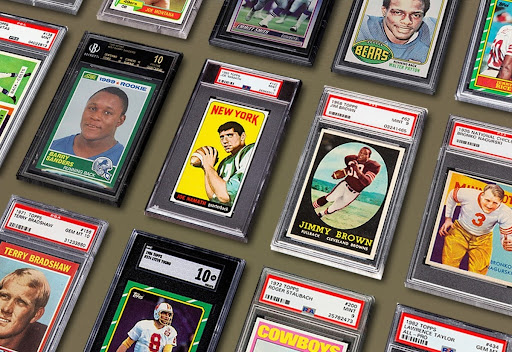
Fig 7: Top NFL rookie cards of all time — Image courtesy of Graded Card Investor
Whether you're just starting the hobby or already on your way to building a serious collection, Collectibles.com provides the digital tools to easily organize, manage, value, and showcase everything you own — all at your fingertips.
Download our IOS App
Download our Android App

Frequently Asked Questions
What's the difference between a base rookie card and a National Treasures rookie during draft season? Base rookies — Prizm, Select, Donruss — are produced in high volume and represent the accessible entry point into a player's market. National Treasures and similar high-end products are low-numbered, often have patch autographs, and are produced in quantities of 99 or fewer. During draft season, base rookies move first and fastest because they're affordable and liquid. High-end cards take longer to move but carry more significant upside for players who develop into stars. Most experienced collectors build a base position first, then selectively add high-end once a player's situation is clearer.
How long does the draft night price spike typically last? For players who land in strong situations, the initial spike often holds and builds through the preseason as playing time becomes clearer. For players who land in difficult situations or fall from their projected pick position, the spike can fade within 48 to 72 hours as the market digests the context. The most dangerous window for overpaying is the 24 hours immediately after a player is picked — prices reflect maximum hype and minimum information. Patient collectors typically find better entry points in the week after the draft once the noise settles.
Does draft position matter more than college performance for card prices? In the short term, yes. Draft position is the market's primary signal during draft week because it determines team, system, and opportunity. A player with dominant college stats who falls to round two will see their card prices reflect that fall immediately. Long term, career performance is everything — draft position is the starting line, not the finish line. The most valuable cards belong to players who outperformed their draft position, not simply those who were picked highest.
What happens to a prospect's card prices if they fall on draft day? A fall typically triggers an immediate price correction. The severity depends on how far they fall and why. A player falling due to a medical concern — an injury discovered at the combine — will see sharper drops than one falling due to positional value debates. The silver lining for collectors: falls sometimes create genuine value if the underlying talent is real and the landing spot is good. Some of the best risk-reward opportunities in the draft card market come from prospects who fell further than their ability warranted.
Which rookie cards hold value best long term? Quarterbacks taken in the top ten with strong landing spots have the best long-term track record. Low-numbered autograph rookies from premium products hold value better than high-print-run base cards. And cards from players who go on to sign large second contracts — the ultimate validation of draft-day potential — tend to appreciate most significantly over a three to five year hold.
What are the most anticipated NFL rookie cards for the 2026 draft? Fernando Mendoza, as the projected number one overall pick, is generating the most pre-draft card market activity. Jeremiyah Love is the most talked-about non-quarterback prospect. Among the quarterback depth, Ty Simpson is worth monitoring, depending on the landing spot. Wide receivers Carnell Tate and Jordyn Tyson round out the most-watched names heading into draft night, with tight end Kenyon Sadiq the most underrated card market opportunity in the class.
Disclaimer: All content on Collectibles.com and shared publicly is for educational and informational purposes only and does not constitute investment, financial, tax, or legal advice. Collectibles.com and its partners are not registered investment advisors. Investing in collectibles carries a high risk of loss, including total loss of principal, and is speculative and unsuitable for many investors. Past performance is no guarantee of future results. Always consult qualified professionals before making decisions. No recommendations or solicitations are intended.

