

How to Start Collecting One Piece Cards: A Beginner's Guide (2026)
One Piece is the best-selling comic series in history, one of the most-watched anime on the planet, and — since 2022 — home to what many consider the fastest-growing trading card game of the decade. In 2026, a single One Piece card sold for more than $440,000. Most, though, cost less than a dollar.
A One Piece collection can go from one starter deck to hundreds of cards fast — and knowing what you own and what it's worth is half the hobby. Whatever you collect, catalog it as you go and track the market so you always know what's worth grading, holding, or trading. Collectibles.com lets you scan, organize, value, and showcase your whole collection in one place. — Collectibles.com
That gap is exactly why new collectors need a map. The One Piece Card Game is thrilling, gorgeous, and booming, but it's also easy to overspend or get burned by counterfeits if you dive in blind. This beginner's guide walks you through everything you need to start collecting with confidence: how the cards work, what to buy first, what's genuinely worth money, how to protect your collection, and how to avoid the traps — plus a quick look at collecting One Piece beyond the cards.
Fig 1: Monkey D.Luffy One Piece card - courtesy of DiceBreaker
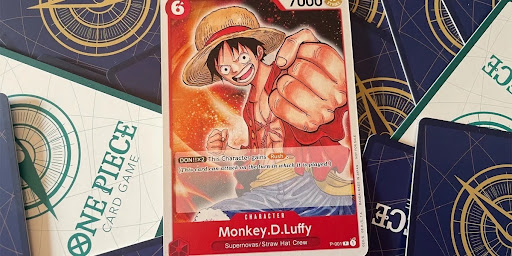
First, How the Card Game Works
Bandai publishes One Piece Card Game (often shortened to OPCG or OPTCG). It launched in Japan on July 8, 2022, and in English on December 2, 2022 — making it a genuinely young game that exploded fast. It's a two-player battle game: each player leads with a Leader card tied to a color and a crew, then plays characters and events powered by a resource called DON!!, trying to reduce the opponent's Life cards to zero.
You don't need to play to collect, but you do need to understand three things before you spend a cent.
The product types (and their codes). Everything is labeled with a short code:
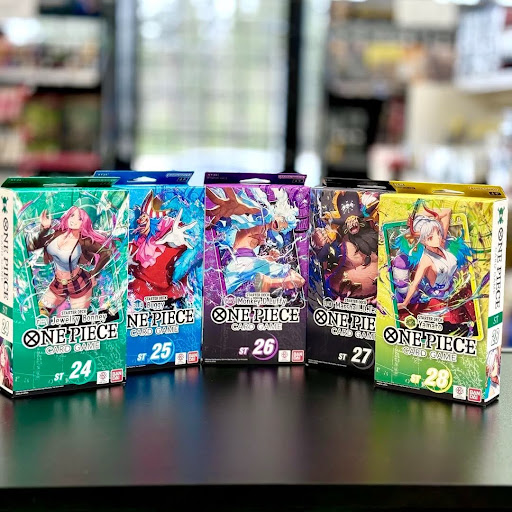
ST — Starter Decks: pre-built, ready-to-play decks built around one Leader. The recommended entry point.
OP — main Booster sets (OP-01 Romance Dawn through the latest releases). The core of the game.
EB — Extra Boosters: smaller supplementary sets, often with limited or themed cards.
PRB — Premium Boosters (the "One Piece Card The Best" line): collector-focused sets that reprint popular cards, often in premium gold treatments.
The set cadence. New sets drop roughly every few months, and there's an important recent change: starting with OP-15 Forging New Bonds in April 2026, Bandai began releasing sets worldwide simultaneously, ending the three-month "Japan first" window that used to define the hobby. That means English and Japanese collectors are now largely on the same schedule.
The rarities. A letter in the bottom-right corner tells you a card's rarity, running from Common (C) and Uncommon (UC) up through Rare (R), Super Rare (SR), and Secret Rare (SEC). On top of that base scale sit the special treatments that collectors chase: Manga Rares (cards drawn in Eiichiro Oda's comic-panel style), alternate arts and parallels, and SP (Special) cards. As a rule, base rarity plus treatment drives value — commons are bulk, while manga rares, alt-arts, and promos are the prizes.
Fig 2: One Piece Playmat & card zone - courtesy of One Piece
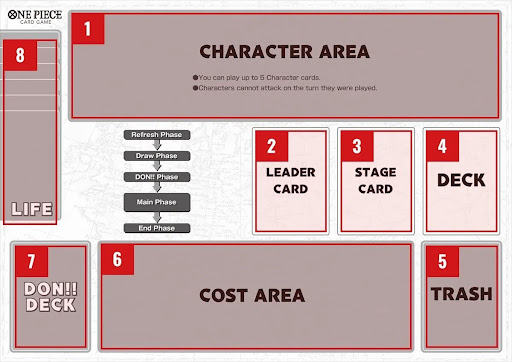
How to Make Your First Purchase
Here's the single best starting move: buy one Starter Deck plus one Booster Box from a recent set. The starter deck teaches you the rules and gives you a functioning collection foundation; the booster box (a sealed display of packs) is the most efficient way to build a broad card pool and gives you a real shot at pulling something exciting.
A few decisions to make up front:
- Player or collector? If you want to play, always begin with a starter deck and add booster singles later. If you purely want to collect, you can focus on sealed products and chase specific cards you love. Most people end up doing both.
- English or Japanese? Both use the same artwork and game system, so the quality is identical. English is easier for casual play and local tournaments; the Japanese product has extra appeal for collectors. Now that recent sets are released simultaneously, it mostly comes down to preference.
- Set a budget and a plan. The fastest way to lose money in this hobby is to drop $500 in your first month with no direction. Pick a favorite character or crew, decide roughly how much you'll spend, and let that guide your buying. Chasing everything at once is how beginners burn out.
And don't stress about pulling the rarest cards immediately — you can build a strong, satisfying collection (or a competitive deck) mostly from starter cards, rares, and a few super rares, then trade up over time.
Fig 3: One Piece starter decks - Gamesland Canada
What's Actually Worth Money
Time for a reality check that most hype videos skip: the vast majority of One Piece cards are worth under a dollar. Commons trade for pocket change, and bulk lots of thousands sell cheaply. The money lives in a narrow top tier — manga rares, serialized promos, alternate arts, and tournament prize cards.
At the very top are the grails. Championship and tournament-prize cards — often serial-numbered and produced in tiny quantities — are the game's blue chips: a Korean serialized top-prize Monkey D. Luffy sold for $440,420 at Goldin in May 2026, the most expensive One Piece card on record. Those aren't pullable from packs, but plenty of high-end chase cards are: the OP-01 Romance Dawn Luffy Manga Rare is widely considered the iconic grail of the game, a Red alternate-art Luffy from a 2025 set has cleared six figures in a perfect grade, and cards like the Boa Hancock SP trade in the multi-thousands.
Notice a pattern? Luffy is the Charizard of One Piece — the cross-everything demand anchor whose best cards set the ceiling, followed closely by fan-favorite characters like Zoro, Shanks, and Roger.
One more thing to understand: Bandai reprints popular cards to meet demand (including through those PRB "Best" sets, which keep the original card numbers). That's great for players who just want the card, but it means prices can swing, and a reprint isn't worth the same as an original — so always confirm exactly which printing a listing is before trusting a price.
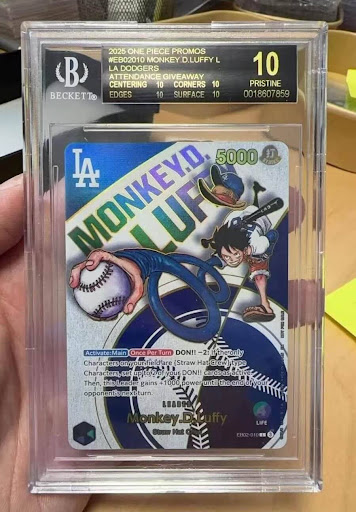
Fig 4: One Piece x Dodgers - courtesy of The NY Times
Protect Your Collection
A card's condition is a huge part of its value, and One Piece cards are fragile — corners ding and surfaces scratch easily. Basic protection is cheap and non-negotiable:
- Penny sleeves for everything you want to keep, and toploaders or one-touch holders for your better cards.
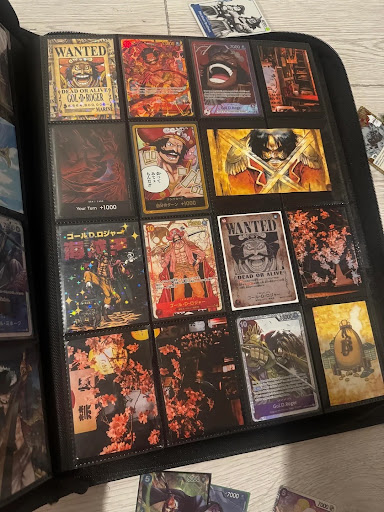
- A binder with side-loading pages for building sets and showing off your collection.
- Cool, dry, out-of-sunlight storage — heat and humidity warp cards and fade ink.
For genuinely valuable cards, consider professional grading from a service like PSA, CGC, or BGS. Grading authenticates the card and locks in a condition score, and for high-end pieces, the difference between a near-mint and a perfect grade can be thousands of dollars. It costs money and takes time, though, so it's for your chase cards — not your commons.
Fig 5: One Piece cards protected in a binder - courtesy of Reddit
Don't Get Ripped Off! Spotting Fake Cards
As the game has grown, so have the counterfeits — and the fakes get better every year. High-value cards are the most faked, so learn the tells before you buy any expensive single. Five quick checks:
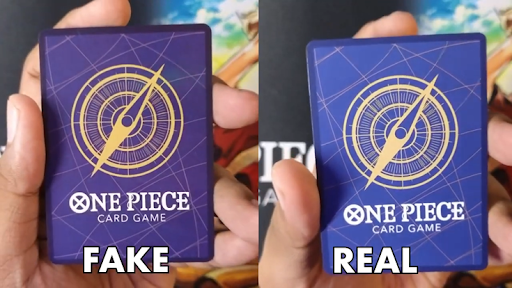
- The back. Many counterfeits show a slight purple or off-color tint on the card back. Genuine backs have clean, correct color balance.
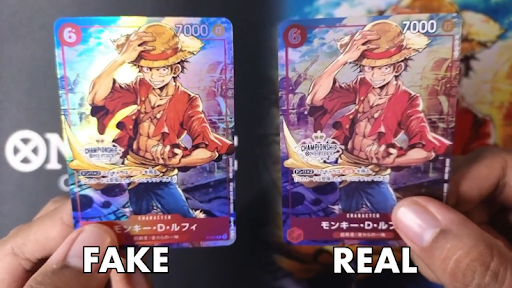
- Texture. Real SR, SEC, and alternate-art cards have a subtle embossed, textured finish. If a "rare" card feels completely smooth, be suspicious.
- Print quality. Authentic cards are razor-sharp; fakes often have fuzzy or slightly pixelated small text.
- Foil and shine. Look for a uniform, correct holo pattern — fakes tend to have off-shimmer or wrong layer separation.
- The light test. Genuine cards use layered cardstock that lets very little light through; a card that's too translucent may be fake.
The single most reliable method is to compare a suspect card side by side with a card you know is genuine from the same set and rarity. And the best defense of all is simply where you buy: stick to reputable, established sellers and official retailers, buy sealed product from sources you trust, check seller feedback before purchasing, and treat any deal that seems too good to be true as exactly that.
Fig 6: How to spot fake One Piece cards - courtesy Chobonov Games
Beyond the Cards
The card game is the hottest corner of One Piece collecting right now, but it's far from the only one. If you love the series, the wider collectible world is deep:
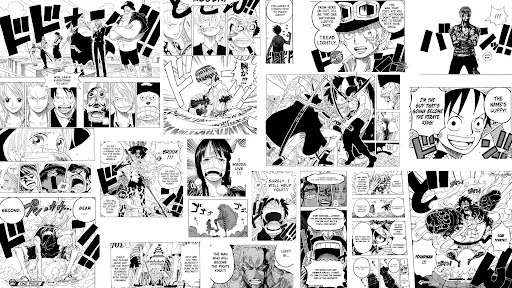
- Manga. Eiichiro Oda's original series has run in Weekly Shonen Jump since 1997 across 100-plus volumes and is the best-selling manga of all time. First printings, early English volumes, and special editions are collectible in their own right.
- Figures. One Piece has one of the richest figure ecosystems in anime, from Megahouse's high-end Portrait of Pirates (P.O.P) line and Bandai's Figuarts Zero to affordable Banpresto prize figures and Ichiban Kuji lottery exclusives.
- Everything else. Statues, Funko Pops, art books, posters, and video-game memorabilia round out a franchise that has touched nearly every category of merch imaginable.
The same fundamentals apply everywhere: condition, authenticity, and buying from trusted sources.
Fig 7: One Piece manga collage - kid1412
Want to start collecting graded One Piece?
Rip one of our One Piece Repackz: don't like the pull, sell it back for 90% of its fair market value, like the card, get it shipped to your home!
Final Thoughts
There's never been a better time to start collecting One Piece. The card game is booming, new sets arrive constantly, and there's a version of this hobby for every budget — from a single starter deck to a six-figure grail. The keys are the same as with any great collection: understand what you're buying, start small and deliberate, protect what you own, and always buy from sources you trust.
Wherever your collection goes, Collectibles.com is built to help you keep it organized — scan, catalog, value, and showcase every card and collectible in one place, and track what the market is really doing, alongside a community that shares the obsession.
Download our iOS App
Download our Android App
Frequently Asked One Piece Questions
Is the One Piece Card Game good for beginners?
Yes. Starter Decks make it easy to learn; the artwork and characters are a huge draw, and you can collect casually for very little money. Just start small and buy from reputable sellers.
What should I buy first as a One Piece collector?
One Starter Deck plus one Booster Box from a recent set is the ideal combination — the deck teaches the rules and anchors your collection, and the box gives you a broad mix of cards and a chance at a big pull.
Are Japanese or English One Piece cards worth more?
They share the same art and game system, so the quality is identical. Japanese printings can carry a collector's premium (especially for grails), while English is more convenient for casual play, but recent sets are now released worldwide at the same time.
How much is my One Piece card worth?
Most cards are worth under a dollar. Real value sits in manga rares, alternate arts, SP cards, and tournament promos — and it depends heavily on the exact printing and condition, so check recent sales for that specific version before buying or selling.
How do I avoid fake One Piece cards?
Check the back color, texture, print sharpness, and foil pattern, compare against a known-genuine card, and above all, buy from trusted, established sellers rather than too-good-to-be-true marketplace listings.
Disclaimer: All content on Collectibles.com and shared publicly is for educational and informational purposes only and does not constitute investment, financial, tax, or legal advice. Collectibles.com and its partners are not registered investment advisors. Investing in collectibles carries a high risk of loss, including total loss of principal, and is speculative and unsuitable for many investors. Past performance is no guarantee of future results. Always consult qualified professionals before making decisions. No recommendations or solicitations are intended.

