

A copy of Action Comics #1, printed in 1938 for a dime, sold in January 2026 for $15 million. That's the most ever paid for a piece of pop culture memorabilia. The same comic that kids read, trade, and throw away is now the crown jewel of a global comic market worth an estimated $17.7 billion.
Every comic on this list survived because someone cared enough to keep it safe — and in a hobby where condition and provenance can mean the difference between a dime and $15 million, knowing exactly what you own is everything. Whatever you collect, Collectibles.com lets you scan, catalog, value, and showcase your whole collection in one place, and track what the market is really doing. — Collectibles.com
That arc didn't happen overnight. It took wars, government hearings, speculative manias, crashes, and a pandemic. Each crisis reshaped the hobby. Each one made the survivors more precious.
This guide covers everything: where comic book collecting came from, how the market works today, and what you need to know — whether you're just getting started or returning after a break.
Contents
-History of comic book collecting
-The 1990s crash that nearly ended the hobby
-How CGC grading changed comic collecting
-Comic book market value in 2026
-Comic conventions, shops, and community
-The future of comic book collecting
1. History of Comic Book Collecting
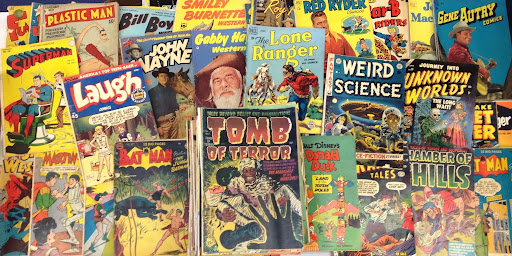
The modern comic book started as a promotional gimmick. In 1933, M.C. Gaines produced Funnies on Parade, a small booklet reprinting newspaper strips for Procter & Gamble. Its follow-up, Famous Funnies #1, hit newsstands in 1934 at 68 pages for a dime. It sold 90% of a 200,000-copy run and was clearing $30,000 a month in profit by issue twelve.
On April 18, 1938, DC Comics published Action Comics #1. Jerry Siegel and Joe Shuster were paid $130 total — $10 per page — for Superman's debut. The 200,000-print run sold out. Superman didn't just succeed. He invented the superhero genre.
Batman followed in Detective Comics #27 (May 1939). Marvel's predecessor debuted that October with Marvel Comics #1. Captain America Comics #1 arrived in March 1941, moving nearly a million copies per issue. Nobody was collecting any of it. These were read, swapped, and thrown away.
The industry sold nearly a billion comics annually in the 1940s, yet almost none survived. World War II paper drives destroyed untold millions. Of Action Comics #1's original 200,000 copies, fewer than 100 exist today. That scarcity wasn't engineered. It was accidental — and it's the entire reason Golden Age comics are worth what they are today.
The 1954 Comics Code crisis
Psychiatrist Fredric Wertham published Seduction of the Innocent in April 1954, arguing comics caused juvenile delinquency. Senate hearings followed. Publishers formed the Comics Code Authority that October, a self-censorship body banning horror and excessive violence. Comic titles dropped from roughly 650 to 250. Public book burnings happened. The stigma accelerated the destruction of older issues and made collecting socially unacceptable for years.
The Silver Age (1956–1970): comics find their collectors
Showcase #4 (October 1956) reimagined the Flash and kicked off the Silver Age. Stan Lee and Jack Kirby created the Fantastic Four (1961), then Spider-Man in Amazing Fantasy #15 (1962), the X-Men, the Avengers, Iron Man — the entire foundation of what became the MCU — all within a few years.
Fandom organized fast. The first comic book convention took place in Manhattan in July 1964, organized by a 16-year-old named Bernie Bubnis. About 100 people showed up.
The Overstreet Price Guide and the direct market
Two things turned comic collecting from a hobby into a market. Phil Seuling created the direct market in 1972–73, convincing DC and Marvel to ship directly to specialty shops. Comic shop numbers grew from roughly 30 in the early 1970s to over 1,500 by 1980.
In November 1970, Robert Overstreet published the first Overstreet Comic Book Price Guide — 218 pages, roughly 1,000 copies, $5 cover price. It listed Action Comics #1 at $300 in top condition and standardized grading language across the hobby. Now in its 55th edition, collectors still call it "the Bible."
2. The 1990s Crash That Nearly Ended Comic Collecting
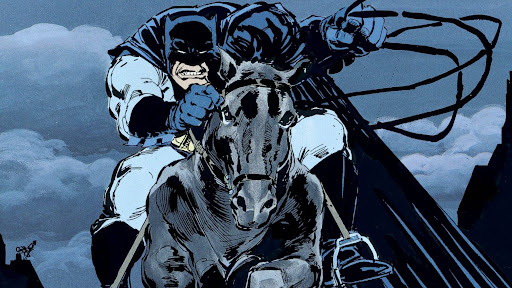
The 1980s made comics culturally legitimate. Frank Miller's Batman: The Dark Knight Returns (1986) and Alan Moore's Watchmen (1986–87) earned features in Rolling Stone and Time. When Action Comics #1 sold at Sotheby's in 1992 for $82,500, mainstream coverage convinced a generation that comics were investments.
What followed nearly killed the industry.
Todd McFarlane's Spider-Man #1 (1990) sold 2.5 million copies. Jim Lee's X-Men #1 (1991) hit 8,186,500 — a Guinness-certified record. Publishers pushed hologram covers, chromium foil, die-cuts, and polybagged variants to manufacture scarcity. The Death of Superman (Superman #75, 1993) cleared $30 million on its first day.
Then Superman came back five months later. The logic collapsed.
Golden Age comics were valuable because they were destroyed. Nobody saved them. The 1990s books that millions of people hoarded in polybags were printed by the millions and carefully preserved by everyone. When speculators realized their "investments" would never appreciate, they left.
The numbers tell the story. Roughly 10,000 comic shops at the peak. About two-thirds closed by 1997. Marvel filed for Chapter 11 bankruptcy on December 27, 1996. Publisher sales dropped 70% from peak to trough.
Today, a CGC 9.8 of X-Men #1 (1991) — that 8-million-copy record-breaker — sells for roughly $70. Keep that number somewhere visible.
3. How CGC Grading Changed Comic Book Collecting
Recovery required trust. Trust arrived in a plastic case.
The Certified Guaranty Company (CGC) launched in early 2000 in Sarasota, Florida. Multiple expert graders examine each comic, assign a numerical grade from 0.5 (Poor) to 10.0 (Gem Mint), then seal it in a tamper-evident hard plastic holder. The hobby calls this "slabbing."
Before CGC, grading was entirely subjective. Sellers routinely overstated the condition. Third-party certification created buyer confidence, and combined with eBay's rise as a global marketplace, graded comics became a liquid, tradable asset.
CGC label colors explained
The label color tells you a lot before you even look at the grade.
Blue label — standard grade, no issues
Yellow label — Signature Series, witnessed signature
Green label — qualified grade, minor notation
Purple label — restored comic; this is the "Purple Label of Death." Restoration can slash value by 50–80%
If you're buying a raw comic of any real value, the first question to ask is what color label it's likely to earn.
The CGC Census
The CGC Census is a public database showing how many copies of each issue exist at each grade. It gave collectors precise scarcity data for the first time. When a book shows three copies in 9.8 and nothing higher, you know exactly what you're competing for.
CGC vs. CBCS vs. PGX
CBCS, founded in 2015 by former CGC primary grader Steve Borock, is a respected alternative with a loyal following. PGX exists as a third option but carries significantly less market trust. A 2024 scandal involving fraudulent reholder submissions briefly shook CGC's standing, but the company implemented reforms and maintained its dominance. By 2026, CGC had graded over 20 million collectibles.
CGC and the MCU price surge
The MCU amplified everything. Iron Man (2008) transformed Tales of Suspense #39 from a mid-tier book into a blue-chip key that eventually sold for $2 million in CGC 9.8. On February 22, 2010, a CGC 8.0 Action Comics #1 sold via ComicConnect for $1,000,000 — the first seven-figure comic sale in history.
4. Comic Book Market Value in 2026
The COVID-19 pandemic created the most explosive boom in collecting history. People stuck at home turned to collectibles. GoCollect's Silver Age index surged 74% in two and a half years. Bronze Age values gained 137% in 27 months.
The record sales that defined the modern era
January 2021 — Batman #1 (1940), CGC 9.4: $2,220,000 — Heritage Auctions. The pandemic boom announced itself with this sale. Batman #1 in CGC 9.4 is a legitimately rare book; most copies that survived the 1940s did so in well-read condition. Seeing one clear seven figures felt like a signal that the market had shifted permanently. It had.
April 2021 — Action Comics #1 (1938), CGC 8.5: $3,250,000 — ComicConnect. Three months after the Batman sale, the book that started everything crossed $3 million for the first time. A CGC 8.5 is exceptional for a Golden Age book from 1938, with tight staples, bright colors, and minimal wear. The census shows almost nothing above it.
September 2021 — Amazing Fantasy #15 (1962), CGC 9.6: $3,600,000 — Heritage Auctions. Spider-Man's first appearance in a 9.6 is a book collectors had been circling for years. The MCU had been building toward this price for a decade. When it finally sold, $3.6 million felt less like a surprise and more like an inevitability.
April 2022 — Superman #1 (1939), CGC 8.0, Mile High copy: $5,300,000 — Private sale. The Mile High pedigree matters here. Edgar Church's collection is the reason any 1939 Superman #1 exists in high grade at all. A private sale crossing $5 million without an auction room's competitive energy says everything about where serious collectors were putting their money.
April 2024 — Action Comics #1 (1938), CGC 8.5, Kansas City copy: $6,000,000 — Heritage Auctions. The same grade as the 2021 sale, almost exactly three years later, for nearly double the price. That's not a bubble. That's a consistent trend line on one of the scarcest books in the hobby.
November 2025 — Superman #1 (1939), CGC 9.0: $9,120,000 — Heritage Auctions. Nine figures shy of eight — but the highest price ever paid for a comic at the time. The CGC 9.0 grade on a book from 1939 is almost incomprehensible; this newly discovered copy, pulled from a California attic, had survived 86 years in better condition than most books survive a decade.
January 2026 — Action Comics #1 (1938), CGC 9.0, Cage copy: $15,000,000 — Private sale (Metropolis/ComicConnect). The Cage copy has a story that matches its price. Bought by Nicolas Cage in 1996 for $150,000, stolen from his home in 2000, recovered in a California storage locker in 2011, and sold that year for $2,161,000. Fifteen years later — now with provenance that reads like a Hollywood script — the same book sold privately for $15 million. It didn't just break the comic record; it surpassed the highest sports cards ever sold, including the $12.6 million 1952 Mickey Mantle and the roughly $12.9 million Jordan/Kobe Logoman card, to become the most expensive pop culture collectible in history. One of only two CGC 9.0 copies known, and the book that started the superhero genre.
Is the comic book market up or down in 2026?
It depends entirely on what you're buying.
Trophy-grade Golden Age keys keep setting records - Heritage reports values up 300% since 2018 at the high end. That trend line is consistent.
Mid-tier and speculative modern comics are a different story. GoCollect's Copper Age index is down 38.5% from its July 2021 peak. Post-COVID normalization, declining MCU enthusiasm, and the CGC reholder scandal have all weighed on confidence. Plenty of collectors who bought into the pandemic frenzy are sitting on losses.
The periodical market, though, is holding up - Dollar sales in comic shops rose 13.3% in 2024. Distribution changed permanently: Diamond Comic Distributors, the backbone of the market for three decades, filed for Chapter 11 in January 2025, with its assets absorbed and wound down over the year. DC and Marvel had already moved on to Penguin Random House. The infrastructure is different now, but the market is still moving.
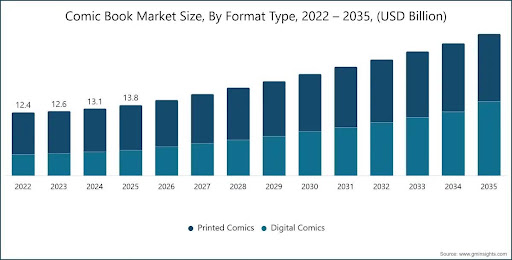
(A note on the big picture: headline "market size" figures vary widely by source — estimates for the global comic market in 2025 range from roughly $13 billion to $20 billion — so treat any single number as a ballpark, not gospel. The more reliable signals are index gains and verified sales, both of which tell the same story: a booming top, a softening middle.)
5. Comic Book Conventions, Shops, and Community
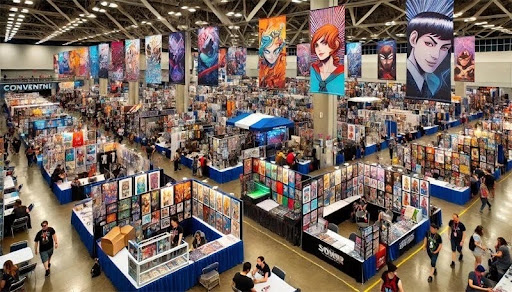
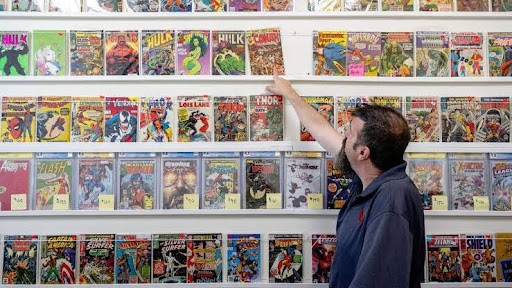
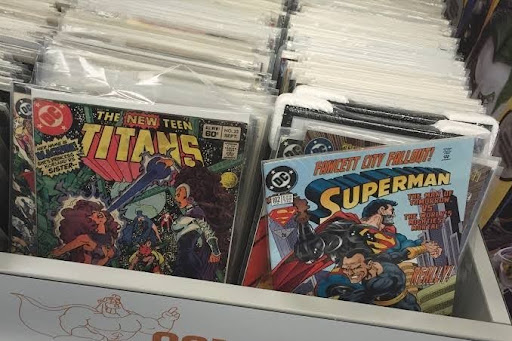
Roughly 2,500 to 3,800 comic shops operate across the United States. New Comic Book Day, on Wednesday, is one of the hobby's most reliable rituals. Pull lists. Long boxes and short boxes. Bags and boards. The physical side of collecting hasn't changed much in 50 years.
Comic conventions in 2026
San Diego Comic-Con, which started with 300 people in a hotel basement in 1970, now draws 130,000+ annually. New York Comic Con tops 250,000. Around 500 smaller shows fill out the calendar. Convention-exclusive variants command immediate premiums, and the variant cover economy — ratio variants (1:25, 1:50, 1:100), store exclusives, and virgin covers — has become a significant market of its own.
Famous collection finds
The Edgar Church / Mile High collection — roughly 18,000–22,000 Golden Age comics stored in a dry Denver basement — was purchased in 1977 for approximately $1,800. Its estimated value today exceeds $100 million.
In 2013, contractor David Gonzalez found a copy of Action Comics #1 inside a wall in Minnesota during a home renovation. An excited relative tore the back cover before it could be graded, dropping the estimated grade from 3.0 to CGC 1.5 — a $75,000 tear. It still sold for $175,000. CGC currently recognizes 61 pedigree collections.
6. The Future of Comic Book Collecting
The hobby has survived worse than what it's facing now. That's worth keeping in mind.
AI and automated grading
CGC and CBCS both face pressure to incorporate machine learning into the grading process. Early experiments with AI-assisted defect detection are already underway in adjacent collectibles markets. For comics, the challenge is that grading involves nuance — the difference between a 9.6 and 9.8 often comes down to subtle spine stress or color vibrancy that experienced human graders still catch better than any current model. That will change. When it does, turnaround times and submission costs should drop significantly, which opens the hobby to a broader collector base.
The risk is grade inflation. If AI lowers the bar for 9.8s, the census data that currently makes scarcity legible becomes harder to trust. That's a conversation the hobby hasn't fully had yet.
Digital comics and physical demand
Digital readership keeps growing, but it hasn't replaced physical collecting — it's expanded the pipeline. Someone who discovers Spider-Man through Marvel Unlimited eventually wants the original Amazing Fantasy #15. Digital is the gateway, not the destination. That pattern has held for over a decade and shows no signs of changing.
The next generation of key issues
The MCU and other media adaptations will keep driving first-appearance demand, but the playbook is getting more complicated. Studios are increasingly adapting obscure characters, which means the spec window between announcement and price spike is getting shorter. Being early requires knowing the source material deeply — which, arguably, favors actual readers over pure investors.
There's also growing collector interest in key issues outside the Big Two. First appearances from Image, Dark Horse, and even some independent publishers are being reassessed as their characters move toward adaptation. Spawn #1 is already a well-known key. Watch what happens when smaller titles get their MCU moment.
Graded comic investment vs. reading copies
The bifurcation between slabbed investment books and reading copies is accelerating. High-grade keys are heading further into asset-class territory — stored, traded, rarely touched. Meanwhile, a separate culture of readers-first collectors is pushing back, arguing the hobby loses something when a 9.8 slab becomes purely a financial instrument.
Both camps are growing. They want different things from the hobby, and the market is starting to serve them separately. That tension isn't going away, but it doesn't have to be destructive. The $15 million Action Comics #1 and a Wednesday pull list can coexist.
What to watch in the next five years
A few things worth tracking. The Absolute Universe and other DC publishing initiatives are actively trying to bring lapsed readers back; if they succeed, Modern Age print runs will look very different from the 1990s bloat. Grading competition between CGC and CBCS should intensify, which is good for collectors on price and turnaround. And the pedigree collection pipeline continues: every year, another long-stored attic find surfaces, reminding the market that undiscovered Golden Age books still exist.
By one industry projection, the hobby could reach $27 billion by 2034 — though, as with all market-size forecasts, estimates vary. That growth will only hold if new collectors keep coming in, and the ones who stay longest are almost always the ones who started by actually reading the books.
The Bottom Line
Comic collecting in 2026 is genuinely split. Record prices at the top. A multi-year correction in the middle. New readers still coming in. Diamond gone. And underneath all of it, the same thing that started this whole market: people who want to hold a piece of cultural history.
Jerry Siegel and Joe Shuster got paid $130 for Superman. That Action Comics #1 was originally a dime. Those facts never stop being worth thinking about — and they're why collectors keep digging through long boxes, chasing keys, and arguing about grades.
Feel the Thrill 24/7: Play Our Comic Book Repackz

Half the magic of comic collecting is the hunt — that jolt of not knowing whether the next book is a common or a key. Our Comic Book Repackz ignites that feeling with curated mystery packs and style reveals, from solid reader copies to genuine chase issues worth $8,000. Every rip brings you closer to a shot at pulling something special.
Want to pull key issues? Play our Comic Book Repackz today!
Use code BLOG20 for 20% off your first rip. HURRY! It expires within 48 hours.
Use My Coupon NOW —>
Collectibles.com was made for comic book collectors to connect with like-minded collectors, organize their collection digitally, track the value, and trade with others right on our app.
Collection unorganized? Click the link below to organize your collection in a few seconds!
Download our iOS App
Download our Android App

Frequently Asked Comic Book Questions
What is the most expensive comic book ever sold?
A CGC 9.0 copy of Action Comics #1 (1938) — once owned by Nicolas Cage — sold in a private sale for $15 million in January 2026, making it both the most valuable comic and the most expensive pop culture collectible ever sold.
What makes a comic book valuable?
Four things: it's a key issue (a first appearance, origin, or major death), its condition/grade, its scarcity in that grade, and its provenance (a documented pedigree or ownership history). A first appearance in high grade with a clean CGC label is the blue chip.
Should I get my comics graded?
Grading makes sense for genuinely valuable or key issues, where a certified grade adds authenticity and can significantly increase value — but it costs money and time, so it's not worth it for common reading copies. If a raw book might earn a high grade on a valuable key, it's usually worth submitting.
Are comic books a good investment in 2026?
The market is sharply split: trophy-grade Golden Age keys keep setting records, while mid-tier and speculative modern books have corrected hard since 2021. This isn't financial advice — and historically, the collectors who do best are the ones who buy what they love to read.
How do I start collecting comics?
Pick an era or character you actually enjoy, learn the key issues, buy the best condition you can afford, protect everything in bags and boards, and buy from reputable sellers. Reading the books is the surest way to know the market — and to stick with the hobby.
Comic Book Collecting Terminology
Key issue — A comic significant for a major first appearance, origin story, or character death. First appearances drive most of the key issues in the market.
Raw vs. slabbed — A raw comic is ungraded. A slabbed comic has been professionally graded and sealed by CGC or CBCS.
CGC grades — Numerical grades run from 0.5 (Poor) to 10.0 (Gem Mint). The grade most modern collectors target is 9.8 (Near Mint/Mint). A 9.9 or 10.0 is rarely awarded.
Pressing — Using controlled humidity and pressure to remove non-color-breaking defects. Widely accepted practice. Not considered restoration.
Restoration — Adding non-original material: color touch, piece fill, staple replacement. Earns a purple CGC label and significantly reduces value.
Newsstand vs. direct edition — Newsstand copies (standard UPC barcode) were sold through grocery stores and newsstands. Direct editions went through comic shops. As newsstand distribution disappeared in the 2000s and 2010s, lower-print-run newsstand copies became increasingly collectible.
The comic book ages — Golden Age: 1938–1956 · Silver Age: 1956–1970 · Bronze Age: 1970–1983 · Copper Age: 1984–1991 · Modern Age: 1992–present.
Spec and flipping — Spec means buying ahead of a movie or TV announcement in anticipation of a price spike. Flipping means selling quickly for profit. MCU casting news can move a first-appearance key within hours. The tension between spec collecting and reading for pleasure is the hobby's oldest argument.
Disclaimer: All content on Collectibles.com and shared publicly is for educational and informational purposes only and does not constitute investment, financial, tax, or legal advice. Collectibles.com and its partners are not registered investment advisors. Investing in collectibles carries a high risk of loss, including total loss of principal, and is speculative and unsuitable for many investors. Past performance is no guarantee of future results. Always consult qualified professionals before making decisions. No recommendations or solicitations are intended.

