

Picture the morning after the apocalypse. The power grid is dark, the banks are gone, and the cash in your wallet is suddenly just paper backed by a government that no longer exists. What becomes money? A theory that keeps resurfacing among collectors has a provocative answer: trading cards. The idea that sports and Pokémon cards could serve as a modern-day currency sounds like a punchline — until you look at how the best of them already behave in the real economy, appreciating like assets, trading like commodities, and backing loans like collateral. The thought experiment is fun. The argument underneath it is serious.
Money is just a shared story about what holds value. Trading cards tell that story unusually well: they're scarce, portable, globally recognized, and — thanks to third-party grading — standardized into units a stranger will accept on sight. You don't have to believe cards will literally replace the dollar to see that the best of them already function like a hard asset. The first step is knowing which cards in your own collection actually carry that kind of value. — Collectibles.com
This is not a claim that a Charizard will replace the dollar. It is a look at why elite trading cards tick so many of the boxes economists use to define money in the first place — and, just as importantly, why the vast majority of cards would be worthless even in a world desperate for a new currency.
What Actually Makes Something "Currency"?
Before crowning any collectible as money, it helps to remember what money has to do. Economists generally agree that a currency needs to be:
- A store of value — it holds, or grows, its purchasing power over time rather than evaporating.
- A medium of exchange — it's liquid enough to be swapped for goods, cash, or other assets quickly and widely.
- Fungible and standardized — one unit is interchangeable with, and comparable to, another, so people can price it without inspecting every example.
- Scarce, durable, and portable — it can't be conjured at will, it survives handling, and you can move it.
- Universally trusted — enough people recognize it and believe in its value that they'll accept it sight unseen.
Hold those five criteria in mind, because the surprising part is how many of them elite sports and Pokémon cards quietly satisfy right now.
Why Sports and Pokémon Cards Already Behave Like Money
Run the best cards through that checklist, and a pattern emerges. The top of the market isn't behaving like a hobby. It's behaving like a hard-asset currency.
A proven store of value
In 2022, YouTuber-turned-boxer Logan Paul acquired a pristine PSA 10 Pikachu Illustrator — the "holy grail" of Pokémon cards — for $5.275 million. In February 2026, he sold it at auction for $16.5 million, making it the most expensive trading card ever sold and roughly tripling his money in under four years. That is not a lottery ticket; it is an appreciating store of value behaving the way gold or blue-chip art does.
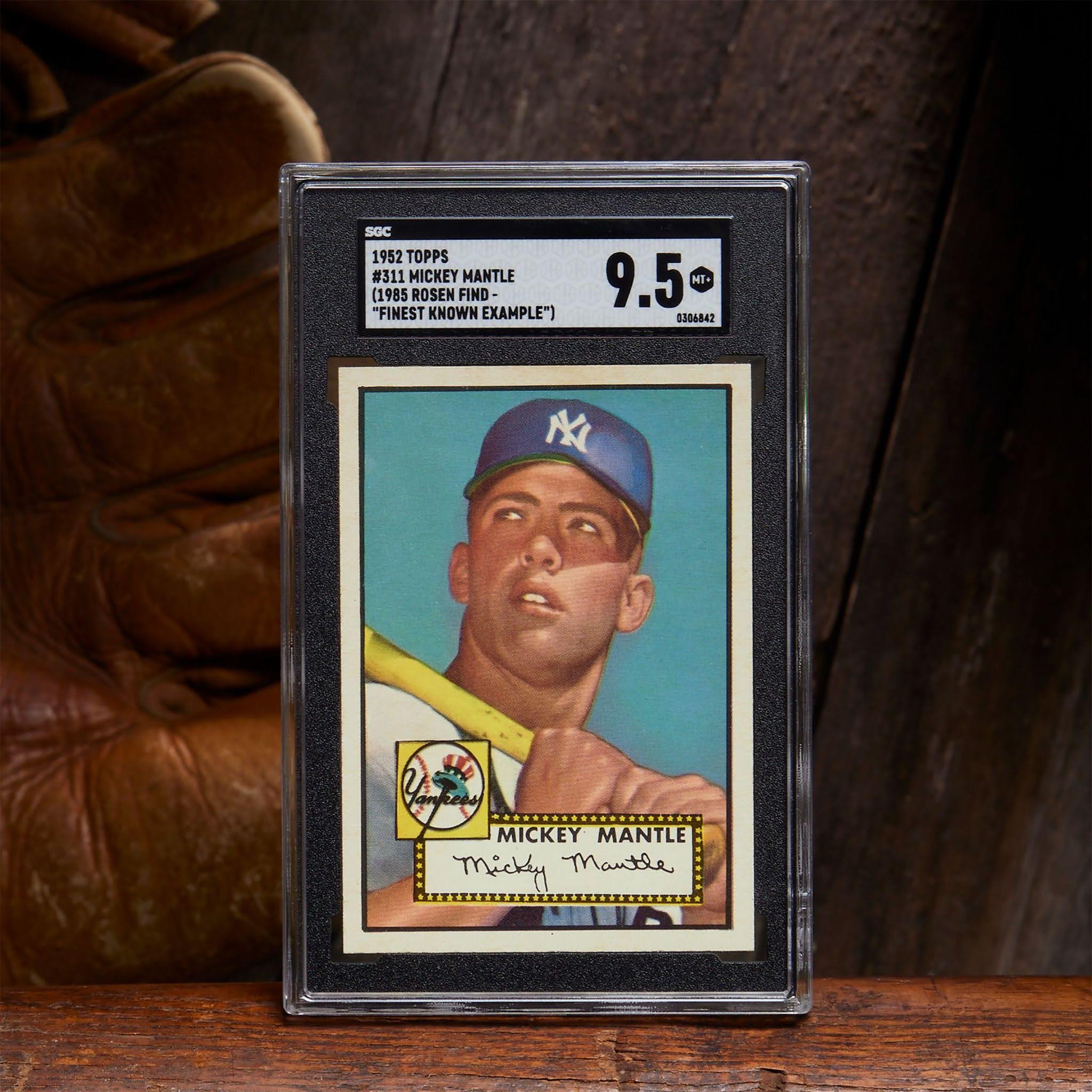
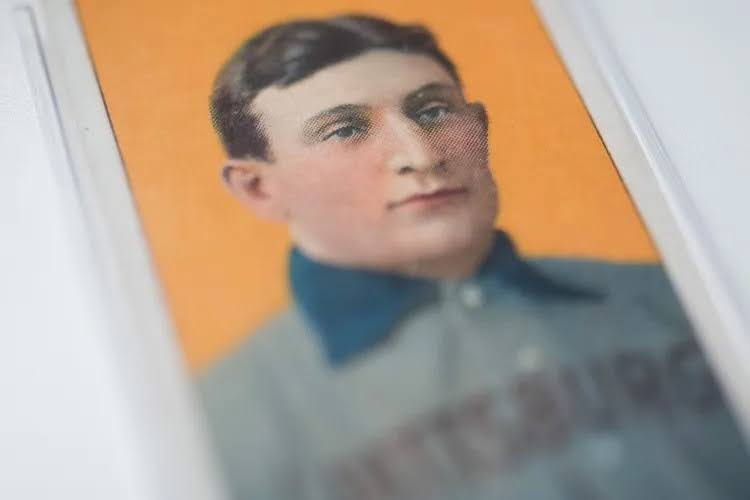
Sports cards tell the same story at the top. A 1952 Topps Mickey Mantle sold for $12.6 million at Heritage Auctions in August 2022, and a T206 Honus Wagner changed hands for $7.25 million at Goldin that same year. The best cards don't just hold value across generations — they compound it.
Fig.1: The world's most expensive baseball card - image courtesy of CNN
Sealed product: Pokémon's bullion reserve
If single cards are the hobby's blue-chip stocks, sealed product is its bullion. An unopened booster box or pack is the purest form of the bet: as long as the shrink wrap stays on, every card inside remains a potential Gem Mint 1st Edition Charizard, and the box holds the full, undiminished promise of what it might contain. That is exactly why serious collectors buy certain boxes with no intention of ever opening them.
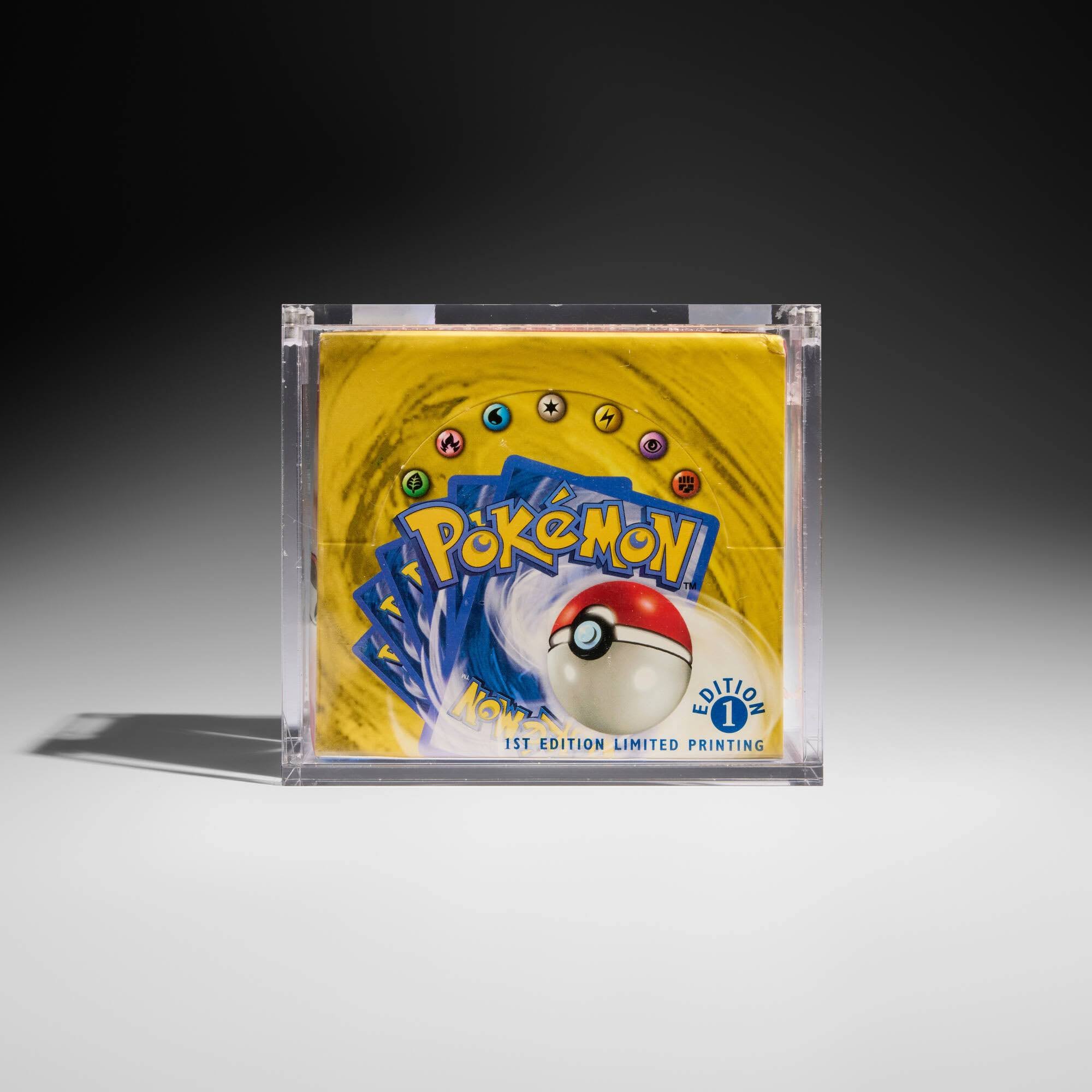
Vintage sealed product is the blue-chip of the category. A factory-sealed 1999 Wizards of the Coast 1st Edition Base Set booster box set set a world auction record of $360,000 at Heritage Auctions in November 2020 — then broke it again at $408,000 just two months later in January 2021, and came back for a third time in September 2026 to shatter it with a $750,000 sale. These boxes don't trade like toys; they trade like reserve assets, held and insured and passed on unopened.
Sealed product behaves like currency for a reason unique to its format: its supply is actively deflationary. Every box someone rips to chase a Charizard is one fewer sealed box in existence, forever. Fixed-and-shrinking supply against rising demand is the textbook engine of a hardening store of value — the same logic that underpins gold and, increasingly, Bitcoin.
But sealed product also carries the category's sharpest warning, and it maps straight onto provenance. In 2021, Logan Paul paid a reported $3.5 million for a sealed case of 1st Edition Base Set boxes — only to discover on a livestream that it had been tampered with and was packed with G.I. Joe cards instead. Even shrink-wrapped, a box is worth only as much as its authentication. That's why specialists lean on third-party sealed-wax verification [services such as BBCE that confirm a box's shrink wrap and case are original and untampered] before six- and seven-figure sums change hands.
Fig.2: World's most expensive Pokemon booster box - image courtesy of Laundry Pop Auctions
Deep liquidity and a 24/7 market
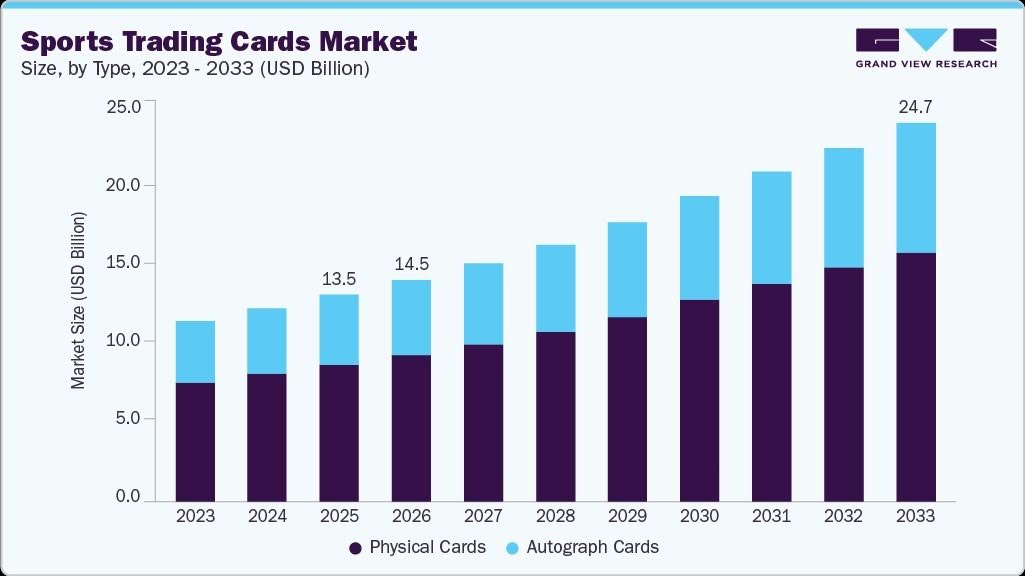
A store of value is only currency-like if you can actually convert it. Cards can. Grand View Research pegged the global sports trading cards market at $13.5 billion in 2025, rising toward $14.5 billion in 2026 and a projected $24.7 billion by 2033 (a 7.9% annual growth rate). Around-the-clock marketplaces — eBay, Goldin, Fanatics Collect — mean a graded card can be listed, sold, and converted to cash in hours, anywhere on earth. That is liquidity that most physical collectibles can only dream of.
Fig.3: Sports card market - image courtesy of Grand View Research
Grading turns cards into denominations
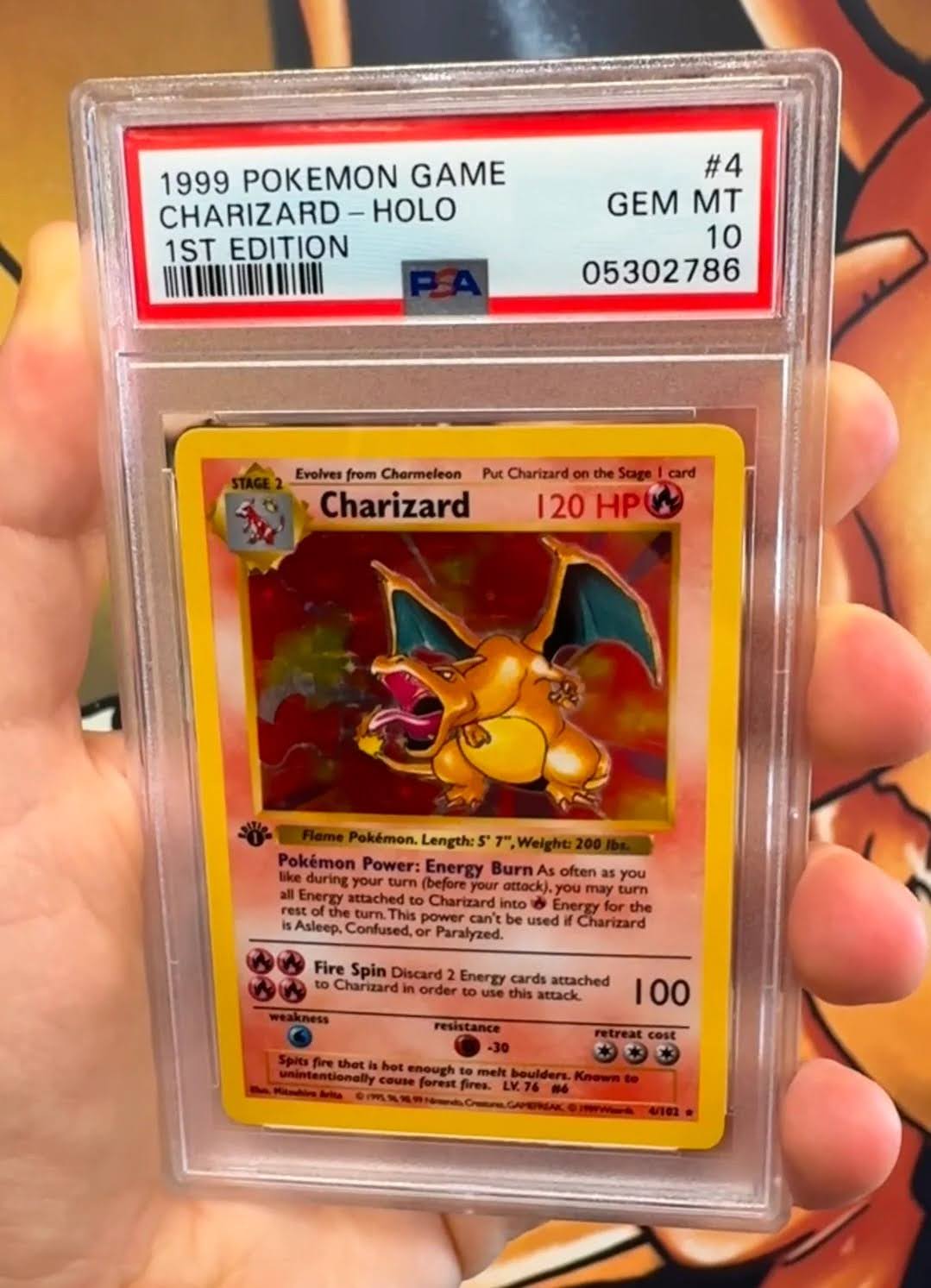
Here is the mechanism that makes the whole thing work. Third-party grading services — PSA, SGC, and CGC — assign a standardized numeric grade to a card's condition [the 1–10 scale that fixes a card's state in an independent, universally accepted way]. A PSA 10 is a PSA 10 whether it's in Tokyo or Toronto. That standardization is exactly what denominations do for cash: it lets a buyer trust a card's value without physically inspecting it, which is the difference between a curiosity and a tradeable unit. Grading is the Collector's Lens principle of condition, formalized into something a market can price instantly.
Fig.4: PSA Graded 1st Edition Charizard
Scarcity you can't print
Fiat currency has a fatal flaw as a store of value: a central bank can print more of it. The best cards can't be reprinted. There will never be another original-run 1952 Mantle or a T206 Honus Wagner, and the surviving population of high-grade vintage and low-population modern cards is fixed and shrinking. That built-in rarity — the second pillar of the Collector's Lens — is precisely the quality that makes gold, and arguably Bitcoin, function as money. A finite supply against permanent demand is the engine of value.
Fig.5: 115-year-old T206 Honus Wagner - image courtesy of People Magazine
Universal recognition and trust
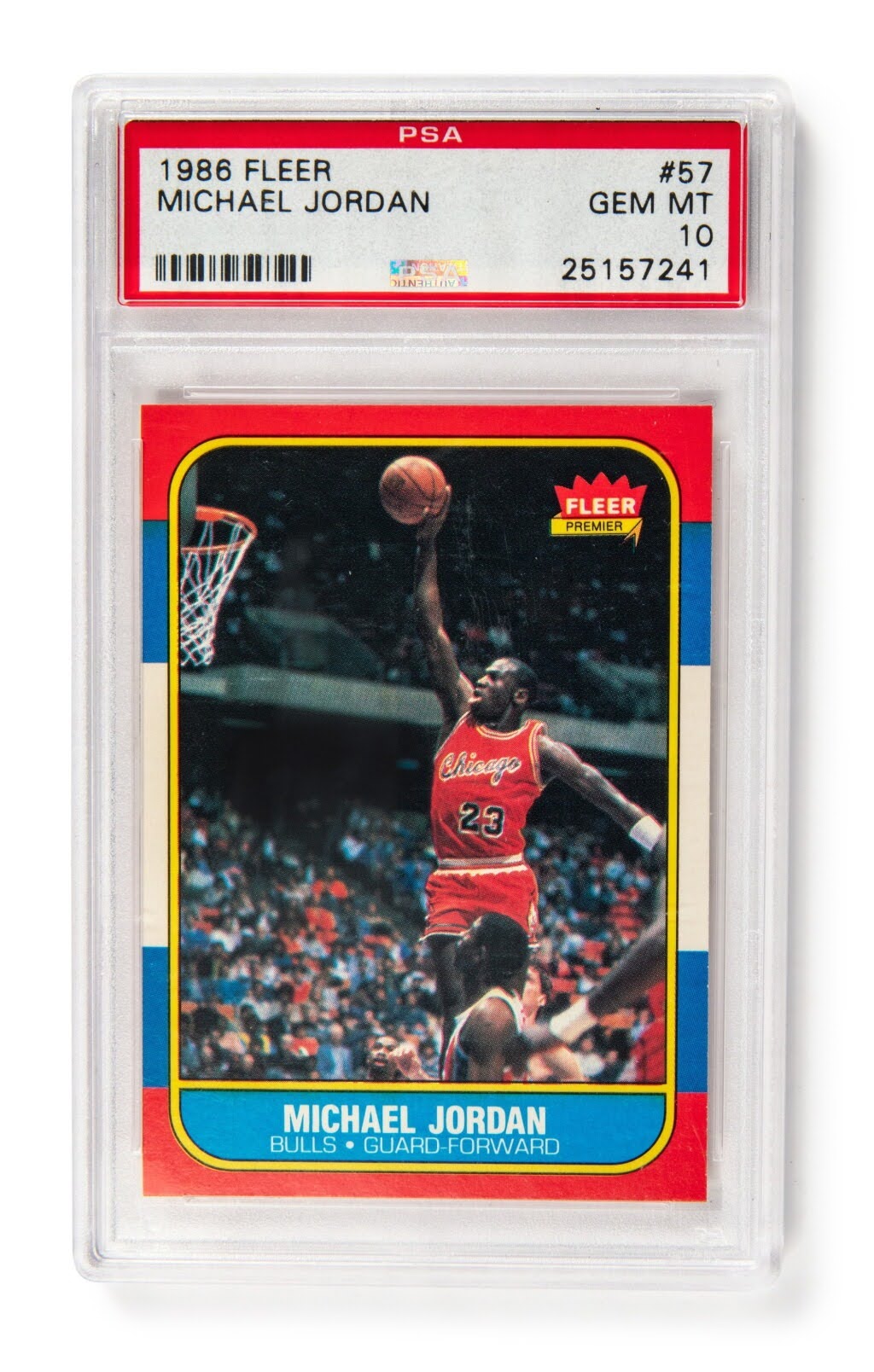
Currency depends on a shared story, and few objects are recognized across as many borders and generations as a holographic Charizard or a Michael Jordan rookie. Pokémon is one of the highest-grossing entertainment franchises in history; the biggest names in sports are global brands. That universal recognition — underpinned by provenance and authentication, the third pillar of the Collector's Lens — is the trust layer that lets a card cross cultures the way money has to.
Fig.6: 1989 FLEER Michael Jordan Rookie Card - image courtesy of Sotheby's
Collateral and credit
The clearest sign that the financial world already treats cards as real assets: you can borrow against them. In 2022, the marketplace PWCC secured a $175 million credit facility from WhiteHawk Capital to expand a lending program that lets collectors take loans against their cards. When a bank accepts an asset as collateral, that asset has crossed from hobby into finance. Cards now sit on balance sheets.
The Catch: Why Most Cards Would Still Be Worthless
Here is where the apocalypse fantasy meets reality — and where honest collectors part ways with the hype. Not all cards are money. Most are the opposite.
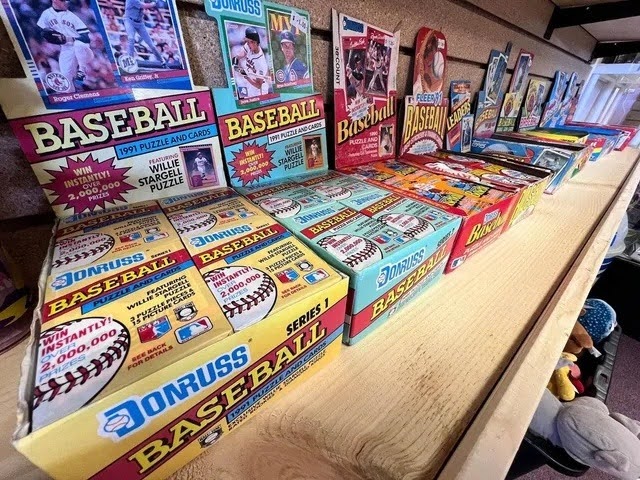
The modern market is drowning in supply. One analysis of Fanatics and Topps' flagship 2025–26 basketball releases counted more than 429 million cards, with over 1.26 million copies of some individual base cards. That echoes the infamous "junk wax era" of the late 1980s and early 1990s, when manufacturers printed billions of cards, convinced a generation they were investments, and watched values stay depressed for decades. A base card from a mass print run isn't currency. It's wallpaper.
So the thought experiment needs a correction. In a world looking for a new store of value, the cardboard that survives wouldn't be the latest hyped parallel pulled from a retail blaster. It would be the scarce, graded, universally-desired pieces — the exact cards that already behave like money today. Scarcity is doing the work, not the Pokémon logo.
Fig.7: Junk Wax Era sports cards
The Collector's Lens: Which Cards Would Actually Survive
Whether you're stress-testing a collection for the apocalypse or just for a recession, the filter is the same three-part lens serious collectors apply to everything:
- Condition: Graded, high-grade, and ideally sealed or slabbed. An ungraded card is a story; a PSA 10 is a priced, tradeable unit. Condition is the one variable you control after purchase, so protect it.
-Rarity: Low population, vintage, short prints, true rookies, and first-edition holos. Ask not "is this cool?" but "Can more of these ever exist?" If the answer is yes and easily, it isn't currency.
-Provenance: Authenticated, documented, and traceable. In a trust-based market, a clean chain of ownership and legitimate grading are what let a stranger accept your card at full value.
Cards that clear all three behave like a hard asset. Cards that miss even one behave like the paper dollars in the opening scene.
Final Thoughts
The apocalypse framing is a bit of fun, but it lands on a real truth: the best sports and Pokémon cards already do the job money does. They store value across decades, trade with deep liquidity, standardize into gradeable units, resist being reprinted, command global recognition, and back real credit. What separates the cards that behave like currency from the cardboard that doesn't is the same thing it always has been — condition, rarity, and provenance.
You don't need a doomsday to put that to the test. The smartest move with any collection is to know what you're actually holding: which cards are hard assets, which are sentimental, and which are just supply. Collectibles.com is built to do exactly that — scan, identify, value, and track your entire collection in one place, so you can watch your holdings move like the portfolio they've quietly become, alongside a community that knows the difference between a store of value and a stack of wallpaper.
Download our iOS App
Download our Android App

Frequently Asked Questions
Are trading cards really a currency?
Not literally — you can't buy groceries with a Charizard. But the top tier of the market satisfies most of the classic criteria for money: the best cards are a store of value, highly liquid through global marketplaces, standardized by grading, genuinely scarce, universally recognized, and even accepted as loan collateral. In that economic sense, elite cards behave far more like a hard asset than a toy.
What is the most expensive trading card ever sold?
A PSA 10 Pikachu Illustrator Pokémon card sold for $16.5 million at auction in February 2026, previously owned by Logan Paul, who had bought it for $5.275 million in 2022. The most expensive sports card is the 1952 Topps Mickey Mantle that sold for $12.6 million at Heritage Auctions in 2022.
Is a sealed Pokémon product a good store of value?
Historically, vintage sealed product has been one of the hobby's strongest performers — a factory-sealed 1999 1st Edition Base Set booster box set records of $360,000 and then $408,000 across 2020–2021. Its appeal is a deflationary supply: every box opened permanently shrinks the sealed population. The critical caveat is authentication. Sealed boxes are a prime target for tampering and resealing, so third-party sealed-wax verification (such as BBCE) is essential before buying at any high price.
What makes a trading card hold its value?
The Big Three of the Collector's Lens: condition (graded and well-preserved), rarity (low supply that can't be reprinted), and provenance (authenticated and documented). Scarce cards, high-grade, and universally recognized hold value; mass-produced modern base cards generally don't.
Can you really use trading cards as collateral?
Yes. Marketplaces and specialty lenders now offer loans secured against high-value cards — PWCC, for example, secured a $175 million credit facility in 2022 to expand exactly this kind of lending. Treating cards as collateral is one of the clearest signs that the financial world views them as genuine assets.
Would Pokémon cards actually work as currency after an apocalypse?
A handful might — the scarce, iconic, universally-recognized ones. But the overwhelming majority of cards in circulation come from enormous print runs with little resale value, so they'd be worthless even in a currency-starved world. Scarcity, not nostalgia, is what would separate money from wallpaper.
Disclaimer: All content on Collectibles.com and shared publicly is for educational and informational purposes only and does not constitute investment, financial, tax, or legal advice. Collectibles.com and its partners are not registered investment advisors. Investing in collectibles carries a high risk of loss, including total loss of principal, and is speculative and unsuitable for many investors. Past performance is no guarantee of future results. Always consult qualified professionals before making decisions. No recommendations or solicitations are intended.
*Written by Dillan Prince (Collectibles.com CMO)

