

A single basketball card sold for nearly $13 million in 2025. That's the dream at the very top of the hobby — but it's not where anyone starts. Everyone starts the same way: standing in front of a wall of colorful boxes, holding a first pack, wondering what half the words on the label even mean.
A card collection grows fast — one blaster becomes a binder becomes a box of binders — and half the hobby is simply knowing what you actually have. The Collectibles.com app lets you scan your cards, identify them, track what they're worth, and organize everything in one place, so your collection never turns into a mystery pile. — Collectibles.com
If you've ever felt that — blaster? Hobby? refractor? case hit? — This guide is your "start here." We'll walk through everything you need before you open your first pack: how to pick the right box, how to read what's inside it, what actually makes a card valuable, and how to collect smart without getting overwhelmed (or ripped off). Sports cards are in the middle of a massive boom, and there's never been a more fun — or more confusing — time to jump in. Let's fix the confusing part.
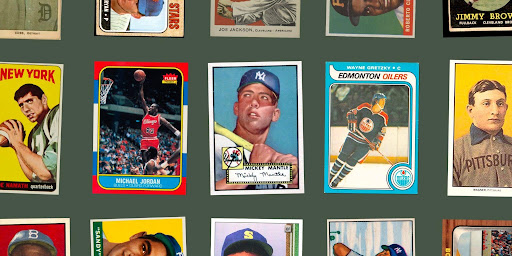
Fig. 1: The most iconic sports cards ever made
Step 1: Before You Buy Anything, Pick Your Lane!
The best thing you can do as a beginner is decide what you're collecting before you spend a dollar. Four quick questions turn an overwhelming wall of boxes into a short list:
- What's your sport? Baseball, basketball, football, hockey, soccer — each has its own flagship products and release calendar.
- Who's your player or team? Collecting a specific player or team gives your collection focus and makes the hunt far more meaningful than buying random packs.
- What's your budget? Pick a number you're comfortable spending. This hobby can escalate fast, so a limit set early saves regret later.
- Fun or hits? Be honest about your goal. Are you here to rip packs and enjoy the moment, or to chase valuable "hits" like autographs and rare parallels? Your answer decides which products make sense.
There are no wrong answers — but knowing yours is the difference between collecting with a plan and just spending.
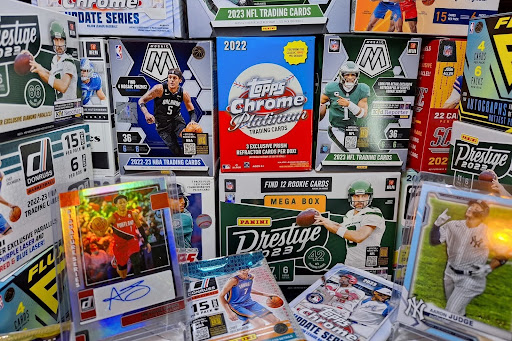
Fig 2: Sports cards for multiple sports
Step 2: Choosing Your Box
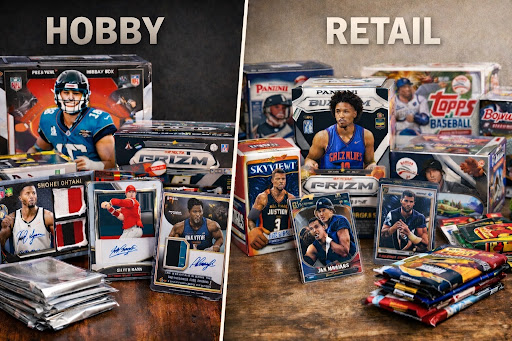
Many usually ask: Hobby or retail boxes? Here's the first thing that trips up newcomers: the same set — same year, same design, same rookies — can cost $15 or $400 depending on a single word on the label. Each format is a deliberately different product with different odds and different ideal buyers. From most affordable to most premium:
Loose packs and hangers (a few dollars up): The cheapest way to sample a new release. Hanger boxes cram the most cards per dollar and often include an exclusive parallel color. Great for kids, gifts, or set-builders who just want this year's cards in hand.
Blaster boxes (around $25): The classic starting point, found at Target and Walmart. Usually six to eight packs with box-exclusive parallels and the best fun-per-dollar ratio in the hobby. Autographs are possible but rare. Best for: total beginners and anyone who just wants to rip for fun. When in doubt, start here.
Mega boxes (around $50): A step up in retail, also at big-box stores. More packs, plus — crucially — format-exclusive content, often chrome versions of the year's top rookies that you can only pull from megas. In a hot rookie year, these sell out fast. Best for: rookie chasers who want more upside without hobby prices.
Hobby boxes (around $100 to $1,000+): The premium tier, sold through card shops rather than big-box retail. More packs, better odds, and hobby-exclusive content you can't get at retail. Many guarantee a "hit" (an autograph or memorabilia card) per box — but not all do. Some flagship hobby boxes only guarantee a set number of inserts or numbered cards, so always check a product's stated guarantee before you buy. Best for: serious collectors chasing the best pulls.
Jumbo boxes (the top hobby tier): The maximum rip experience: fat jumbo packs, the most cards, and multiple guaranteed autograph-or-relic hits per box. The biggest spend, and the deepest stack. Best for: dedicated collectors who want guaranteed hits and the full experience.
A note on the golden rule of ripping: retail boxes are for fun, not profit. On a hot product, you might pull something great, but on average, a blaster returns a fraction of what you paid. If your goal is a specific card, buying the single is almost always cheaper than chasing it in packs. Rip for the thrill; buy singles for the collection.
What your first $100 might look like.
To make this concrete, here's a fun, balanced way to start: spend about $25 on one blaster in your sport to rip for the experience, put $50–$60 toward two or three singles of a player you actually love (bought individually, so you know exactly what you're getting), and spend the last $15–$20 on supplies — penny sleeves, a handful of toploaders, and a binder. You'll get the thrill of a pack, cards you genuinely wanted, and a safe place to keep them all.
Fig 3: Hobby box vs. retail box - image courtesy of bro show collectibles
Step 3: Understanding the Cards
Open a pack, and you'll see a mix of card types. Here's how to read them:
Cardstock: Paper vs. Chrome
- Paper is traditional cardstock — the original trading-card feel and the foundation of most base sets. Classic, matte, and usually the most affordable version of a card.
- Chrome is a premium, shiny, reflective card stock with brighter colors and sharper images. Chrome cards (and their "refractor" parallels) are among the most popular and collectible in the modern hobby — a rookie's Chrome card typically holds more value than its paper counterpart.
What makes a card "special"
- Base cards — the standard cards that make up the set. These are the commons you'll pull most, and most are worth cents.
- Inserts — special cards with a unique theme or design, dropped at set odds. Harder to pull than base cards, and often beautifully designed.
- Numbered cards — cards stamped with a serial number showing exactly how many exist, like "25/99." The lower the print run, the scarcer the card, and usually the more valuable.
- Autographs ("autos") — cards signed by the athlete, either on-card (signed directly) or on a signed sticker applied to the card. A genuine auto of a star is a major hit.
- Relics (memorabilia cards) — cards embedded with a piece of game-used or player-worn memorabilia: a jersey swatch, a bat piece, a patch, and more.
- Case hits — the rarest chase cards in a product, sometimes as scarce as one per case (multiple boxes).
- These are the cards the whole hobby hunts for.
Short prints (SP/SSP) — cards deliberately printed in smaller quantities than the base set, often as a "variation" (say, an alternate photo of the same player). Super-short prints (SSPs) are the scarcest and most sought-after.
Redemptions — sometimes a card (usually an autograph) isn't finished when a product ships, so you'll pull a "redemption" instead: a placeholder card you redeem with the manufacturer to receive the real card later. Don't panic if you get one — just know it can take a while to fulfill.
Rookie Cards: The Heart of the Hobby]
If one term drives the entire sports card market, it's the rookie card (RC) — a player's official first-year card, marked with an "RC" logo (a designation the leagues standardized in the mid-2000s). Rookie cards matter because there's only ever one rookie year: a superstar's RC is the card collectors chase for decades, and it's almost always their most valuable mainstream card.
Two clarifications that trip up beginners:
- An RC isn't just any early card. A card only carries the official "RC" logo once the player qualifies, generally after their Major League debut.
- "1st Bowman" is a different thing. In baseball, a prospect's first card often appears in Bowman years before they reach the majors — that's their "1st Bowman," which is not an official rookie card but is frequently even more chased. So a star can have both a coveted 1st Bowman prospect card and an official RC.
When you hear collectors argue about a player's "true rookie," this is the debate they're having.
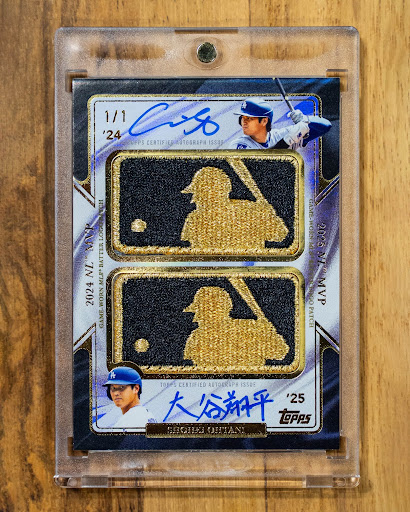
Fig. 4: Shohei Ohtani’s 1/1 Back-to-Back Gold Logoman that sold for $11 million - image courtesy of Topps
Step 4: Parallels and the "Rainbow"
Parallels are where the hobby gets its color — literally. A parallel is the same card as the base version, but with a different color, finish, or pattern, and often a serial number that caps how many exist. The rarer the parallel, the more valuable.
For Chrome products, the classic parallel is the Refractor — a version with a rainbow sheen —, and it comes in a whole spectrum of colors, each with its own print run. Every product has its own rainbow, so the exact colors and numbers change from set to set, but a typical ladder climbs from common to ultra-rare, something like this:
- Base — unnumbered, the most common
- Refractor — a shinier version, often unnumbered
- Colored numbered parallels — for example (in one recent Chrome set) Aqua /199, Green /99, Gold /50, Orange /25, Black /10, Red /5, getting scarcer as the color changes — but remember these colors and print runs vary from product to product
- The 1-of-1s — at the very top sits the SuperFractor, the single most coveted version of a card. Worth knowing: it's not technically the only 1/1 — each card also has four printing plates (cyan, magenta, yellow, black) that are 1-of-1s as well, though the SuperFractor is the crown jewel.
Chasing the full "rainbow" of a favorite player's rookie card — every color, all the way to the SuperFractor — is one of the hobby's most beloved pursuits. One note on brands: "Refractor" is Topps and Bowman terminology; Panini's equivalent shiny parallel line is called Prizm, with its own color rainbow.
Fig 5: A Max Verstappen Topps F1 “Rainbow” set - image courtesy of Grid Cards UK

Step 5: Where to Buy, How to Sell, and How Much to Spend
You have four main options, and most collectors use a mix:
- Big-box retail (Target, Walmart) — the easiest place to grab blasters, megas, and hangers. Convenient, beginner-friendly, and where most people rip their first packs.
- Local card shops (LCS) and hobby stores — the home of hobby boxes, singles, supplies, and expertise. A good shop owner will happily point a beginner to the right product — exactly what the "just ask" culture of card stores is for.
- Online marketplaces (Fanatics Collect, eBay, ALT) — the best place to buy singles of specific cards, compare real sold prices, and find anything you can't get locally.
- Live breaks (on apps like Whatnot) — a newer, social way to buy, where you pay for a "slot" (a team or player) and watch sealed products open live. Fun and fast, but stick to reputable, well-rated sellers.
On budget: decide your monthly number and stick to it. And remember the single most useful habit in the hobby — check sold prices, not asking prices, before you buy anything of value. eBay's "sold" filter is the quickest gut check, and tools like Card Ladder and 130point track real sales history in more detail. A card is worth what people have actually paid, not what a hopeful seller lists it for.
How to Sell
Sooner or later, you'll want to sell or trade — to fund the next pickup or clear out duplicates. Your main options:
- eBay — the biggest marketplace and the best price discovery, but it takes a seller fee (factor roughly low-teens percent, plus shipping, into your asking price).
- COMC and other card marketplaces — good for moving volume without shipping each card individually.
- Facebook groups, Discord, and your local card shop — faster and often fee-free or trade-friendly, though a shop pays wholesale, not full retail.
However you sell, ship cards safely. A cheap card can go in a penny sleeve, and a toploader inside a plain envelope, but anything valuable belongs in a sleeve, toploader, and team bag inside a bubble mailer with tracking. Once a card is worth real money, it's often worth grading before you sell.
Step 6: Protect and Grade Your Cards
Condition is a huge part of a card's value, and cards are fragile — corners ding and surfaces scratch in seconds. Basic protection is cheap and essential:
- Penny sleeves for anything you want to keep, and toploaders or one-touch holders for your better cards.
- A binder with side-loading pages for building sets and showing off your collection.
- Cool, dry, out-of-direct-sunlight storage.
For genuinely valuable cards, consider professional grading from a service like PSA (the largest and most liquid for modern cards), SGC (a favorite for vintage), BGS, or CGC. Graders authenticate the card and assign a condition score from 1 to 10; a gem-mint 10 can be worth many times an ungraded copy. Grading costs money and takes time, though, so it's for your best cards — not your commons.
Graders judge four things: centering (how even the borders are — collectors describe it as a ratio like 60/40), corners (sharp versus soft or dinged), edges (clean versus chipped), and surface (free of scratches, print lines, and scuffs). Before you pay to grade anything, eyeball those four — a well-centered, sharp-cornered card is worth submitting; an off-center or dinged one usually isn't.
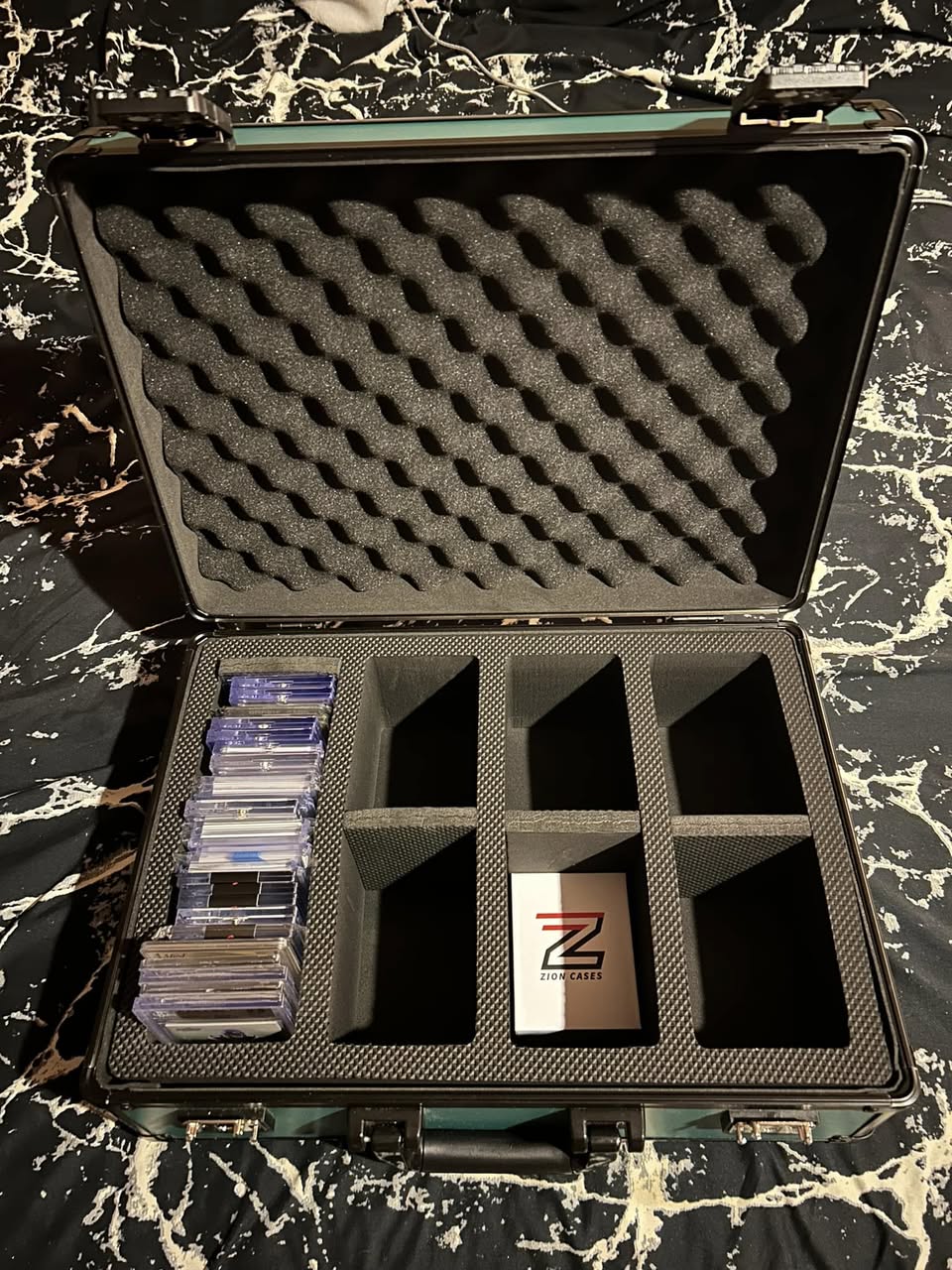
Fig 6: Multiple slab case
Step 7: Beginner Tips and Mistakes to Avoid
- Collect what you love. Trends come and go; a collection built around players and teams you care about is always worth it.
- Most cards are common. The vast majority of what you pull is worth cents. That's normal — the fun is in the hunt, and the occasional big pull.
- Condition is everything. A mint card can be worth many times a worn one, so handle and store it carefully from day one.
- Don't treat packs as investments. The market is booming, but it's volatile, and retail boxes rarely "profit." This isn't financial advice — enjoy the hobby first.
- Beware fakes and reprints, especially on high-value singles and autos. Buy from reputable sellers, and when in doubt, favor professionally graded cards.
- Learn the players and the release calendar. The major products drop on a predictable annual schedule (flagship early in the year, then Chrome, Bowman, and others across the season), and prices often spike at release, then settle. Knowing which rookies matter and when sets drop is the real edge — and it comes free with following the sport.
- Lean on the community. Card shows (including the giant National Sports Collectors Convention), local shops, and hobby forums on Reddit and Discord are the fastest way to learn, get cards valued, and find deals.
A quick note on the modern landscape: Topps (now owned by Fanatics) holds the official licenses for MLB, the NBA, and the NFL, so its Chrome and flagship products dominate the current hobby, while Panini and others produce sets for various sports too. One brand every baseball beginner should know is Bowman (and Bowman Chrome): it's the home of prospect cards, and a player's "1st Bowman" — their very first card, printed years before their official rookie card — is one of the most chased items in the whole hobby. Otherwise, new collectors don't need to memorize the corporate landscape — just know that the brand and license on the box are part of what shapes its cards.
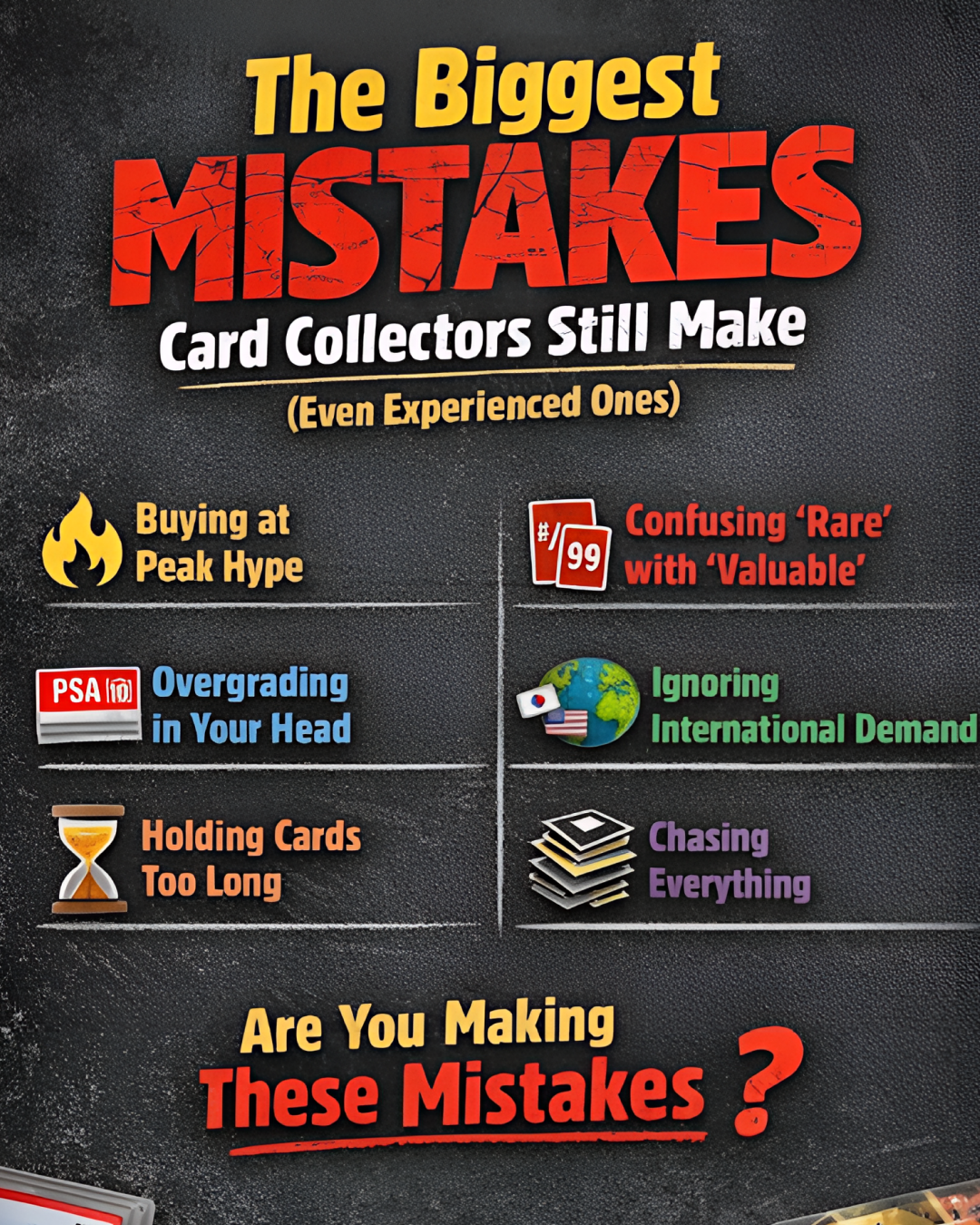
Fig. 7: Common sports card collector mistakes - image courtesy of Urban Empire
Final Thoughts
Sports card collecting looks intimidating from the outside — the products, the parallels, the lingo — but it comes down to something simple: pick what you love, choose a box that fits your budget, and enjoy the rip. Learn the terms as you go, protect your best cards, and check real sold prices before you spend big.
Do that, and you're already smarter than most beginners!
Wherever your collection goes, Collectibles.com is built to grow with it — scan and identify your cards, track what they're worth, and organize everything in one place, alongside a community that shares the thrill of the pull.
Download our iOS App
Download our Android App
Frequently Asked Questions
What's the best sports card box for a beginner?
A blaster box (around $25) is the ideal starting point — affordable, available at any big-box store, and the best fun-per-dollar in the hobby. When in doubt, start with a blaster and step up to mega or hobby boxes as you learn what you enjoy.
What's the difference between a hobby box and a retail box?
Retail boxes (blasters, megas, hangers) are cheaper, sold at stores like Target, and rarely guarantee a "hit." Hobby boxes cost more, are sold through card shops, and usually guarantee autographs or memorabilia cards plus hobby-exclusive content. Same cards, very different odds and price.
What does "numbered" or "/99" mean on a card?
It's the print run — how many copies of that exact card exist? A card stamped "25/99" is the 25th of only 99 made. The lower the number, the scarcer the card, and generally the more valuable.
Should I buy singles or packs?
Both for different reasons. Packs (and boxes) are for the thrill of the chase and the shot at a big hit. Singles are the smart way to get a specific card you want, usually for far less than chasing it in packs.
Do I need to get my cards graded?
Only your best ones. Grading authenticates and scores a card's condition and can multiply the value of a genuinely valuable card — but the fees aren't worth it for common cards.
Disclaimer: All content on Collectibles.com and shared publicly is for educational and informational purposes only and does not constitute investment, financial, tax, or legal advice. Collectibles.com and its partners are not registered investment advisors. Investing in collectibles carries a high risk of loss, including total loss of principal, and is speculative and unsuitable for many investors. Past performance is no guarantee of future results. Always consult qualified professionals before making decisions. No recommendations or solicitations are intended.

