

In June 2026, a single Nintendo cartridge sold for $3 million. Not a car, not a painting — Super Mario Bros., a game that cost about $50 new and once sat in tens of millions of homes. A generation ago, the idea would have sounded absurd. Today it's the clearest sign of something that's been building for years: video games have become serious collectibles, taking their place alongside rare coins, comics, and trading cards as genuine alternative assets.
Video games went from toys to trophies in barely a decade — and most of that value lives in condition and rarity, not the cartridge itself. Whatever you collect, the first move is the same: know exactly what you have and its value. Catalog every game, console, and more in one place, with our collection management app made for serious collectors. — Collectibles.com
So why are video games collectible — and how do we know it's real and not a fad? This post makes the case, then proves it. First, the forces that turned childhood cartridges into coveted collectibles. Then the receipts: the five most expensive video game sales ever recorded, ranked strictly by verified price, with the grade, venue, and story behind each. (Every figure has been checked against the auction houses and the record books — in this market, the numbers move fast, and the record you'll see quoted elsewhere may already be out of date.)
Why Are Video Games Collectible
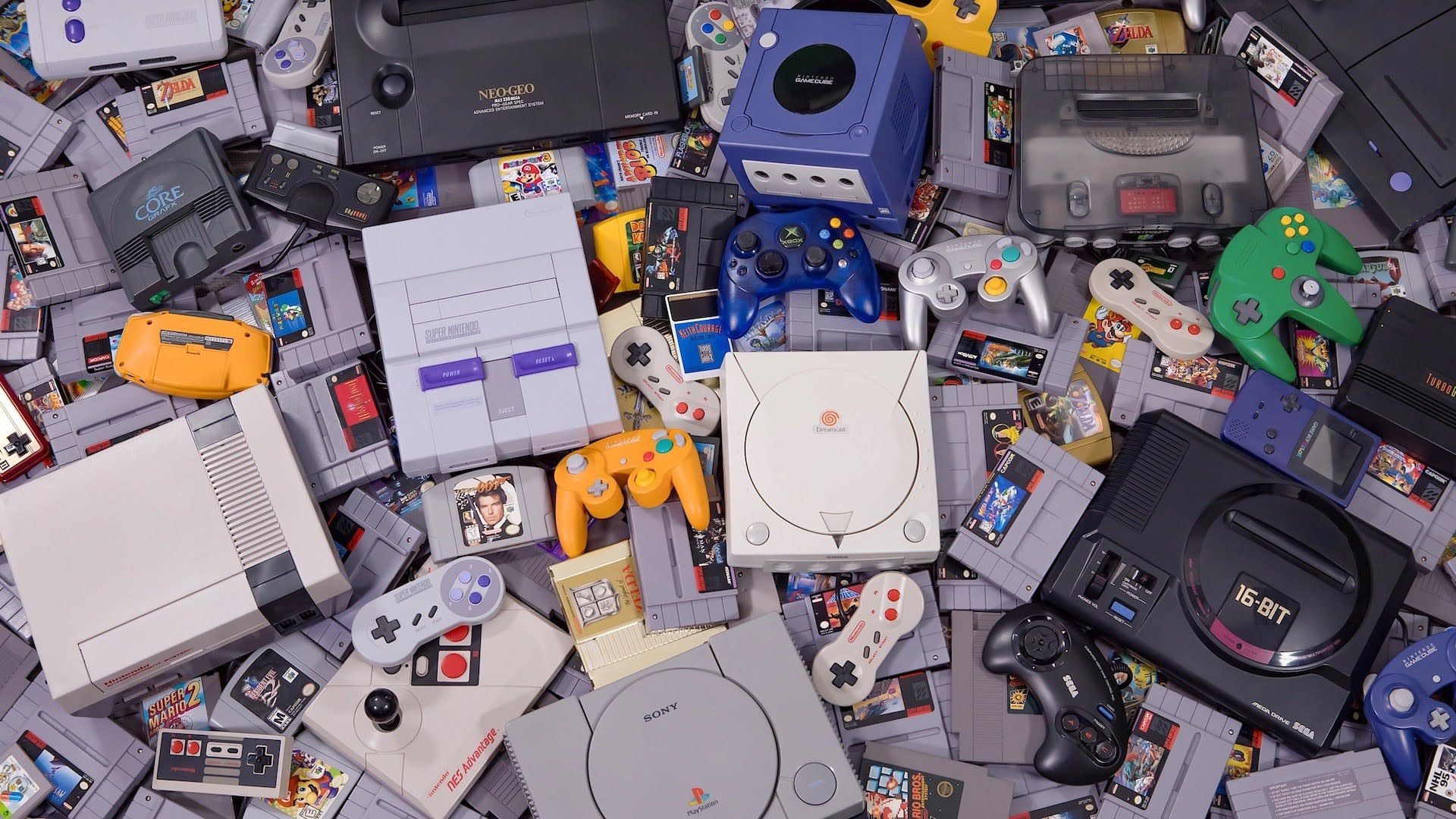
Start with the obvious: nostalgia. The kids who grew up with an NES, a Game Boy, or an N64 controller in hand are now adults with real disposable income, and many of them want to truly own a piece of the childhood that shaped them. But video games aren't just nostalgic keepsakes. Over the last two decades, the medium has come to be recognized as a genuine cultural art form — collected by museums, preserved by archivists, and studied as seriously as film or music. The earliest, most important titles are now treated as historical artifacts. A sealed first-run Super Mario Bros. isn't just an old game; it's a milestone in entertainment history that happens to fit in your hand.
That cultural weight is what gives the hobby its heart, but a handful of practical forces give it a market:
- Sealed, mint copies are genuinely scarce: Games were made to be torn open and played. Boxes torn, shrink-wrap ripped, cardboard hangtabs bent. A high-grade sealed survivor of a 35-to-40-year-old game is far rarer than the millions originally produced would suggest — the same "loved into oblivion" dynamic that makes vintage toys and comics so valuable.
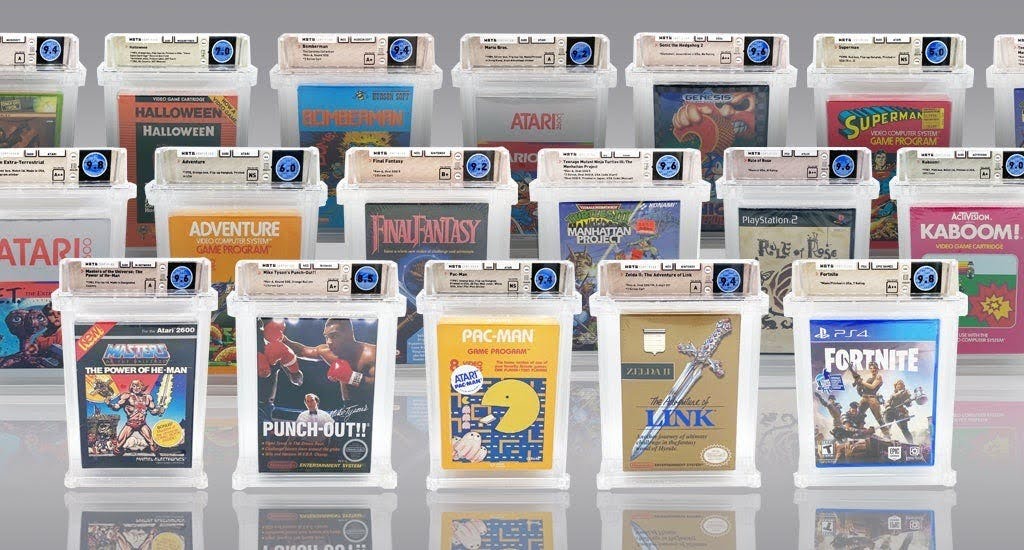
- Grading turned games into assets: Third-party services — Wata (launched 2018), VGA, and CGC —brought a standardized condition language to games, exactly as PSA did for sports cards. A graded, slabbed game became comparable and tradeable, and the tiny gap between a 9.6 and a 9.8 can mean hundreds of thousands of dollars.
- The IP is untouchable: Mario, Zelda, and Pokémon rank among the most valuable entertainment brands on earth, and that brand gravity pulls in buyers far beyond dedicated game collectors.
- Rarity anomalies create grails: Recalls, contest-only cartridges, regional exclusives, and early production variants produce the legendary rarities that define the hobby — and, as you're about to see, set the records.
Put simply, video games are collectible because a nostalgic, well-funded generation is chasing genuinely scarce, professionally graded pieces of a medium the world now takes seriously, just like with Pokémon cards. The clearest evidence for it is what the rarest examples actually sell for — so let's look at the numbers.
The Proof: The 5 Most Expensive Video Game Sales Ever
If you want to know whether video games have truly arrived as collectibles, this is the receipt. These are the five biggest sales on record, ranked strictly by verified price. One honest note before the countdown: this is a Nintendo story, and mostly a Mario one. Four of the five are Mario titles, and two are different sealed copies of the same game, Super Mario Bros. — a sign of how heavily the high end concentrates on the single most important cartridge in gaming history.
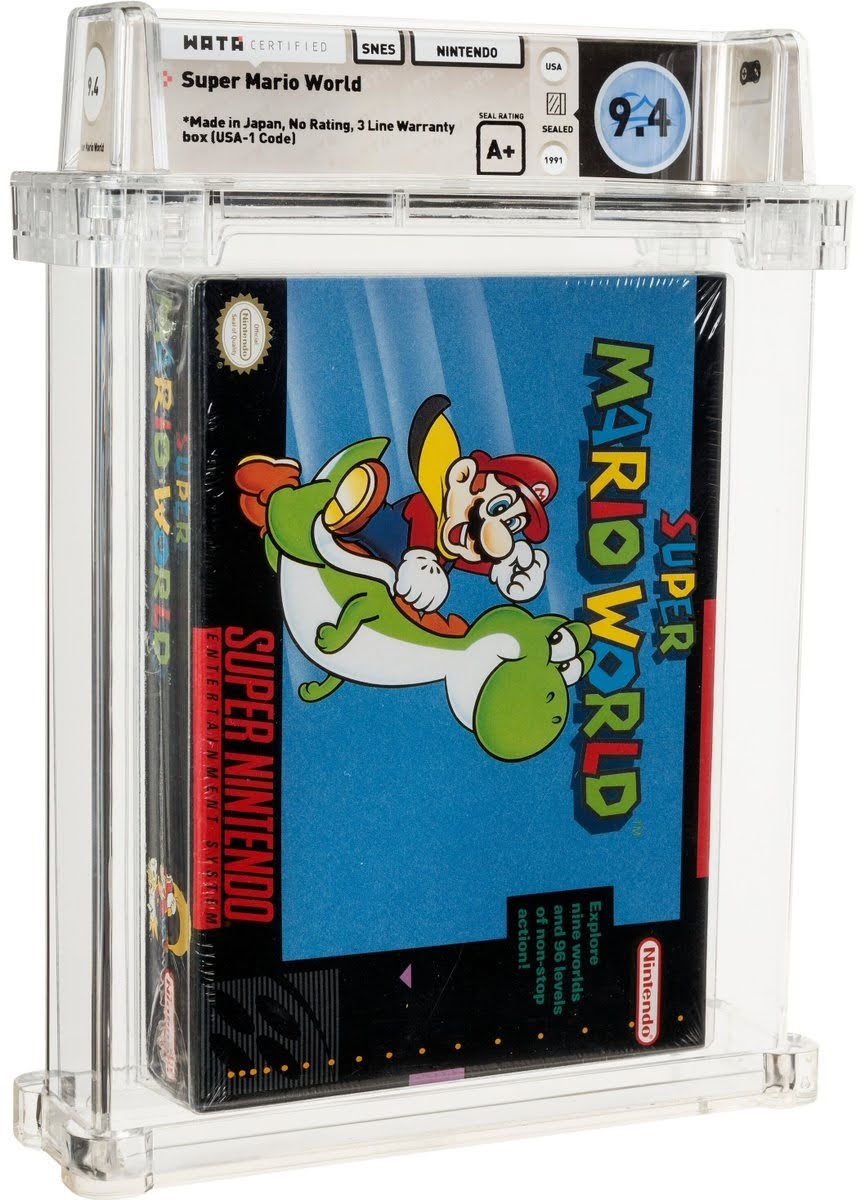
5. Super Mario World (SNES) — $360,000
Sold for: $360,000 · Where: Heritage Auctions · When: April 2021 · Grade: Wata 9.4 A+
The SNES pack-in classic that sold roughly 20 million copies in its day, which makes the price tag all the more striking, because commonness at retail is exactly why pristine sealed copies are so scarce now. This was the finest graded example, a Wata 9.4 A+, and it topped its auction. The value here is almost entirely about condition: the game itself is beloved and abundant, but a sealed copy this clean, decades later, is a genuine rarity.
What Collectors Should Know: Loose Super Mario World carts sell for pocket change, so this price reflects the sealed, top-grade condition rather than the game — a sealed 9.4 A copy sold for far less ($125,000) in a cooler 2024 market.
Image: Super Mario World (SNES, 1991), Wata 9.4 A+ — credit: Heritage Auctions
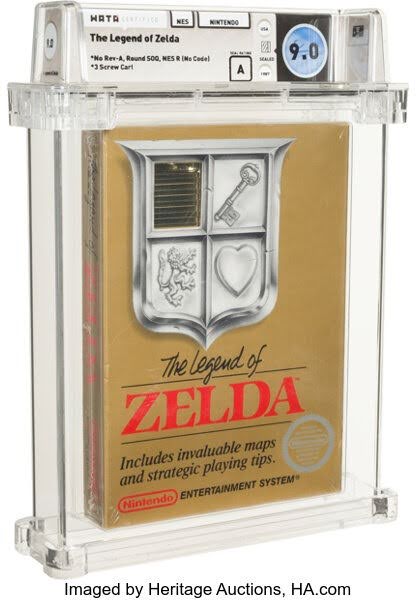
4. The Legend of Zelda (NES) — $870,000
Sold for: $870,000 · Where: Heritage Auctions · When: July 2021 · Grade: Wata 9.0 A
For two days in July 2021, this was the most expensive video game on earth. It's the game that launched one of gaming's most important franchises, and this copy is one of the earliest known produced variants — an "NES TM" early-production print that makes it far rarer than a standard sealed copy. Historical significance plus an ultra-early variant, plus a high grade, is what drove it to $870,000, before it was overtaken just 48 hours later.
What Collectors Should Know: With the original Zelda, the specific early-production variant matters enormously, so a copy's exact printing can separate a five-figure sale from a seven-figure one.
Image: The Legend of Zelda (NES, 1987), Wata 9.0 An early-production variant — credit: Heritage Auctions
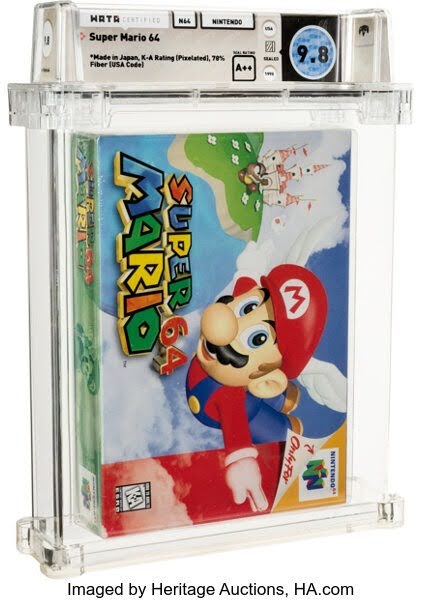
3. Super Mario 64 (N64) — $1.56 Million
Sold for: $1,560,000 · Where: Heritage Auctions · When: July 2021 · Grade: Wata 9.8 A++
The first video game ever to break $1 million at public auction. Super Mario 64 (1996) launched Mario — and console gaming as a whole — into 3D, and it remains the best-selling N64 game. What pushed it past seven figures was the condition at the absolute ceiling: this copy earned Wata's top 9.8 A++ grade, with the auction house noting fewer than five copies existed in comparable shape. Heritage admitted it was "a bit speechless" in describing it.
What Collectors Should Know: Loose copies of Super Mario 64 sell for roughly $30–$40, so essentially all of this price is the sealed, perfect-grade condition, and no 9.8 A++ has surfaced for sale since.
Image: Super Mario 64 (N64, 1996), Wata 9.8 A++ — credit: Heritage Auctions
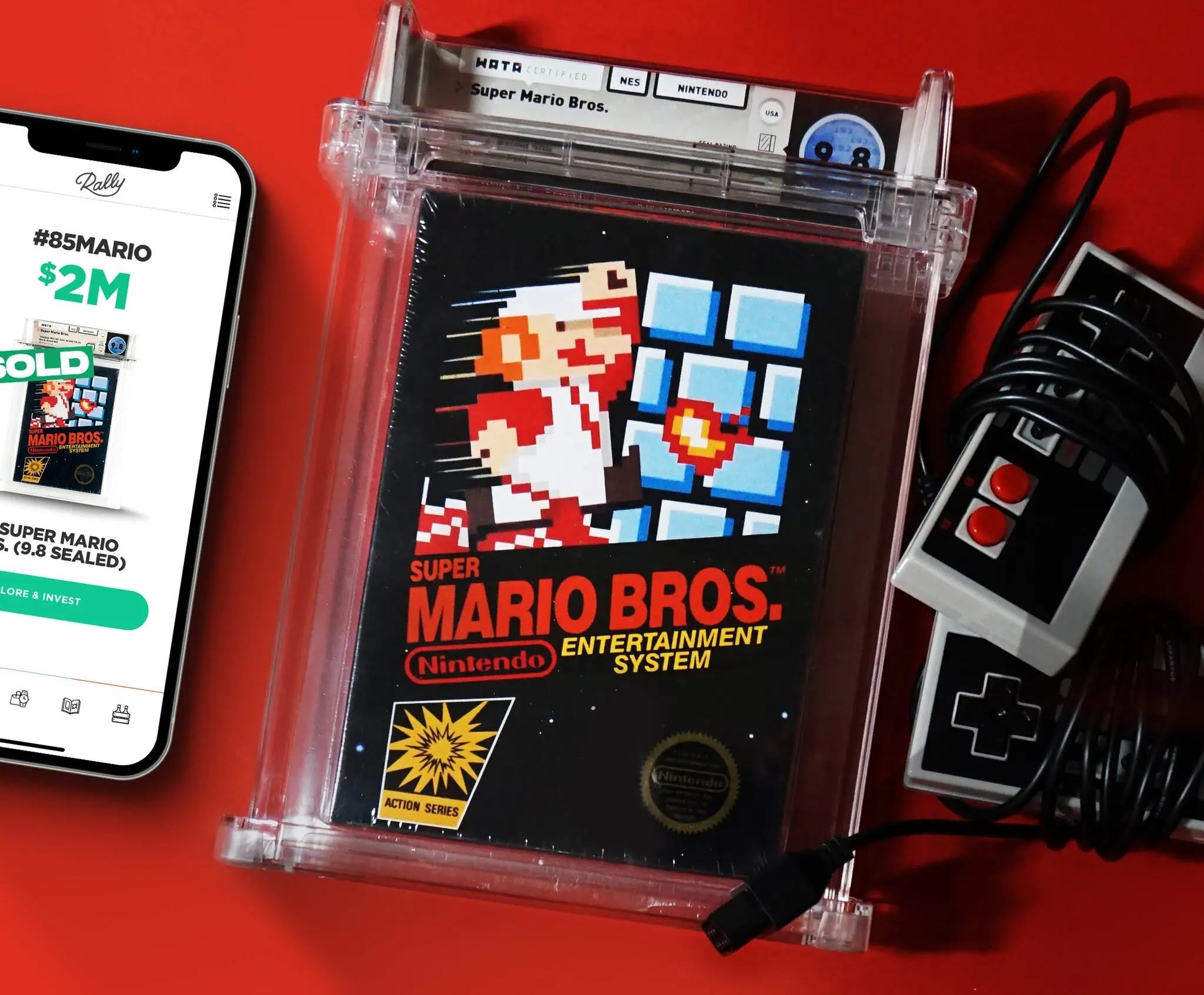
2. Super Mario Bros. (NES) — $2 Million
Sold for: $2,000,000 · Where: private sale (via Rally) · When: August 2021 · Grade: Wata 9.8 A+
A few weeks after Mario 64, this sealed Super Mario Bros. changed hands privately for $2 million — a record that stood for nearly five years. It's a first-production-run copy with the early cardboard "hangtab," a variant produced only briefly in late 1985, with only about 14 known to exist. Rarity did most of the work here, but the sale also became a symbol of the era's speculation: the copy had been bought for $140,000 in 2020 and sold for roughly 14 times that in about 16 months.
What Collectors Should Know: The hangtab and seal variant is what separates a $2 million copy from an ordinary sealed Super Mario Bros., which is why precise variant identification is everything at this level.
Image: Super Mario Bros. (NES, 1985), Wata 9.8 A+ hangtab variant — credit: New York Times
1. Super Mario Bros. (NES) — $3 Million
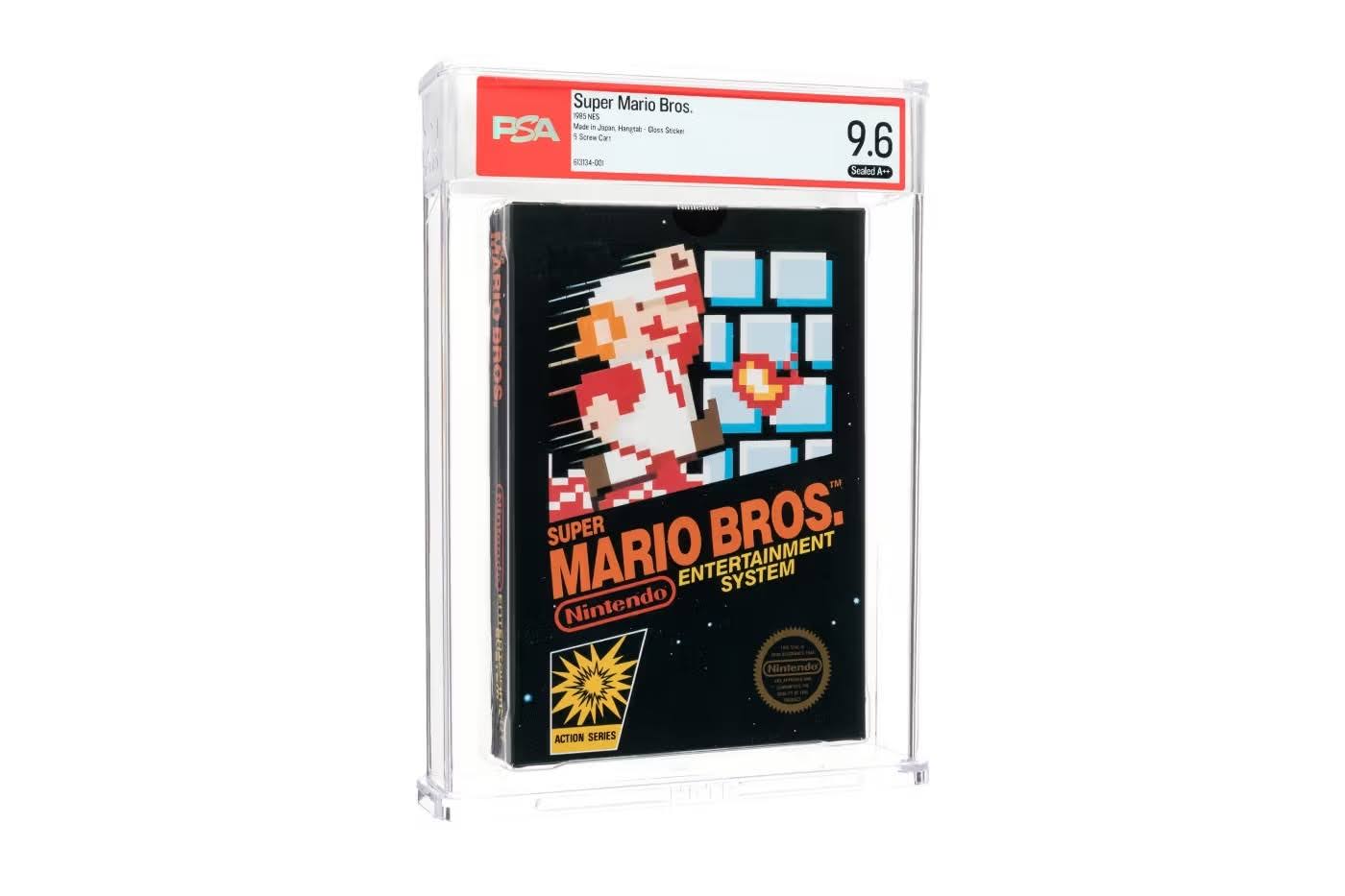
Sold for: $3,000,000 · Where: Heritage Auctions · When: June 2026 · Grade: PSA 9.6 A++
The current record-holder is the first video game ever to reach $3 million. Sold at Heritage in June 2026, it's a second-production-run copy from early 1986, identified by a "gloss" sticker seal that Nintendo used for only a brief window — one of just three known sealed copies of that variant, and the finest of the three. It reportedly wasn't even known to exist until months before the sale, when it was discovered inside a like-new NES Control Deck bundle. The perfect storm of the most iconic title in gaming, an extraordinarily rare early variant, and a top grade is what carried it to a record; Heritage called it "the holy grail of video game collecting."
What Collectors Should Know: Its $3 million result shows the very top of the market still climbing even as ordinary graded games have cooled sharply since 2021 — a split every collector should keep in mind.
Image: Super Mario Bros. (NES, 1986), PSA 9.6 A++ gloss-seal variant — credit: Heritage Auctions
Why Mario Matters So Much to Video Game Collectors
If four of the five biggest sales are Mario, that's not a coincidence — it's the whole story of the hobby in miniature. A few things make Mario the blue chip of video game collecting.
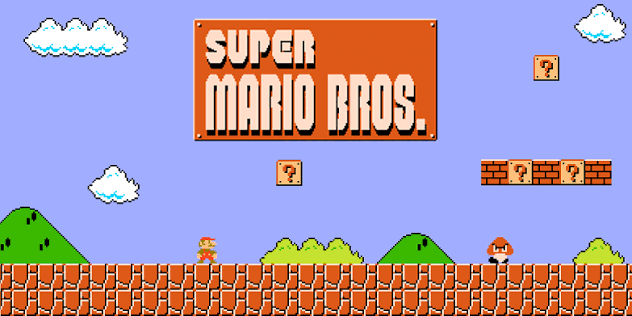
He is the medium's founding artifact. Super Mario Bros. (1985) is widely credited with helping revive the North American video game industry after the catastrophic crash of 1983, and as the NES launch title bundled with the console, it single-handedly reintroduced millions of households to home gaming. For collectors, that makes an early sealed copy the closest thing the medium has to a birth certificate — which is exactly why Heritage called the record-setter "the holy grail of video game collecting," a phrase collectors also reserve for the T206 Honus Wagner in cards.
His games are everywhere, which is precisely why mint copies are so rare. Super Mario Bros. sold more than 40 million copies and was the best-selling video game on earth for nearly three decades. It was in tens of millions of homes — an enormous base of nostalgic buyers today — but that ubiquity is the point: everyone owned a copy, and everyone tore it open and played it to death. The most common game produces the scarcest pristine survivors, and that paradox of massive demand chasing a tiny high-grade supply is the engine behind every record on this list.
He is the face of the entire medium. Mario is the most recognizable character in video games and one of the most recognizable in all of entertainment — a 40-year mascot whose franchise has sold roughly 800 million units, dwarfing even Nintendo's own Legend of Zelda. That universal recognition pulls in buyers far beyond dedicated game collectors, the same way a Babe Ruth or Mickey Mantle card draws in even casual bidders. Brand gravity widens the pool, and a wider pool drives higher prices.
And he defined every era, not just one. Super Mario Bros. established 2D platforming. Super Mario World anchored the SNES, and Super Mario 64 launched 3D gaming and became the first video game ever to break $1 million at auction. Collectors can chase a landmark "first" from every console generation — all under a single character. That continuity is why Mario doesn't just appear on this list; he sets the benchmark that the entire market measures itself against.
The Grading Boom — and the Backlash
The video game market didn't drift upward; it detonated. The first game to crack six figures did so in 2019, when a sealed Super Mario Bros. sold for about $100,000 — up from a $30,000 ceiling just two years earlier. Then 2021 went vertical: $660,000, then $870,000, then $1.56 million, then $2 million, all within months. Grading infrastructure, pandemic-era collecting, and wall-to-wall media coverage lit the fuse.
That boom had a controversial side. In August 2021, Australian journalist and YouTuber Karl Jobst published a roughly hour-long investigation alleging that grading company Wata and Heritage Auctions had worked together to inflate the retro-game market — pointing to conflicts of interest, including the fact that a co-founder of Heritage was among the buyers of that first $100,000 Super Mario Bros. A 2022 lawsuit echoed similar market-manipulation claims. Both companies flatly denied any wrongdoing, calling the allegations baseless, and no fraud was ever proven. Wata subsequently began publishing population reports — a step toward transparency — and the run of record-breaking sales went quiet for years.
Then came the correction. After the 2020–2021 peak, most graded games fell hard, with reports of declines anywhere from 20% to 85%. The market that produced $2 million headlines also produced far more sober realities: in early 2026, a sealed Super Mario Bros. sold for around $26,000. Yet the very top tier kept climbing — a sealed NES Legend of Zelda hit $300,000 in May 2025, and June 2026 delivered the $3 million Super Mario Bros. The pattern mirrors vintage sports cards almost exactly: value consolidated around the rarest, highest-grade, most iconic pieces, while common graded copies stayed speculative. High-end game collecting in 2026 is a bigger, more mature, grading-driven hobby — but the headline prices and the everyday reality now live in two very different worlds.
Frequently Asked Video Game Questions
Why are video games collectible?
Three reasons stack up: nostalgia (the generation that grew up gaming now has money to buy its childhood back), cultural significance (games are now recognized as an art form and historical medium), and scarcity (games were made to be played, so sealed, high-grade survivors are genuinely rare). Third-party grading then turned those rare copies into comparable, tradeable assets.
What is the most expensive video game ever sold?
A sealed copy of Super Mario Bros. sold for $3 million at Heritage Auctions in June 2026, graded PSA 9.6 A++. It broke the previous record of $2 million, set by a different sealed copy of the same game in 2021.
Why is Super Mario Bros. worth so much more than other games?
It's the most historically significant home console game ever made, and its earliest sealed copies survive in tiny numbers across a handful of micro-variants. That combination of iconic status and extreme rarity is why it holds the top two spots on this list.
Why are sealed video games worth so much more than loose ones?
Because packaging was disposable, the grading rewards were based on condition. Loose copies of even record-setting games like Super Mario 64 sell for $30–$40; the enormous prices attach to sealed, high-grade copies verified by a service like Wata, VGA, or CGC, which are genuinely rare after several decades.
Are these prices real, or was the market manipulated?
The record sales are documented, but the 2021 boom drew serious scrutiny — a widely viewed investigation and a later lawsuit alleged price manipulation involving a grading company and an auction house. Both denied wrongdoing, and no fraud was proven, but the market cooled sharply afterward, which is worth knowing before treating any game as an investment.
Are video games a good investment?
They carry real risk. The graded-game market dropped dramatically after its 2020–2021 peak, and record prices now concentrate at the very top of the market. This isn't financial advice — the healthiest approach is to collect games you actually love.
Final Thoughts
So, are video games collectible? The record books settle the argument. A medium once dismissed as kids' entertainment now produces seven-figure sales, backed by professional grading, deep collector communities, and genuine cultural significance. The five biggest sales all share one trait: they shouldn't be common anymore. Games built to be torn open and played, surviving decades sealed and pristine in the rarest variants of the most iconic titles ever made — that's what turns a $50 cartridge into a collectible worth millions, and it's why Mario sits at the center of the whole hobby.
The market will keep swinging, as the ride from 2021 to today makes clear. But the fundamentals don't change: condition, rarity, and knowing exactly what you have. Whether you're chasing sealed Nintendo grails or a shelf of well-loved carts from your childhood, Collectibles.com is built to help you scan, organize, value, and showcase all of it in one place — and to track what the market is really doing, alongside a community that shares the obsession.
Download our IOS App
Download our Android App

Disclaimer: All content on Collectibles.com and shared publicly is for educational and informational purposes only and does not constitute investment, financial, tax, or legal advice. Collectibles.com and its partners are not registered investment advisors. Investing in collectibles carries a high risk of loss, including total loss of principal, and is speculative and unsuitable for many investors. Past performance is no guarantee of future results. Always consult qualified professionals before making decisions. No recommendations or solicitations are intended.
Wrrite by Dilan Prince (Collectibles.com Head of Marketing)

