

In 2005, two art dealers spotted a dark, heavily overpainted picture of Christ at a New Orleans estate auction, bought it on a hunch for $1,175, and had it cleaned. Twelve years later — restored and newly attributed to Leonardo da Vinci — it sold at Christie's for $450.3 million. The most anyone has ever paid for a work of art started as a rummage-sale gamble worth less than a used car.
Which raises the question every collector has quietly asked: what actually makes an object worth a fortune? Why does one painting bring nine figures while a near-identical copy is worth a few hundred dollars — and why would anyone pay millions for a single postage stamp?
Here's what runs through every sale below — rarity, condition, and provenance — and it's the same one that quietly decides what your own collection is worth, whatever you collect. The first move is never selling; it's knowing exactly what you have. Capture every piece in one organized inventory, then let real market data show you what's worth grading, what's worth holding, and what's worth letting go. — Collectibles.com
The ten sales below are the closest thing to an answer. Each one is the record-holder for its category — the most expensive painting, gemstone, car, coin, stamp, manuscript, sculpture, and instrument ever auctioned. This isn't a straight ranking of history's ten highest prices (that list would be almost all paintings, and far less revealing); it runs lowest to highest, from a $9.5 million stamp to that $450 million Leonardo, as a field guide to what drives a collectible into the stratosphere — the same forces at work whether you collect Old Masters or lunch boxes.
What Turns an Object Into a Fortune
No object is inherently worth $450 million. These prices happen when a specific set of forces collide — the same forces a serious collector weighs in any category, pushed to their absolute limit.
- Rarity, often absolute — Nearly every entry here is either one-of-a-kind or one of a tiny handful. When there is no alternative example to buy, the price stops behaving normally.
- Condition, professionally verified — From graded coins to authenticated stamps to third-party-certified instruments, an independent stamp of condition is what turns "probably genuine" into a bankable asset.
- Provenance that reads like history — Kings, legendary collectors, museum estates—a documented chain of ownership doesn't just prove authenticity; it adds value all by itself.
- Cultural gravity and cross-category demand — The pieces that shatter records tend to be icons that pull in more than one type of buyer at once, multiplying the bidding pool.
Keep those four in mind as you count down. Every object on this list scores high on at least three of them — and number one scores high on all four.
10. The British Guiana One-Cent Magenta — $9.48 Million
- Category: Stamp
- Sold for: $9,480,000
- Where: Sotheby's New York
- When: June 17, 2014
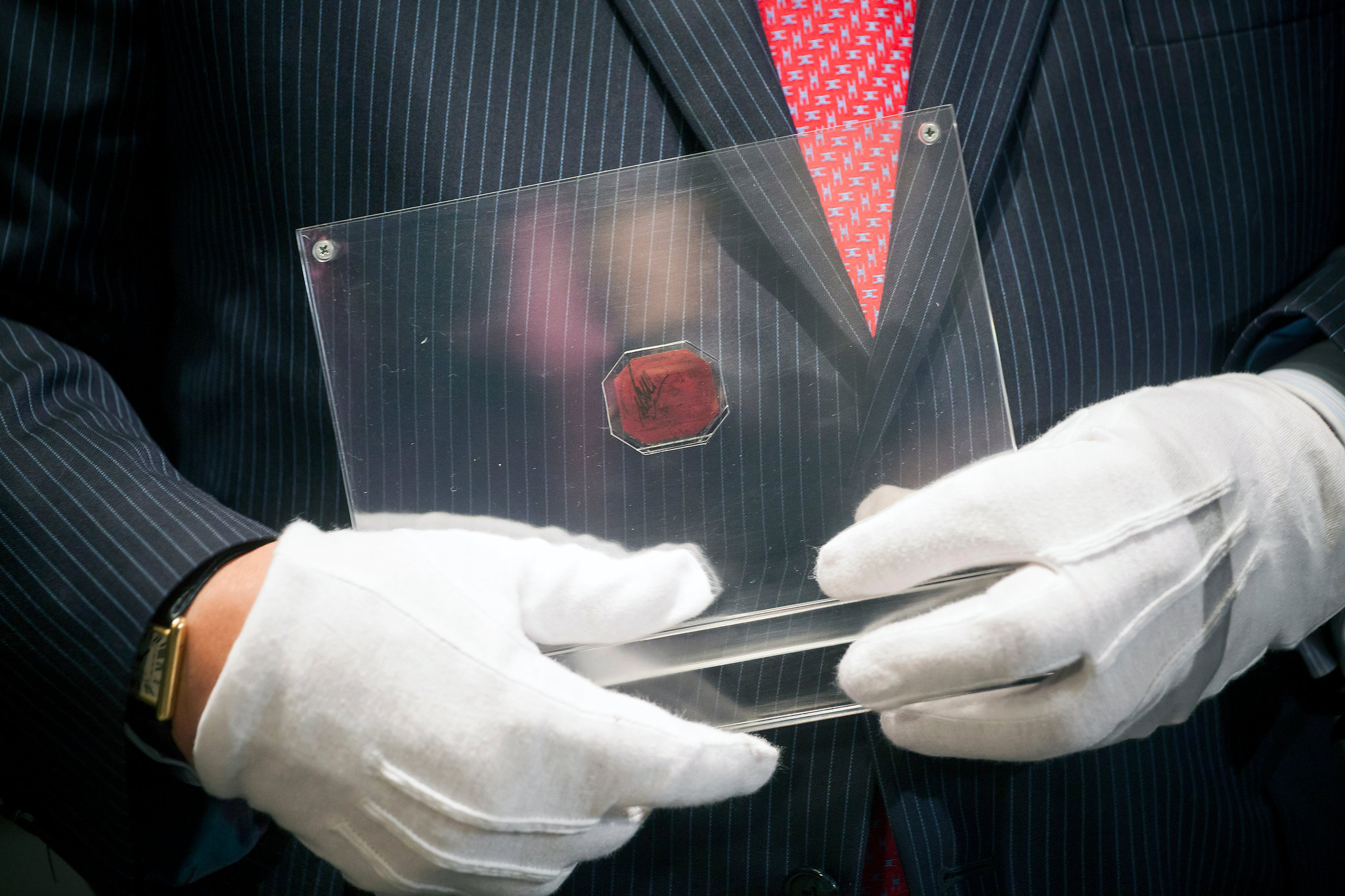
The only surviving example of a stamp printed as a stopgap in the colony of British Guiana (now Guyana) in 1856, after a shipment of stamps from England ran late and the local postmaster had a newspaper print an emergency batch. Barely an inch square and weighing 0.04 grams, it has been called the most valuable object on earth by weight. Its provenance reads like a thriller: discovered by a 12-year-old boy among family papers in 1873 and sold for a few shillings, later owned by the legendary collector Philippe la Renotière von Ferrary, then by Arthur Hind (who reportedly outbid the King of England for it), and eventually by chemical heir John du Pont. Shoe designer Stuart Weitzman took it in 2014.
Why it sold for this price: Absolute rarity — it's the only known example on earth — layered over a century of legendary provenance and its standing as the most famous stamp in the world. When a category has exactly one trophy and only one copy, buyers compete on scarcity alone.
What Collectors Should Know: Because only one is known to exist, the British Guiana One-Cent Magenta has broken the world stamp record nearly every time it has sold — and its 2014 price still stands as the record.
British Guiana One-Cent Magenta (1856) — credit: The Guardian
9. The Joachim-Ma Stradivarius — $11.3 Million
- Category: Musical Instrument (Violin)
- Sold for: $11,250,000
- Where: Sotheby's New York
- When: February 7, 2025
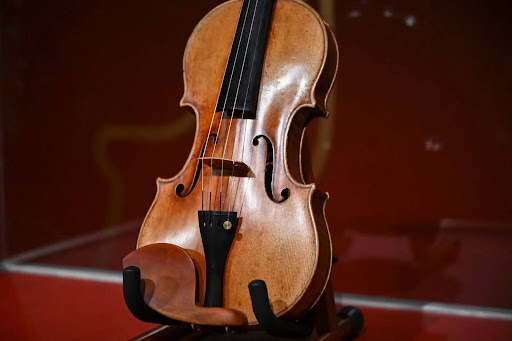
Crafted in 1714 by Antonio Stradivari during his celebrated "Golden Period," this violin is named for two former owners: 19th-century Hungarian virtuoso Joseph Joachim — believed to have played it at the 1879 premiere of Brahms's Violin Concerto in D Major — and violinist-teacher Si-Hon Ma, who left it to Boston's New England Conservatory on the condition that it eventually be sold to fund student scholarships. Sotheby's estimated $12–18 million, the upper end of which would have set an all-time instrument record; it fell just short, hammering at $10 million for an $11.3 million final price.
Why it sold for this price: A "Golden Period" Stradivari is already among the rarest and most coveted instruments ever made, and this one carries elite provenance — a documented link to Joachim and Brahms — plus a charitable halo, with proceeds funding scholarships, that widened its appeal beyond pure collectors.
What Collectors Should Know: The all-time auction record for a musical instrument still belongs to another Stradivari, the 1721 "Lady Blunt," which sold for $15.9 million in 2011.
Image: The Joachim-Ma Stradivarius (1714) — credit: NPR
##8. The 1933 Double Eagle — $18.9 Million
- Category: Coin
- Sold for: $18,872,250
- Where: Sotheby's New York
- When: June 8, 2021
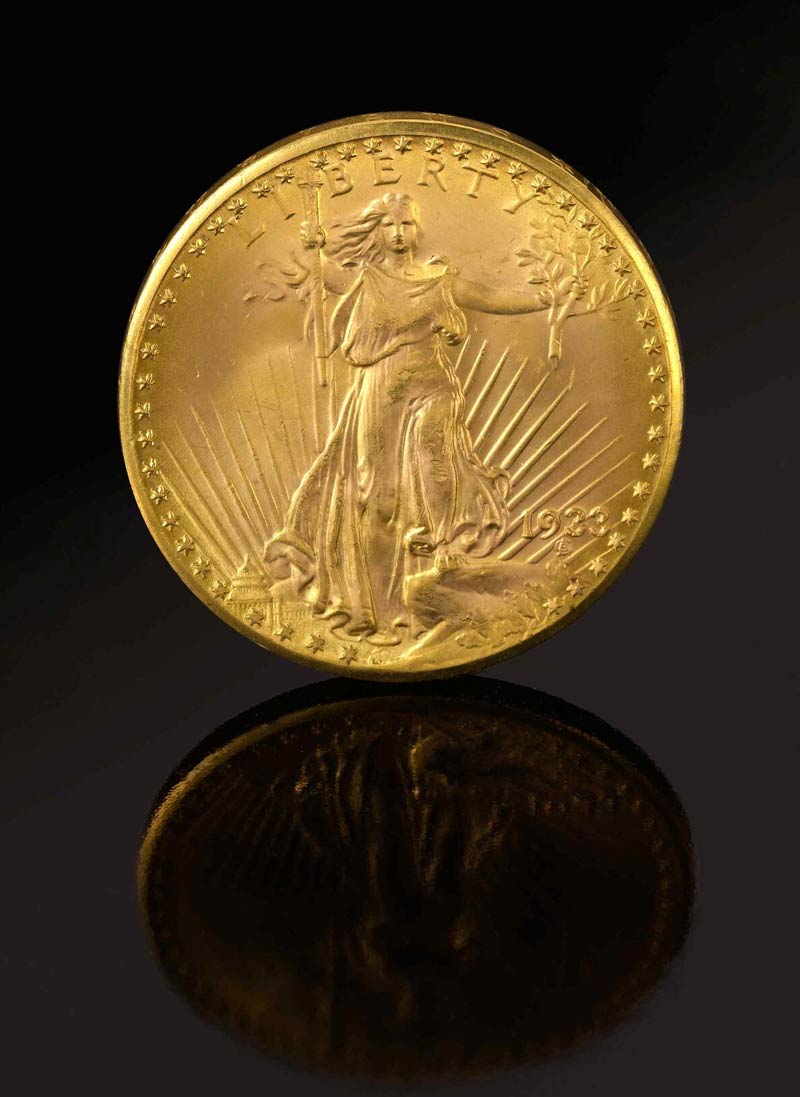
A $20 gold piece designed by sculptor Augustus Saint-Gaudens and widely regarded as one of the most beautiful coins the US Mint ever produced. Roughly 445,500 were struck in 1933, but almost all were melted down after President Franklin D. Roosevelt took the country off the gold standard, and the government later declared any surviving examples stolen property. This one — once part of the collection of King Farouk of Egypt — is the single 1933 Double Eagle the US government has authorized for legal private ownership. It headlined shoe designer Stuart Weitzman's "Three Treasures" sale, nearly tripling its 2002 price.
Why it sold for this price: It is effectively unique in a legal sense — the single 1933 Double Eagle the US government permits in private hands — sitting on top of a dramatic backstory of mass melting, decades of illegality, and royal ownership. Legal scarcity plus that narrative is a rare and powerful combination.
What Collectors Should Know: It remains the most valuable coin ever sold at auction and the only 1933 Double Eagle that can legally be owned by a private collector.
Image: 1933 Saint-Gaudens Double Eagle — credit: CNN
7. Leonardo da Vinci's Codex Leicester — $30.8 Million
- Category: Manuscript / Book
- Sold for: $30,802,500
- Where: Christie's, New York
- When: 1994
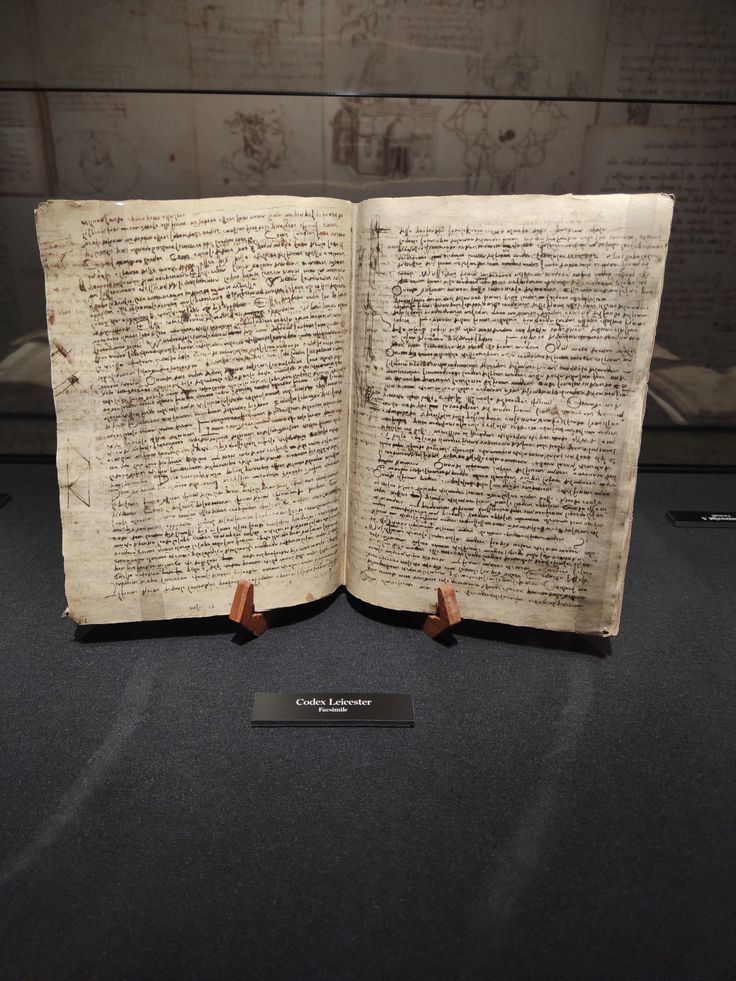
A 72-page scientific notebook handwritten by Leonardo da Vinci around 1508, packed with his theories on water, fossils, the light of the moon, and the workings of the natural world — all in his signature right-to-left mirror script. Named for Thomas Coke, Earl of Leicester, who acquired it in 1717, it is the only major Leonardo manuscript in private hands. Microsoft co-founder Bill Gates bought it in 1994 and has since lent it to museums worldwide, displaying its pages unbound so both sides can be read.
Why it sold for this price: There is simply no substitute — it's the only major Leonardo da Vinci manuscript in private hands and a direct window into the mind of history's most famous polymath. Authorship by a singular genius, combined with one-of-one availability, sets the ceiling.
What Collectors Should Know: Adjusted for inflation, the 1994 price is well over $60 million today, and it is still the most expensive manuscript ever sold at auction.
Image: Leonardo da Vinci's Codex Leicester — credit: Yahoo Finance
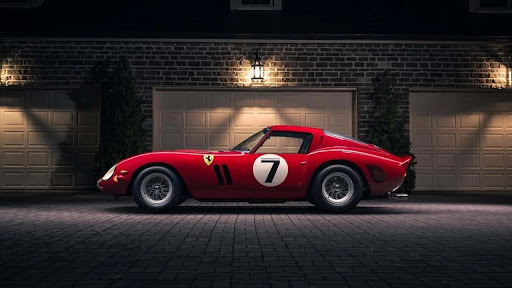
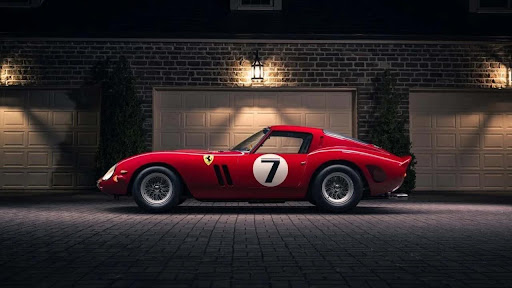
6. The 1962 Ferrari 250 GTO — $51.7 Million
- Category: Automobile / Classic Car
- Sold for: $51,705,000
- Where: RM Sotheby's, New York
- When: November 13, 2023
Chassis 3765 — a 1962 Ferrari 330 LM / 250 GTO, the only factory-owned Series I example, raced in period by Scuderia Ferrari. Just 39 250 GTOs were built between 1962 and 1964, and owners seldom let them go; this one had lived in the same American collection for 38 years. Bidding opened at $34 million and, less than ten minutes later, the hammer fell at $47 million for a $51.7 million all-in price.
Why it sold for this price: The 250 GTO is the blue-chip of collector cars — only 39 exist, they seldom come to market, and this one adds genuine factory racing history with Scuderia Ferrari. Extreme scarcity, ironclad provenance, and a deep pool of billionaire collectors do the rest.
What Collectors Should Know: It's the most expensive Ferrari ever sold at auction, but not the most expensive car — that record belongs to a 1955 Mercedes-Benz 300 SLR Uhlenhaut Coupé, which sold through RM Sotheby's for about $142 million in 2022.
Image: 1962 Ferrari 330 LM / 250 GTO — credit: The Supercar Blog
5. The Oppenheimer Blue — $57.5 Million
- Category: Gemstone (Diamond)
- Sold for: $57,541,779
- Where: Christie's Geneva
- When: May 18, 2016
A 14.62-carat emerald-cut fancy vivid blue diamond named for its former owner, Sir Philip Oppenheimer, a scion of the De Beers dynasty. Blue diamonds get their color from trace boron and rank among the rarest gems on earth; at the time of sale, this was the largest fancy vivid blue diamond ever offered at auction. After a drawn-out bidding battle that settled near $3.9 million per carat, it set the world record for any gemstone.
Why it sold for this price: Fancy vivid blue diamonds are among nature's rarest gems, and at 14.62 carats, this was the largest ever offered at auction, with aristocratic De Beers provenance. Top-tier size, color grade, and pedigree in a scarce category push the price per carat toward record territory.
What Collectors Should Know: It held the gemstone record for less than a year before being overtaken by the Pink Star, which sits higher on this list.
Image: The Oppenheimer Blue diamond — credit: NBC News
4. The CTF Pink Star — $71.2 Million
- Category: Gemstone (Diamond)
- Sold for: $71,200,000
- Where: Sotheby's Hong Kong
- When: April 4, 2017
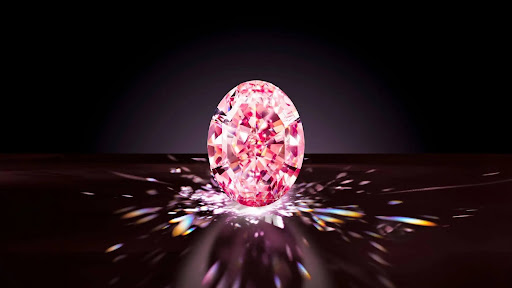
At 59.60 carats, this oval mixed-cut, internally flawless, fancy vivid pink diamond — roughly the size of a strawberry — is the largest of its kind ever graded by the GIA. It had actually sold for a higher $83 million in 2013, but that buyer defaulted, leaving Sotheby's holding the stone; the more cautious 2017 re-offering pre-vetted all three of its bidders. Hong Kong jeweler Chow Tai Fook won it and renamed it the "CTF Pink Star" after the company's late founder.
Why it sold for this price: It's the largest internally flawless fancy vivid pink diamond the GIA has ever graded — a superlative in every dimension that matters: size, color, and clarity — in a category where supply is effectively fixed. When a stone is the best-known example of the rarest color, there's no comparable to anchor a lower price.
What Collectors Should Know: It remains the most expensive diamond — and the most expensive gemstone of any kind — ever sold at auction.
Image: The CTF Pink Star diamond — credit: Natural Diamonds
3. Jeff Koons, "Rabbit" — $91.1 Million
- Category: Sculpture
- Sold for: $91,075,000
- Where: Christie's New York
- When: May 15, 2019
A 41-inch stainless-steel sculpture Koons made in 1986 — a mirror-polished cast of an inflatable toy bunny, and for many collectors, the "holy grail" of his work. It's one of an edition of three; the other two live in museums, making this the only one in private hands. It came from the estate of Condé Nast chairman S.I. Newhouse, and dealer Robert Mnuchin placed the winning bid for an unnamed client, reclaiming for Koons the living-artist crown he had briefly lost to David Hockney.
Why it sold for this price: It's the "holy grail" of a market-defining living artist — one of only three, and the only one not in a museum — with blue-chip provenance from the Newhouse collection. Trophy status, a tiny edition, and a buyer pool of the world's wealthiest collectors fueled the bidding war.
What Collectors Should Know: It is still the most expensive work by a living artist ever sold at auction.
Image: Jeff Koons, "Rabbit" (1986) — credit: NBC News

2. Andy Warhol, "Shot Sage Blue Marilyn" — $195 Million
- Category: Fine Art (Painting)
- Sold for: $195,040,000
- Where: Christie's New York
- When: May 9, 2022
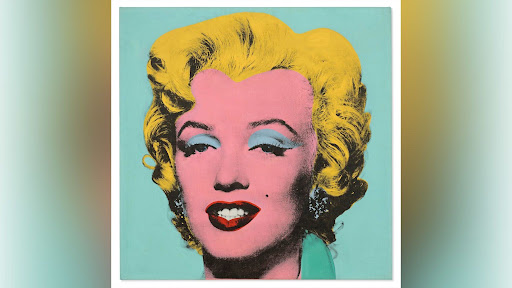
One of five silkscreen portraits Andy Warhol made of Marilyn Monroe in 1964, based on a publicity still from the 1953 film Niagara. The "Shot" name comes from an incident at Warhol's Factory studio, where a visitor reportedly fired a gun at a stack of the canvases. Consigned by the Thomas and Doris Ammann Foundation — with proceeds directed to children's health and education programs — it sold in roughly four minutes to mega-dealer Larry Gagosian.
Why it sold for this price: It pairs one of the most recognizable images in 20th-century art with the two things top buyers pay most for — cultural iconography and rarity, as one of only five. Warhol's Marilyn is about as close to a universal brand as art gets, which pulls in demand far beyond specialist collectors.
What Collectors Should Know: The sale made it the most expensive 20th-century artwork and the most expensive work by any American artist ever sold at auction.
Image: Andy Warhol, "Shot Sage Blue Marilyn" (1964) — credit: Christies
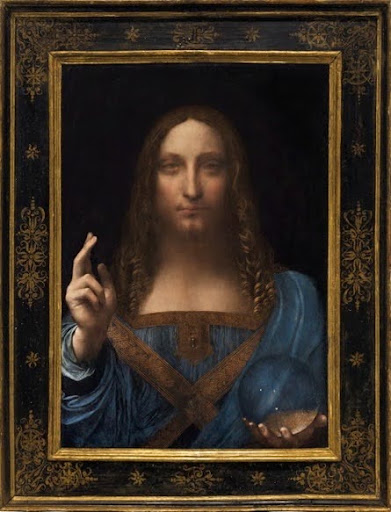
1. Leonardo da Vinci, "Salvator Mundi" — $450.3 Million
- Category: Fine Art (Painting)
- Sold for: $450,312,500
- Where: Christie's New York
- When: November 15, 2017
Attributed to Leonardo da Vinci and painted around 1500, this depiction of Christ as "Savior of the World" was billed as the last Leonardo in private hands — one of fewer than 20 surviving paintings linked to his own hand. Lost for centuries and heavily restored, it famously surfaced at a 2005 estate sale for around $1,175 before being reattributed to the master. After nearly 20 minutes of bidding, it obliterated every auction record; its buyer was later reported to be connected to Saudi Arabia, and the painting's current whereabouts remain a matter of speculation.
Why it sold for this price: It was sold as the last Leonardo da Vinci in private hands — the ultimate combination of the most famous artist in history, extreme scarcity of fewer than 20 accepted works, and a rediscovery story built for headlines. Even with restoration and attribution debates, the "only chance to own a Leonardo" narrative overrode every other consideration.
What Collectors Should Know: At more than four times the price of any other object on this list, it is still the most expensive artwork of any kind, from any era, ever sold at auction.
Image: Leonardo da Vinci, "Salvator Mundi" (c. 1500) — credit: The Guardian
What These Sales Teach Collectors
Line the ten up and the pattern is unmistakable. A painting, a diamond, a race car, a scrap of 1856 magenta paper — on the surface, they have nothing in common, yet every one of them earned its price the same way: through rarity that can't be replaced, provenance that can be traced, and a story big enough to draw more than one kind of buyer into the room.
The encouraging part, if you collect anything at all, is that this logic scales down as cleanly as it scales up. Every category has its grail. You don't need a Leonardo to see the same forces at work — the exact dynamic that turned a single stamp into a $9.5 million object is running quietly in the coin album, the card box, and the shelf of vintage toys. The difference between an object that's merely old and one that's genuinely valuable almost always comes down to knowing what you have, being able to prove it, and understanding where it sits in the story of its category.
Final Thoughts
Record-breaking auctions make headlines because of the numbers, but for collectors, the real lesson is in the mechanics: rarity, condition, provenance, and demand, working together at the end of every category. Those same four forces decide what your own collection is worth — whether you deal in Old Master paintings or mid-century lunch boxes.
That's exactly what Collectibles.com is built for. Whatever you collect, our app lets you scan, organize, value, and showcase everything you own in one place — so you always know what you have, what it's worth, and where it fits — alongside a community that shares the obsession.
Download our IOS App
Download our Android App

Frequently Asked Questions
What is the most expensive item ever sold at auction?
Leonardo da Vinci's Salvator Mundi, which sold for $450.3 million at Christie's in 2017, remains the most expensive artwork of any kind ever sold at auction.
Is a painting always the most expensive thing at auction?
At the very top, yes — the highest auction prices in history are dominated by paintings. But most other categories have their own record-holders, from the 1933 Double Eagle coin ($18.9M) to the Pink Star diamond ($71.2M) to the Ferrari 250 GTO ($51.7M).
What's the most expensive everyday collectible — like a coin or a stamp — ever sold?
Among "small" collectibles, the British Guiana One-Cent Magenta stamp ($9.48M) and the 1933 Double Eagle gold coin ($18.9M) are the category record-holders — proof that a coin album or stamp binder can hold serious value.
Do these record prices ever fall?
They can. Records are moments in time, not guarantees. The British Guiana stamp itself is a cautionary example: after selling for $9.48 million in 2014, it changed hands again in 2021 for $8.3 million — a lower price for the very same object seven years later.
Disclaimer: All content on Collectibles.com and shared publicly is for educational and informational purposes only and does not constitute investment, financial, tax, or legal advice. Collectibles.com and its partners are not registered investment advisors. Investing in collectibles carries a high risk of loss, including total loss of principal, and is speculative and unsuitable for many investors. Past performance is no guarantee of future results. Always consult qualified professionals before making decisions. No recommendations or solicitations are intended

