

Everyone has a story about the thing they threw away. The comic box that went to the curb, the sneakers worn into the ground, the first iPhone traded in for $50. This is a list of ten things worth money — sometimes staggering money — if you were one of the rare people who kept them sealed, boxed, and untouched. These are everyday objects that became museum pieces, and the collectibles that could make you rich usually have one thing in common: almost nobody held onto a perfect one.
The difference between a treasure and a memory is almost always the seal. The same object — same cardboard, same plastic, same vinyl — can be worth six dollars or six figures depending on whether it was opened, how many survived, and whether you can prove what it is. Before you assume your attic is a jackpot (or a bust), find out exactly what you've got. — Collectibles.com
But here's the honest part this list won't hide: the headline numbers below are ceilings, not averages. A used first-gen iPhone is worth pocket change; a sealed one hit nearly $190,000. The fortune is never in the object — it's in the condition, the rarity, and the proof. Here are ten things that could make you rich, ranked from the merely life-changing to the genuinely absurd, with an honest read on what yours is actually worth.
The Collector's Lens: What Turns Old Stuff Into Real Money
Every item on this list is judged by the same three forces serious collectors use to value anything — the Big Three. Run yours through this filter before you get excited.
- Condition. Sealed, mint, and graded beat used, loose, and "pretty good" every single time. Across this entire list, the record-setters are almost always factory-sealed or professionally graded (PSA, CGC, WATA, AFA). A played-with example of the very same item is often worth 1% of a pristine one.
- Rarity. It comes down to how many were made and how few survived in top shape. The magic items are the ones everybody used, and nobody preserved — which is exactly why a perfect survivor is so scarce.
- Provenance. Can you prove it's real and untouched? Authentication, original packaging, receipts, and documented history separate a record sale from a hopeful listing — and protect you from the fakes that swarm every category below.
Keep that lens handy. It's the entire difference between the ten fortunes below and the millions of worthless duplicates sitting in basements right now.
10. Original Vintage Barbie Dolls
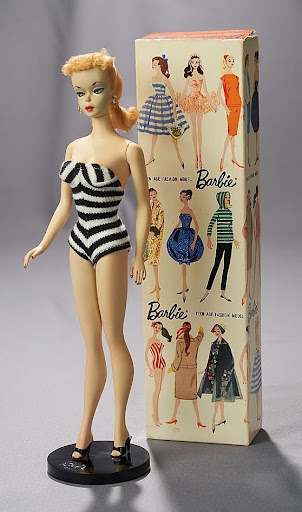
Top sale: ~$27,450 for a 1959 #1 Ponytail Barbie
Mattel sold roughly 350,000 original Ponytail Barbies in 1959 at $3 each. The survivors in mint condition now trade for a small fortune — a #1 Ponytail brought about $27,450 — and a one-of-one jeweled Barbie by Stefano Canturi hit $302,500 at Christie's. The dolls everyone's mom had became blue-chip collectibles.
The reality: the vast majority of vintage Barbies are worth $10 to $50. Value concentrates in the earliest production (1959–1972) in untouched condition with original accessories.
What Collectors Should Know: A "Made in Japan" stamp on the foot dates a Barbie to the 1959–1972 window, where nearly all the real value sits — and the #1 and #2 Ponytails (with holes in the feet for the stand) are the grails.
Fig.1: The most expensive #1 Ponytail Barbie doll
9. Vintage Hot Wheels Redlines
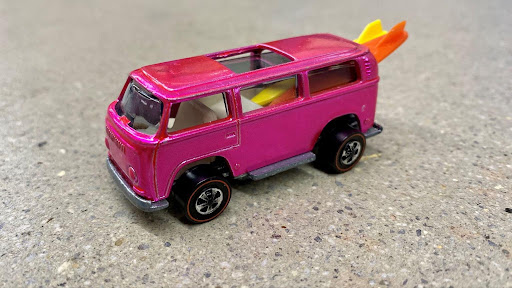
Top sale: ~$150,000 (estimated) for a 1969 pink rear-loader Beach Bomb
The "Redline" era (1968–1977, named for the red stripe on the tires) is where Hot Wheels value lives. The crown jewel is the pink rear-loader Beach Bomb prototype — redesigned before mass production because it was too top-heavy for the track — valued around $150,000, with its owner reportedly turning down seven figures. A $0.59 toy car became a holy grail.
The reality: most Redlines sell for $20 to a few hundred dollars. The money is in prototypes, rare colors (pink was marketed to girls and is scarce), and mint, unplayed examples.
What Collectors Should Know: Check the car's base for the casting year and country, and hunt the Redline years (1968–1977) — color and condition separate a $30 car from a five-figure one.
Fig.2: 1969 pink rear-loader Beach Bomb Hot Wheels - Image courtesy of Car and Driver
8. The First-Generation iPhone (2007)
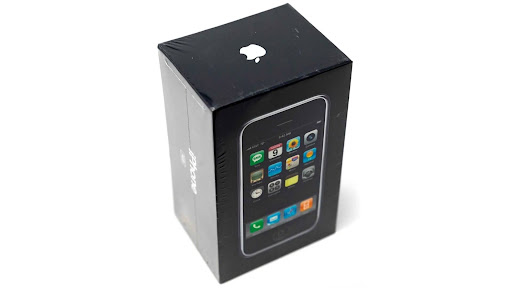
Top sale: ~$190,000 for a sealed 4GB original iPhone
When Steve Jobs unveiled the iPhone in 2007, nobody thought to shrink-wrap one for the future. That's why a sealed first-generation iPhone sold for about $190,000 at LCG Auctions in 2023 — roughly 380 times its $499 retail price. The rarest version is the 4GB model, which Apple discontinued within months, making sealed survivors extraordinarily scarce.
The reality: a used, activated first-gen iPhone is worth well under $1,000. The six-figure sales are exclusively factory-sealed units, and the 4GB model commands the highest premium.
What Collectors Should Know: Only an unopened, factory-sealed first-gen iPhone has real value — the 4GB model is the jackpot, and any broken seal drops it to a fraction of the price.
Fig.3: first-generation iPhone sold for about $190,000 at LCG Auctions in 2023 - Image courtesy of Gizmodo
7. Sealed 1st Edition Base Set Pokémon
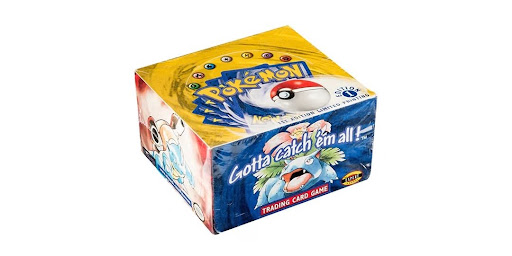
Top sale: ~$408,000 for a sealed 1st Edition Base Set booster box
The 1999 Pokémon Base Set is the foundation of the entire hobby, and sealed 1st Edition product is its bullion. A factory-sealed 1st Edition Base Set booster box has sold for around $408,000 at Heritage Auctions, and a PSA 10 1st Edition Charizard from that set has traded into the six figures on its own.
The reality: the overwhelming majority of Pokémon cards are worth cents. The money is specifically in 1st Edition (look for the stamp), Shadowless, and high-grade Base Set cards — and in unopened, authenticated sealed product.
What Collectors Should Know: Hunt the "1st Edition" stamp and the Shadowless print (no drop-shadow on the art box) from the 1999 Base Set — sealed product should carry third-party authentication before any serious money changes hands.
Fig.4: Factory-sealed 1st Edition Base Set booster box has sold for $408,000 - Image courtesy of Heritage Auction
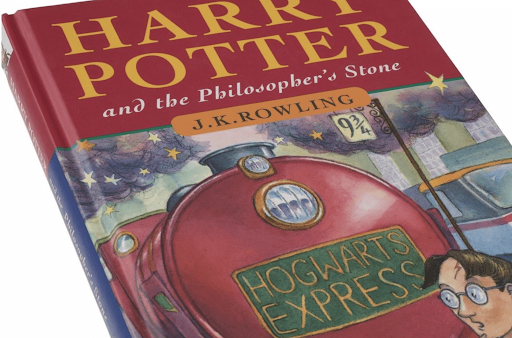
6. A First-Edition Harry Potter
Top sale: ~$471,000 for a 1997 first-edition Harry Potter and the Philosopher's Stone
Bloomsbury printed just 500 hardcover copies of the first edition of Harry Potter and the Philosopher's Stone in 1997, and most went to libraries. One sold for $471,000 at Heritage Auctions in 2021. The book nobody knew would matter became one of the most valuable modern first editions on Earth.
The reality: later printings, paperbacks, and U.S. editions are worth very little. Value is locked to the true 1997 UK first edition, first printing.
What Collectors Should Know: A genuine first printing shows the print line "10 9 8 7 6 5 4 3 2 1," credits "Joanne Rowling" (not J.K.), and lists "1 wand" twice in the equipment list on page 53 — those specific tells are what separate a $400,000 book from a $20 one.
Fig.5: The most expensive first edition of Harry Potter and the Philosopher's Stone in 1997 - Image courtesy of Brussels Times
5. Rare First-Press Vinyl Records
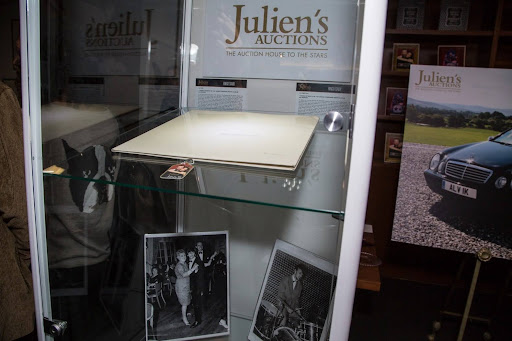
Top sale: ~$790,000 for Ringo Starr's No. 0000001 copy of The Beatles' White Album
Vinyl is one of the most relatable "you had one" categories — and the ceiling is enormous. Ringo Starr's personal copy of The Beatles' White Album, stamped with serial number 0000001, sold for about $790,000 at Julien's Auctions in 2015, the most expensive record ever at the time. Specific pressings and variants routinely reach five and six figures.
The reality: the average used record is worth a few dollars. Value lives in rare first pressings, pulled variants, and error covers — like the Beatles' recalled "butcher cover" or specific regional pressings.
What Collectors Should Know: Value hides in the pressing details — matrix numbers in the run-out groove, first-state covers, and recalled variants — so a record's worth is decided by edition and condition, not the title on the sleeve.
Fig.6: Ringo Starr's No. 0000001 copy of The Beatles' White Album that sold for 6 figures – Image courtesy of Julians Auction
4. Unopened Vintage Star Wars Action Figures
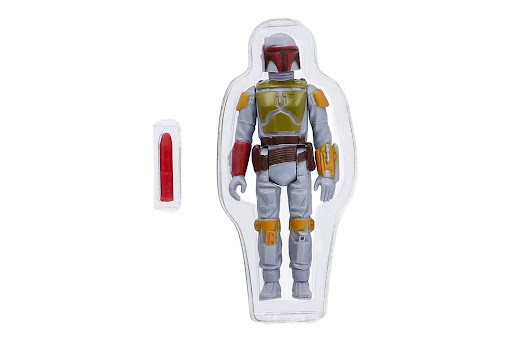
Top sale: ~$1.34 million for a 1979 rocket-firing Boba Fett prototype
No movie merchandise is appreciated like vintage Kenner Star Wars figures. A 1979 rocket-firing Boba Fett prototype — pulled before release over a choking-hazard concern — sold for $1.34 million at Goldin in 2024, a record for any action figure. Even standard carded figures, graded and preserved, routinely bring four, five, and six figures.
The reality: a loose, played-with figure is usually worth a few dollars to a few hundred. The fortunes are in carded, unopened figures graded by AFA (Action Figure Authority), and in rare prototypes and variants.
What Collectors Should Know: Carded-and-sealed beats loose by orders of magnitude — an AFA grade and an original Kenner card back are what turn a childhood toy into a five-figure asset
Fig.7: 1979 rocket-firing Boba Fett prototype that sold for $1.3 million - Image courtesy of Goldin Auctions
3. Limited-Edition Sneakers
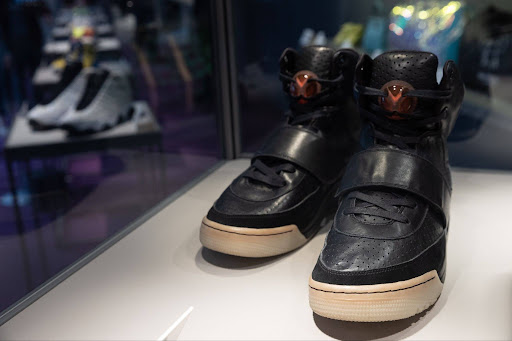
Top sale: ~$1.8 million for Kanye West's Nike Air Yeezy 1 prototype
Sneakers became a legitimate asset class, and the record proves it: Kanye West's "Grammy-worn" Nike Air Yeezy 1 prototype sold for $1.8 million at Sotheby's in 2021. Below the celebrity stratosphere, deadstock (unworn) original 1985 Air Jordan 1s and other OG releases regularly sell for thousands to tens of thousands.
The reality: worn sneakers lose most of their value, and most limited editions never appreciate at all. The money is in deadstock (unworn, with the original box) OG colorways and genuinely scarce releases.
What Collectors Should Know: Deadstock condition and the original box are everything — an unworn OG pair can be worth 10 to 100 times the same shoe with creases, and authentication is essential given how sophisticated sneaker fakes have become.
Fig.8: Kanye West’s Prototype Air Yeezys 1 he wore to the Grammys - Image courtesy of Daily Sabah
2. Sealed Retro Video Games and Consoles
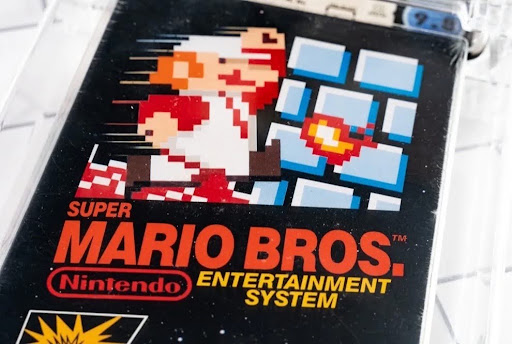
Top sale: ~$2 million for a sealed copy of Super Mario Bros. (NES)
The games you blew into and shoved back into the cartridge slot are now auction royalty. A sealed copy of Super Mario Bros. for the NES sold for about $2 million in 2021 — the most ever paid for a video game at the time — and a sealed Super Mario 64 sold for roughly $1.56 million. Early sealed, graded cartridges from the NES era are the blue chips.
The reality: a loose cartridge is worth a few dollars, and the sealed-game market has cooled from its 2021 peak. Value is specific to early-run, factory-sealed copies graded by WATA, where tiny variations in the seal and label can mean six figures.
What Collectors Should Know: Only sealed, WATA-graded early-production copies reach these numbers — the sticker-sealed and shrink-wrap variations matter enormously, so a loose cart (however nostalgic) is not the lottery ticket.
Fig.9: An unopened Super Mario Bros. game from 1985 sold for $2 million
1. Golden Age Comic Books
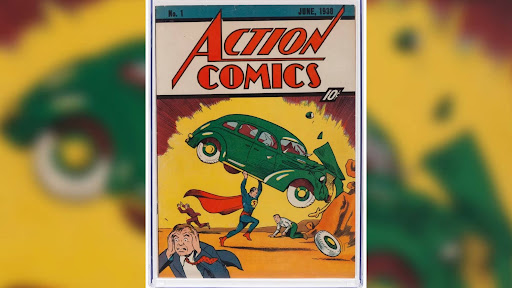
Top sale: ~$6 million for Action Comics #1 (Superman's first appearance)
The single most valuable collectible category on this list. A copy of Action Comics #1 (1938) — Superman's debut — sold for $6 million at Heritage Auctions in 2024, the most expensive comic book ever. Amazing Fantasy #15 (Spider-Man's first appearance) has reached $3.6 million. Pulpy 10-cent newsprint became the most expensive paper in the hobby.
The reality: almost all comics are worth cover price or less. The fortunes are in key issues — first appearances, origins, and first printings — in high CGC-graded condition, where a single grade point can swing the price by six figures.
What Collectors Should Know: Value concentrates in key issues (first appearances and origins) from the Golden and Silver Ages, and condition is everything — a professional CGC grade is what separates a $6 million book from a $600 one.
Fig.10: The world’s most expensive comic book ever sold
What This List Really Teaches
Scroll back through all ten, and the pattern is impossible to miss: the fortune was never in the object. It was in the 1% of examples that stayed sealed, mint, and provable, while everyone else used theirs up. A first-gen iPhone, a Super Mario cartridge, a Base Set booster box — millions existed. Almost none survived untouched, and that scarcity is the whole engine.
That's also the honest warning. For every record sale, millions of opened, worn, common duplicates exist and are worth next to nothing. The Big Three decide which side you're on: condition (sealed and graded), rarity (how few survived), and provenance (can you prove it?). If you're holding something that might be special, the worst move is to guess — and the second-worst is to assume the viral headline price is what yours is worth.
Final Thoughts
Every item on this list proves the same bittersweet truth: the stuff that becomes priceless is the stuff nobody thought to save. The comics got read, the sneakers got worn, the iPhones got traded in — and the handful that survived sealed and mint became the fortunes above.
You can't go back and shrink-wrap your childhood. But you can find out what you actually have right now, before it goes to another curb. Collectibles.com is built for exactly that — scan, identify, value, and organize everything you own in one place, so you always know whether you're holding a jackpot or a memory.

Frequently Asked Questions
What old things are actually worth money?
The strongest categories are sealed or graded examples of culturally iconic items: Golden Age comic books (Action Comics #1 at $6 million), sealed retro video games (Super Mario Bros. at $2 million), limited-edition sneakers, vintage Star Wars figures, sealed Base Set Pokémon, and sealed first-generation iPhones. In nearly every case, only pristine, authenticated examples reach the headline prices.
Why is sealed or mint condition so important?
Because almost everyone opened, used, or discarded theirs. A sealed or professionally graded example is a rare survivor, and that scarcity is what drives value — a mint item can be worth 10 to 100 times a used one.
Is my used first-gen iPhone (or old game, or comic) worth a fortune?
Usually not. The record prices apply to sealed, graded, or rare-variant examples. A used iPhone, a loose cartridge, or a well-read comic is typically worth very little — but it costs nothing to identify exactly what you have before deciding.
How do I find out what my item is really worth?
Identify the specific edition, variant, and condition, then compare it to recent verified sales (not asking prices or viral headlines). For anything potentially valuable, third-party grading and authentication — PSA, CGC, WATA, or AFA — both confirm what it is and unlock its full value.
Disclaimer: All content on Collectibles.com and shared publicly is for educational and informational purposes only and does not constitute investment, financial, tax, or legal advice. Collectibles.com and its partners are not registered investment advisors. Investing in collectibles carries a high risk of loss, including total loss of principal, and is speculative and unsuitable for many investors. Values cited reflect reported sales and vary widely with condition, variant, and authentication; headline prices represent exceptional examples, not typical ones. Past performance is no guarantee of future results. Always consult qualified professionals before making decisions. No recommendations or solicitations are intended.

