

A collector of over 20 years walked us through his museum-grade Star Wars room. What he said about value, fakes, and the one mistake new collectors keep making is the kind of thing most people learn the hard way.
When collector Gabe Strata (@GabesEmpire) sat down for the latest episode of Collectibles.com Unscripted, he said something that stops most people cold: a Star Wars prop replica he could have bought for roughly a thousand dollars in the 1990s now trades for several thousand — and he watched a single helmet in his own collection jump from a few hundred dollars to nearly three thousand in real time. Then he explained why the near-identical version you could 3D-print at home is worth almost nothing on resale.
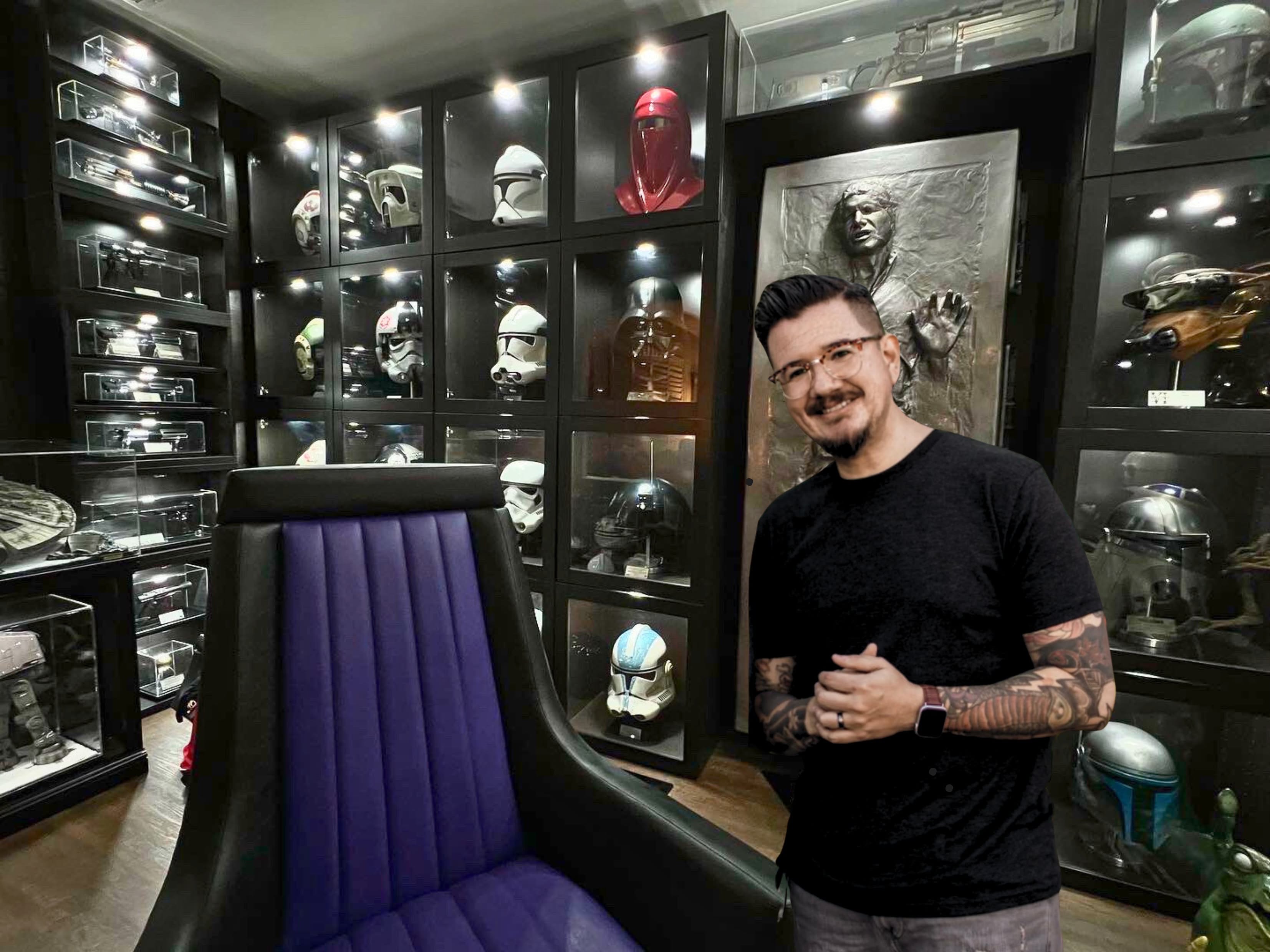
Fig.1: Gabriel and his Lucasfilm Licensed Star Wars Movie Replicas
That gap — between a piece with a paper trail and one without — is the whole game in Star Wars prop replicas. And it's where most new collectors get burned.
At Collectibles.com, we've always said it: the strongest collection in the room isn't the biggest one. It's the one where every piece can prove exactly where it came from.
Here's a preview of what Gabe unpacked in the full episode — and why "officially licensed" is doing a lot more work than most buyers realize.
The Collector's Lens: Condition, Rarity, and the Provenance Problem
Every serious collectible lives or dies by the same three questions: How's the condition? How rare is it? And can you prove where it came from? Star Wars prop replicas are an unusually clean case study in all three, especially the last one.
An officially licensed prop replica isn't just a good-looking statue. The companies that make them are granted access to the Lucasfilm archives, where they either scan the original screen-used prop, pull a mold directly from it, or study the genuine artifact up close. That creates something Gabe calls lineage — a direct, documentable thread back to the movie.
- Condition is fragile in ways beginners underestimate: the oils from your hands can corrode a helmet's finish, and a sunlit display window will bleach paint and ink over time.
- Rarity is baked in: most licensed pieces are limited editions that sell out fast, often within hours of going on sale.
- Provenance is the dividing line: licensed pieces ship with certificates of authenticity, original packaging, and edition numbers. Unlicensed pieces, however beautiful, usually can't prove a thing.
The collector's lens: In this corner of the hobby, provenance is the asset. Strip it away, and you're left with a very nice sculpture — not an investment.
The Piece That Explains the Whole Market: Han Solo in Carbonite
Ask Gabe to point to one object that captures how this market works, and he lands on his life-size Han Solo in Carbonite, produced by a 1990s company called Illusive Concepts. (Worth noting for accuracy: the company name is frequently misremembered as "Elusive Concepts.")
The backstory is pure collector catnip. In the 1990s, Star Wars interest had cooled dramatically — the original trilogy was years in the rearview and the prequels hadn't landed yet. Access to the archives was comparatively easy, so Illusive Concepts pulled a mold tied to the original carbonite block and set out to produce a numbered edition of 2,500. The piece stands roughly six and a half to seven feet tall, and it was sold not in toy stores but through high-end outlets like Sharper Image and mail-order catalogs — the kind of place that stocked massage chairs and luxury gadgets, not action figures.
A few details make it a textbook rarity story:
- The edition was never finished. According to Gabe, the company went out of business before completing the run, leaving an estimated 1,200–1,300 pieces rather than the planned 2,500.
- Condition degrades by edition number. Because the same mold was reused, later casts — roughly numbered 800–900 and beyond — show visible imperfections in the fingers and face, making lower numbers more desirable.
- The value curve is steep. Gabe recalls an original retail price around $1,000; he now sees them change hands in the thousands. As an independent data point, auction house Propstore listed one in 2023 with a pre-sale estimate of $4,000–$8,000.
There's even a thrift-store angle Dillan promised to dig up for the episode — the kind of "someone found one at Goodwill" story that keeps collectors checking every dusty shelf. (That one's worth hearing in Gabe's own words.)
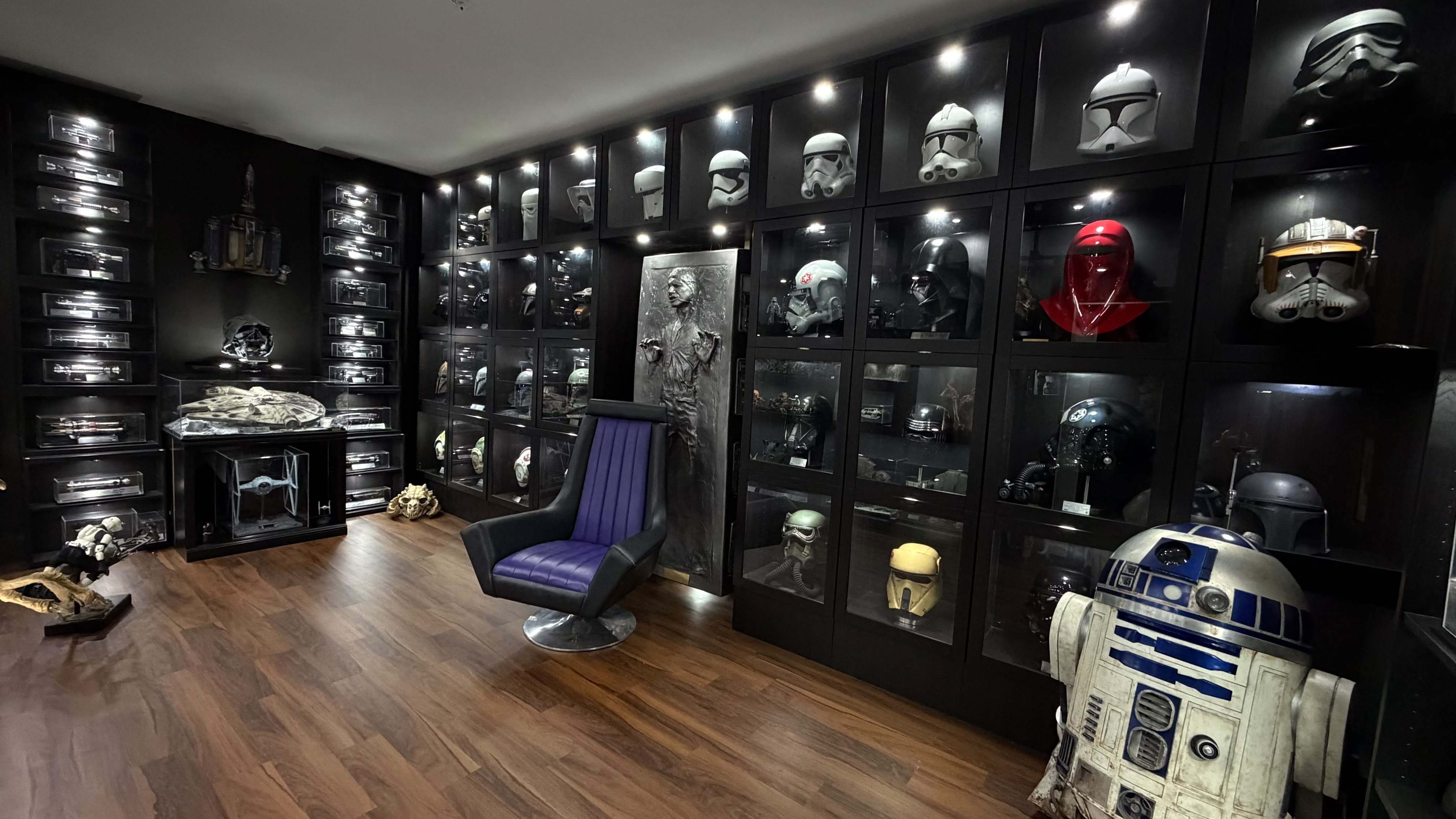
Fig.2: Gabriel’s full Star Wars collection
The $500 Helmet That Hit $2,800 — Overnight
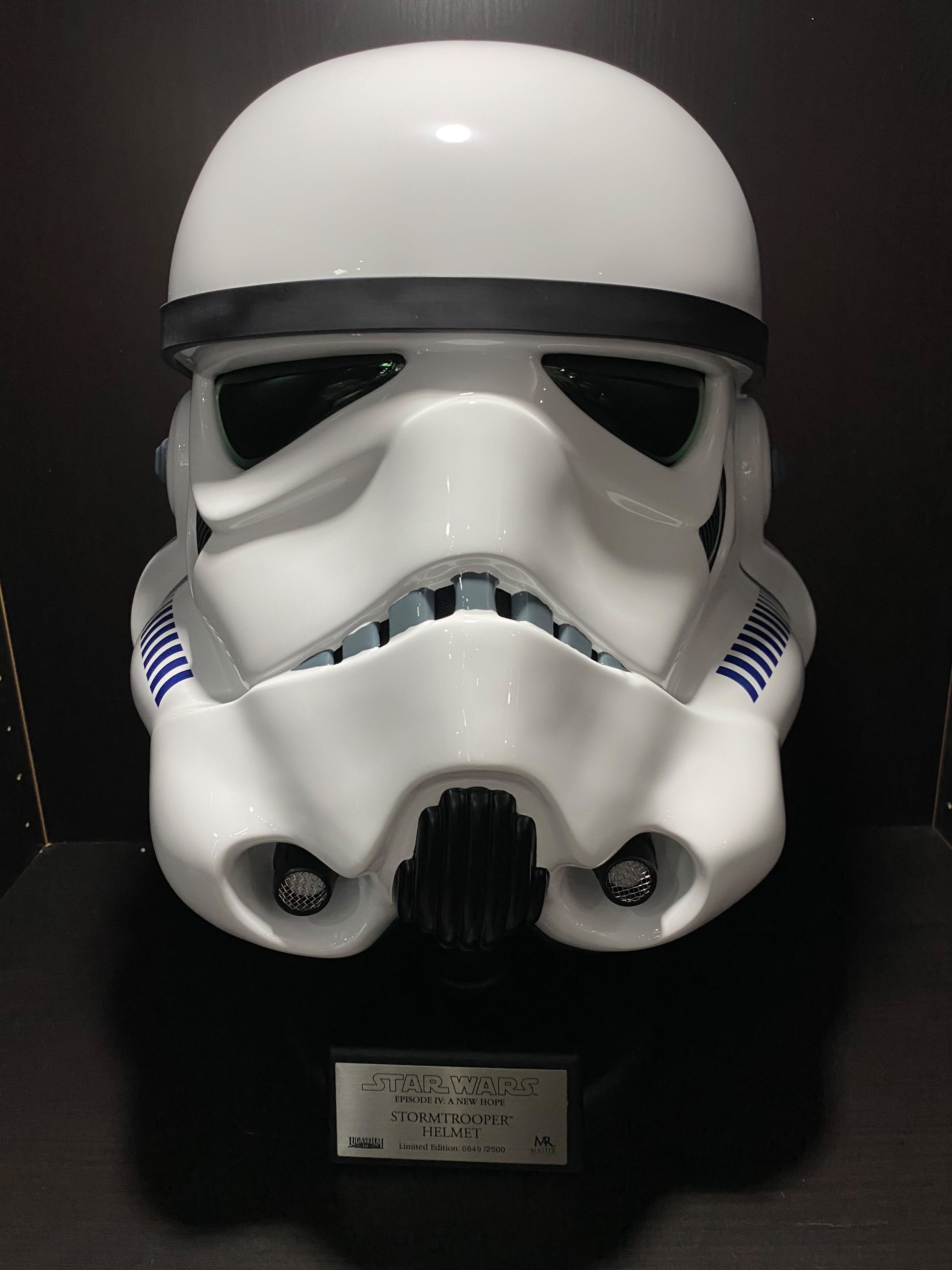
If you want proof that collectible markets move on news, Gabe lived it. Around 2015, he had a saved eBay search running for a Master Replicas Stormtrooper helmet — a piece that typically sold for $400–$500. One listing popped up at $1,200, and he dismissed it as absurd.
Then Lucasfilm announced The Force Awakens.
He watched that same helmet climb to roughly $2,800 and sell. When he checked the rest of the pieces already sitting in his collection, prices across the board had jumped so sharply that, in his words, if he'd started collecting then, he could never have afforded to.
It's the same pattern collectors saw with Pokémon around 2020 and with blue-chip sports cards after breakout seasons: a catalyst arrives, new money floods in, and a sleepy market reprices in weeks. The lesson isn't "buy everything" — it's that the quiet period before a catalyst is when the real deals exist. Which raises the obvious question the episode digs into: what's quiet right now?
Fig.3: Gabriel’s Master Replicas Stormtrooper helmet
Why Your 3D-Printed Replica Won't Hold Value (With One Exception)
Here's where Gabe pushes back on his own comment section. Post a $3,000 helmet online, and you'll get a hundred replies saying, "I could print that at home for a hundred bucks." He doesn't disagree that the print might look great — he argues that looking great was never the point.
His analogy: it's the difference between a genuine luxury handbag and a convincing knockoff. Most people couldn't spot the difference across a room — but only one comes with the provenance that lets you resell it for real money. Unlicensed and 3D-printed replicas, he argues, almost always lose money on resale, because you pay a premium up front for a maker's labor and accuracy, then struggle to prove authenticity to the next buyer.
There's a real-world cost to getting this wrong. Gabe owns an unlicensed helmet he bought for $3,000 because no licensed version existed — and now that an official one is coming, he expects to lose at least $1,000 trying to offload the unlicensed piece. During the pandemic collecting boom, he watched entire collections of unlicensed props get built and then dumped at a loss.
The exception that proves the rule: studio-scale models. Original ILM ships were famously kit-bashed — assembled from commercial model-kit parts (trains, submarines, race cars) sourced from the 1960s and beyond. A custom builder who hunts down those exact vintage parts and reconstructs a ship can command $10,000–$20,000 or more, precisely because those found parts give the build its own kind of authenticity. It's a reminder that "licensed vs. unlicensed" is a useful rule — not an absolute one.
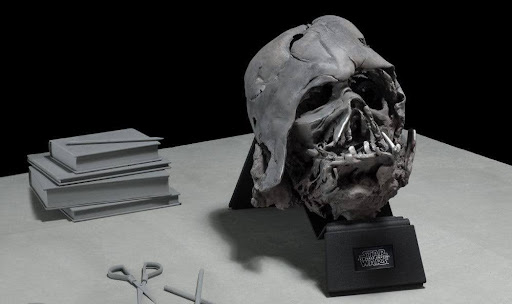
Fig.4: 3D Printed Darth Vader Helmet
How the Disney Era Reshaped Star Wars Collecting
A lot of today's price action traces back to one transaction: Disney acquired Lucasfilm for $4.05 billion in October 2012. (In the episode, Gabe hedges on the date — for the record, it was 2012.)
That deal didn't just change who makes the movies. It arguably introduced Star Wars to an entirely new collecting fandom — Disney's own deeply committed collector base — while new rides, the Clone Wars and Battlefront ecosystems, and a steady content pipeline pulled fresh fans in. More eyeballs, more demand, higher floors.
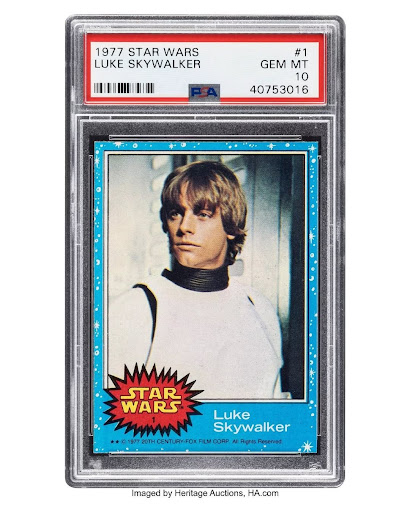
It also helped trigger a quieter shift Gabe has watched up close: money moving out of five-figure props and into Star Wars trading cards. The logic is pure accessibility — instead of $1,000 for one helmet, a collector can put that same $1,000 into sealed boxes of Topps Chrome Star Wars cards, chase a profit, and build a display that doesn't swallow an entire room. (Collectibles like cards also travel better and sell faster, a theme that runs through much of our sports-card coverage.)
Fig.5: The most expensive Star Wars Trading Card - image courtesy of Heritage Auctions
Gabe's Two Rules for Not Getting Burned
Near the end of the conversation, Gabe distilled two decades of collecting into advice he gives every newcomer — and it's refreshingly contrarian for a hobby built on "gotta have them all."
- Niche down, hard. Collect only what you genuinely love, and shrink your focus as narrow as you can stand. A small, curated collection almost always out-satisfies — and out-performs — a sprawling, cluttered one. Gabe limits himself largely to officially licensed Imperial helmets from the original films, and credits that discipline with keeping his spending (and his sanity) in check.
- Spend on the display, not just the piece. His rule of thumb: budget at least a quarter of what you spend on a collectible toward displaying it properly — lighting, cases, and above all, keeping it out of direct sunlight. He's seen grail pieces hidden in closets and six-figure collections slowly bleached by a sunny window. A display window, he warns, is basically a magnifying glass aimed at your most fragile ink and paint.
That second point applies far beyond Star Wars — ungraded comics, posters, and raw cards all die the same sunlit death.
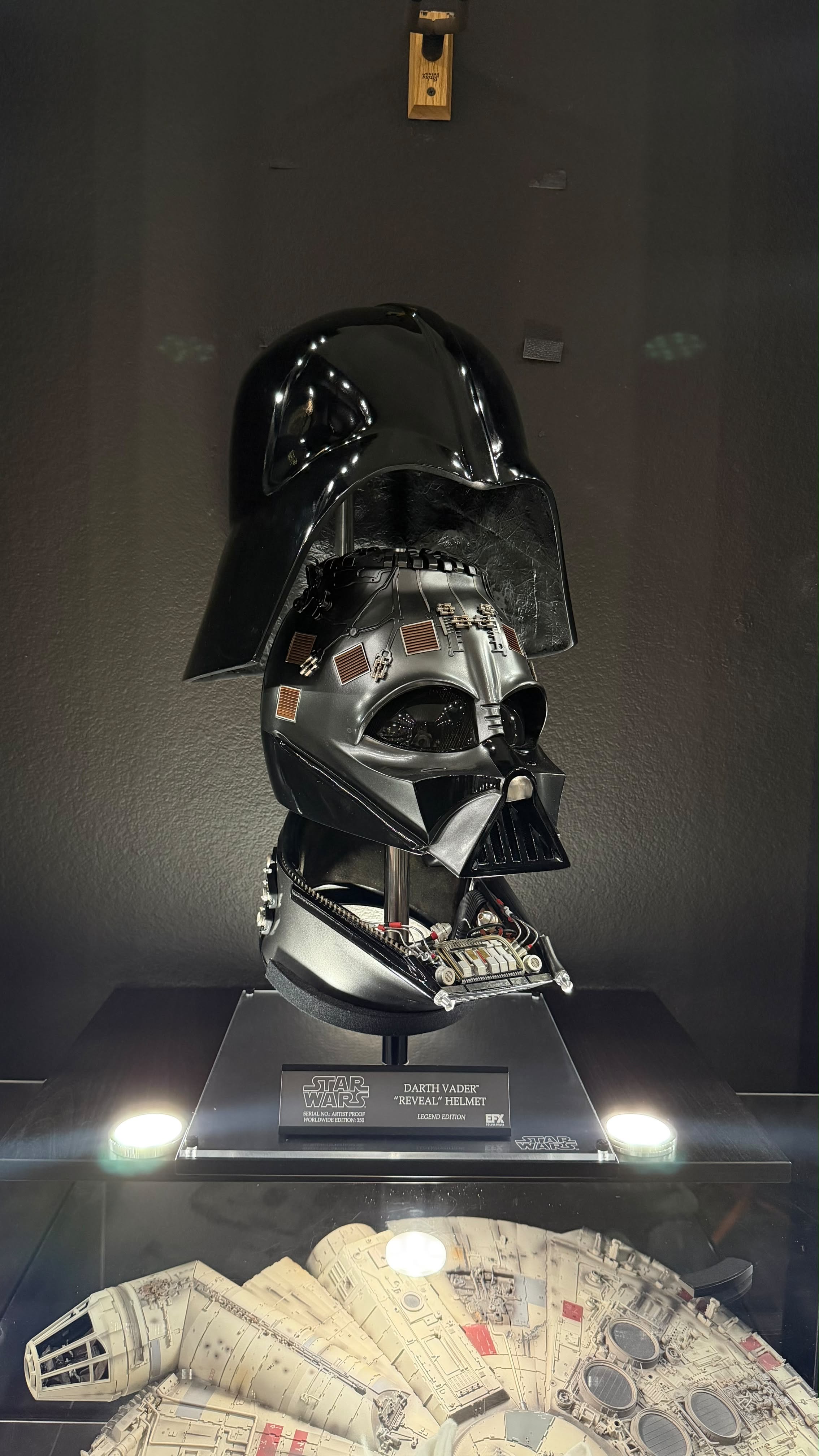
Fig.6: Gabriel's Darth Vader “Reveal Helmet”
The White Whale He Still Can't Buy
So what does a collector with a museum-grade room still chase? For Gabe, the next tier up isn't another replica — it's screen-used props, the genuine articles that actually appeared in the films.
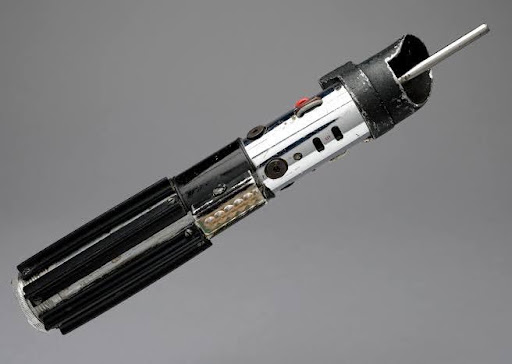
That market has gone stratospheric. Screen-used Star Wars lightsabers have recently sold at auction for and $4.8 million (Luke Skywalker's from The Empire Strikes Back). The catch, as Gabe puts it, is that "you don't know what you don't know" — a grandparent who worked on the films in the UK might have a helmet in an attic, and it surfaces at auction with no warning. The hunt never really ends. It just gets more expensive.
Fig.7: The most expensive Star Wars prop ever sold
Final Thoughts: Watch the Full Conversation
We barely scratched the surface here. In the full episode of Collectibles.com Unscripted, Gabe walks through his collection room piece by piece, tells the thrift-store carbonite story in full, explains how he turned "what's actually inside the box?" into a content career, and makes his prediction for where Star Wars collecting goes next.
Watch the full episode with Gabe Strata here →
Want to track what your own collection is actually worth — before a catalyst reprices it? Download the Collectibles.com app to scan, organize, value, and showcase everything you own.


Frequently Asked Questions About Star Wars Prop Replicas
What are officially licensed Star Wars prop replicas? They're limited-edition, often life-size recreations made by companies granted access to the Lucasfilm archives, where they scan, mold, or study the original screen-used props. That direct connection to the source material is what separates them from fan-made pieces.
Are Star Wars prop replicas a good investment? Officially licensed, limited-edition pieces have historically held and grown their value, especially when a new film or series reignites demand. But like any collectible, a piece is only worth what a collector will pay — and condition, edition number, and provenance all move the price.
Do unlicensed or 3D-printed Star Wars replicas hold their value? Generally no. They can be beautifully made — sometimes better than licensed versions — but without certificates of authenticity and a documentable origin, they're difficult to resell at a profit. The notable exception is custom studio-scale models built from original vintage model-kit parts.
How do you tell if a Star Wars helmet replica is authentic? Look for the original packaging, certificate of authenticity, edition plaque or number, and any inserts that shipped with it. Reference unboxing videos from trusted collectors are invaluable for confirming exactly what should be inside the box.
What's the most valuable Star Wars prop ever sold? Screen-used props lead the market — original lightsabers have sold for roughly $3.6–$3.75 million at auction. These are the genuine on-set items, a tier above even the finest licensed replicas.
Disclaimer: This article is for informational and entertainment purposes only and does not constitute financial or investment advice. Collectible values are volatile, and a piece is only worth what a buyer will pay. Prices and figures reflect the dates referenced and may have changed. Always verify authenticity, edition, and provenance through primary sources before buying or selling.

