

There is no sound in collecting quite like the tear of a wax pack. For seventy years, that little rip has delivered the same jolt — the gum-dusted gamble, the fan of cards, the half-second of hope that this is the one. Wax packs built the modern hobby on that feeling, and the thrill has outlived the format itself: from five-cent packs off a drugstore counter, to sealed boxes locked away as six- and seven-figure assets, to the digital rips collectors are chasing today. This is the story of how wax evolved — and why the rip never went away.
Every era of the hobby has sold the same thing: the moment before you know. The wrapper changed, the price changed, the technology changed — but the chase is identical. Understanding wax, from a 1952 nickel pack to a modern digital rip, is really understanding what makes collecting addictive in the first place. — Collectibles.com
Part 1: The Birth of the Wax Pack — A Five-Cent Gamble
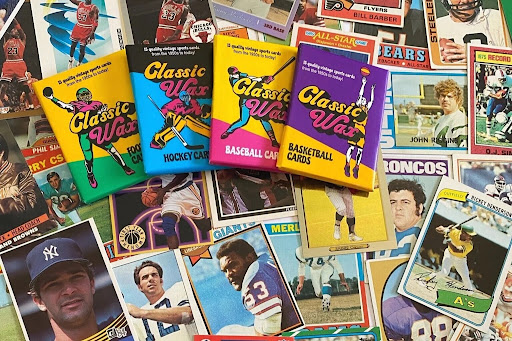
In the 1950s, Topps turned a stick of bubble gum into an empire. The "wax pack" got its name literally: a few cards and a slab of gum sealed inside a wax-coated paper wrapper, sold for a nickel. You didn't choose your cards — you took your chances. That randomness was the entire point, and it made every pack a tiny lottery ticket for a kid hoping to pull Mantle, Mays, or Robinson.
Nobody saved the wrappers. The gum stained the cards. Packs were ripped by the millions and thrown away, which is exactly why the survivors are now staggering. A single unopened 1952 Topps five-cent wax pack in graded condition has sold for around $69,000, and a "brick" of eight unopened 1952 Topps packs brought roughly $1.1 million at Robert Edward Auctions. A nickel's worth of gum and cardboard, preserved by accident, became one of the most coveted objects in the hobby.
What made early wax magic is the same thing that drives collecting today:
- The sealed unknown. A pack you can't see into is pure potential — every card still possible until you open it.
- The chase. You weren't buying a card; you were buying a shot at one.
- The disposability. Because almost everyone ripped and tossed, the few that survived sealed became genuinely rare.
That last point is the hinge on which the whole story turns. The moment collectors realized that not ripping could be worth more than ripping, wax stopped being a gamble and started becoming an asset.
Fig.1: 1950s Wax packs - image courtesy of classic wax sports cards
Part 2: The Rise of the Sealed Wax Box — When the Wrapper Became the Treasure
Somewhere along the way, the hobby fell in love with the unopened box. A sealed wax box is a time capsule: a factory-fresh container of untouched packs, frozen at the moment of production, carrying the full, undiminished promise of every card that could be inside. As vintage cards climbed into the millions, the sealed boxes that could theoretically still contain them climbed right alongside — and often faster.
The record book for unopened wax now reads like a different sport entirely:
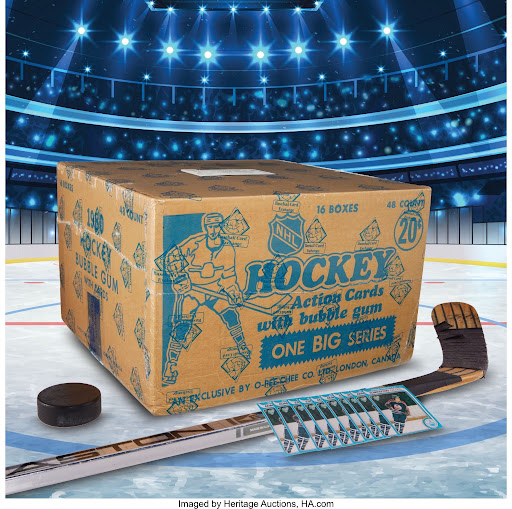
- 1979-80 O-Pee-Chee Hockey (sealed case): roughly $3.72 million at Heritage Auctions in 2024 — a case reportedly found in a basement, and the most valuable case of unopened trading cards ever sold. It is stuffed with the potential of Wayne Gretzky rookie cards.
- 1986-87 Fleer Basketball (sealed case): about $1.789 million at Collect Auctions in 2020 — roughly $150,000 per box, each one a lottery for a Michael Jordan rookie.
- 1999 Pokémon 1st Edition Base Set (sealed booster box): about $408,000 at Heritage Auctions in early 2021 — the Charizard dream, shrink-wrapped.
The Collector's Lens on wax
Sealed wax is valued the way serious collectors value anything — by the Big Three:
- Condition. With wax, condition means the seal. An original, untouched factory wrapper is everything, which is why third-party authentication from the Baseball Card Exchange (BBCE) — the sealed-wax standard — has become non-negotiable at the high end.
- Rarity. It comes down to how much was printed and how little survived unopened. Decades of ripping means sealed vintage boxes are a fixed, shrinking supply.
- Provenance. A documented, unsearched chain of custody is the difference between a real box and a liability.
That word — unsearched — is where the romance of sealed wax collides with reality. As boxes became assets, a shadow market grew up around them: searched and resealed wax, where someone opens packs, pulls the valuable cards, slips in commons, and re-wraps the whole thing to look factory-fresh. A box that "weighs right" and looks sealed can be gutted. This is precisely why BBCE authentication exists, and why buying unopened wax without it is one of the riskiest moves in the hobby.
So the modern collector ended up in a strange bind. Ripping is the soul of the hobby — but the best sealed wax is now too expensive to open, and too easy to fake. The thrill that started it all became a luxury, or a gamble on trust.
Fig.2: 1979-80 O-Pee-Chee Hockey (sealed case) which sold for $3.72 million at Heritage Auctions - image courtesy of Heritage Auctions
Part 3: The Digital Rip — WaxPackz for a New Era
Here's the tension the hobby has been living with: everyone wants to rip, but almost no one can justify tearing into a five-figure box, and the cheaper sealed product is a minefield of searched wax. The feeling that built collecting — the sealed unknown, the chase — got priced out and trust-busted at the same time.
Digital packs are the answer the hobby has been reaching for. A digital rip keeps everything that made wax addictive and strips out what made it painful:
- The rip is real; the risk isn't. You open a pack, ship it to your home, and chase real cards — but there's no searched-wax roulette, no resealed-box betrayal. What you can pull is what you can pull, stated up front.
- The odds are transparent. Instead of trusting that a wrapper is honest, you see the hit rates before you open.
- You're not stuck with it. An instant buyback means if you pull a box you don't want to keep, it can become valuable on the spot, rather than a card you have to list, ship, and hope sells.
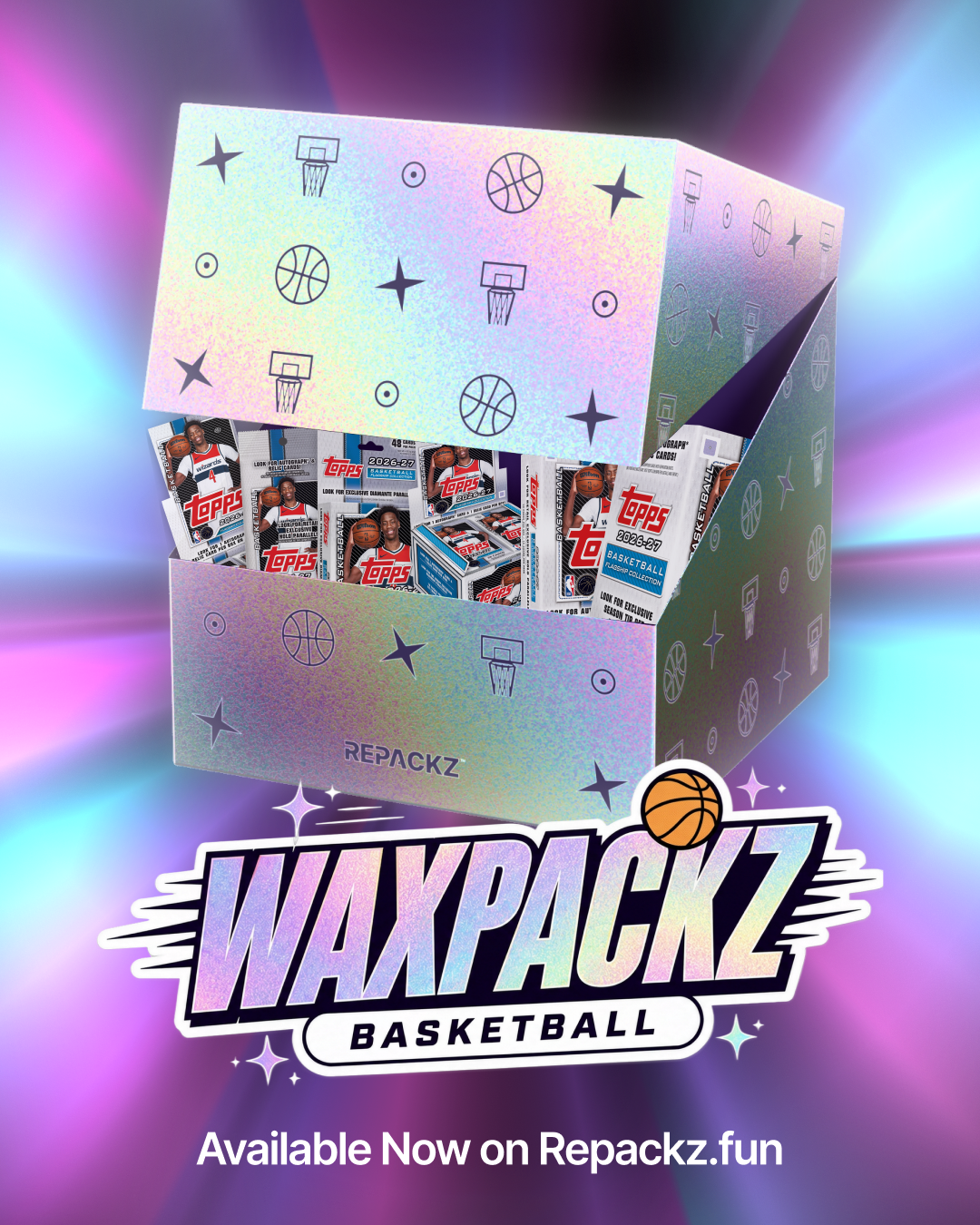
This is where our WaxPackz comes in: the wax-pack experience rebuilt for how collectors actually buy, chase, and trade today. Same tear-it-open adrenaline, modern transparency, real cards on the other side.
For $50, you can pull a box up to $550, and inside are chases like AJ Dybantsa and Cameron Boozer — the rookies everyone’s calling the next wave. Pull the right one and the card’s worth more than the box you paid for!
Seventy years after Topps sealed gum and cardboard into a nickel wrapper, the format has changed again — and the thrill is the same.
Fig.3: Digital Sealed Wax Pack on Repackz.fun
Final Thoughts
The wrapper has changed three times over. The wax-coated nickel pack became the shrink-wrapped box, became the digital rip — and across every version, collectors have paid for the same single moment: the one right before you know. Wax didn't just sell cards; it sold anticipation, and anticipation never goes out of style.
The record books prove how far that feeling can travel — $3.72 million for a case nobody opened. But you don't need a seven-figure box to feel it. The whole point of wax, in every era, was that anyone with a few dollars could buy a shot at the chase!
That's exactly what we built. Ready to feel the thrill of the chase? Open a Wax Box Repackz and chase it yourself!
Open My Wax Pack →
Frequently Asked Questions
What is a wax pack?
A wax pack is the original trading-card pack: a few randomly assorted cards (and, historically, a stick of bubble gum) sealed inside a wax-coated paper wrapper. Topps popularized them in the 1950s, and "ripping wax" became shorthand for the thrill of opening sealed product in search of a big card.
What's the most expensive wax ever sold?
A sealed case of 1979-80 O-Pee-Chee Hockey — loaded with potential Wayne Gretzky rookies — sold for roughly $3.72 million at Heritage Auctions in 2024, the most valuable case of unopened cards ever. A sealed 1986-87 Fleer Basketball case brought about $1.789 million in 2020, and a sealed 1999 1st Edition Pokémon Base Set booster box reached around $408,000.
Why is sealed wax so valuable?
Because almost all of it was ripped and thrown away. A factory-sealed box is a shrinking, irreplaceable time capsule that still holds the possibility of a pristine, ungraded star card inside. Condition (an original seal), rarity (how little survived unopened), and provenance (a documented, unsearched history) drive the price.
What is BBCE, and what is "searched" wax?
The Baseball Card Exchange (BBCE) is the leading authenticator of unopened wax, verifying that a box or pack's seal is original and untampered. "Searched" wax is the opposite: a product that was opened, stripped of its best cards, and resealed to look factory-fresh. BBCE authentication is how collectors protect themselves against it.
How are digital packs different from ripping real wax?
A digital rip delivers the same chase — a sealed unknown and real cards to pull —, but with transparent odds, no searched-or-resealed risk, and instant buyback on hits you'd rather cash in. It's the wax experience without the authentication minefield or the five-figure buy-in.
Disclaimer: All content on Collectibles.com and shared publicly is for educational and informational purposes only and does not constitute investment, financial, tax, or legal advice. Collectibles.com and its partners are not registered investment advisors. Investing in collectibles — and opening packs, physical or digital — carries a high risk of loss, including total loss of principal, and is speculative and unsuitable for many investors. Values cited reflect reported auction sales and vary widely with condition, authentication, and market conditions. Past performance is no guarantee of future results. Always consult qualified professionals before making decisions. No recommendations or solicitations are intended.

